


Wooden Toys for a Calm Down Corner (2026 Guide)
A wooden toys for calm down corner set-up means slow, single-action toys — stacking cylinders, teethers, soft rattles, quiet discovery blocks — chosen to help a toddler or preschooler settle rather than get more excited. The corner only works if the toys in it do one thing at a time; anything with flashing lights, loud sound effects or dozens of loose pieces works against the point of a calm space.
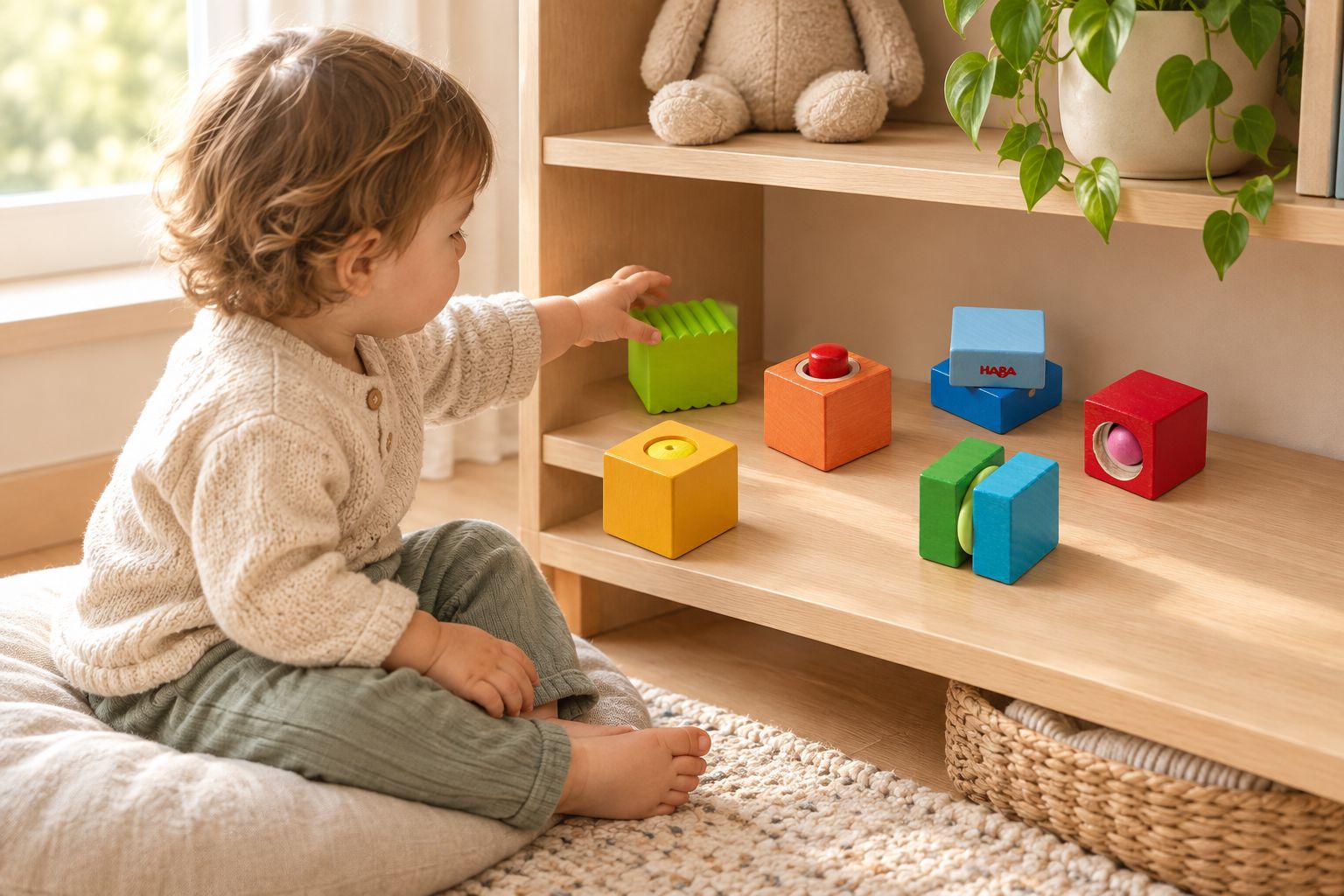
- Fun with Sounds Discovery Blocks and Fun with Sounds Wooden Eggs from Habauk suit toddlers who respond well to gentle, repeatable sound.
- Wooden toys for a calm down corner need one slow action each — stacking, sorting or squeezing — never several at once.
- Two or three toys is the right number for a calm corner; a full toy box undoes the calming effect.
- Teethers and grasping toys suit under-18-month-olds; stacking and sorting toys suit two to five year olds.
Why calm corners matter for toddlers and preschoolers
A calm down corner is a small, predictable spot a child goes to when feelings run ahead of them — before or after a tantrum, or simply when the day gets loud. The toys in it aren't there to entertain; they're there to give small hands something repetitive to do while a nervous system settles.
That's a different job from most toy shopping. A birthday present is judged on excitement; a calm corner toy is judged on how little excitement it generates. Parents looking at wooden toys for children with sensory processing needs are usually solving the same problem from a different angle: a toy that gives the hands and eyes just enough to do, and no more.
Wooden toys tend to fit this brief better than plastic ones. No batteries means no unpredictable noise or light. Weight and grain give a toy a slower, heavier feel in small hands, which itself has a settling effect compared with light plastic that gets flicked and dropped.
Build the corner: step by step
1. Choose toys with one slow action, not many
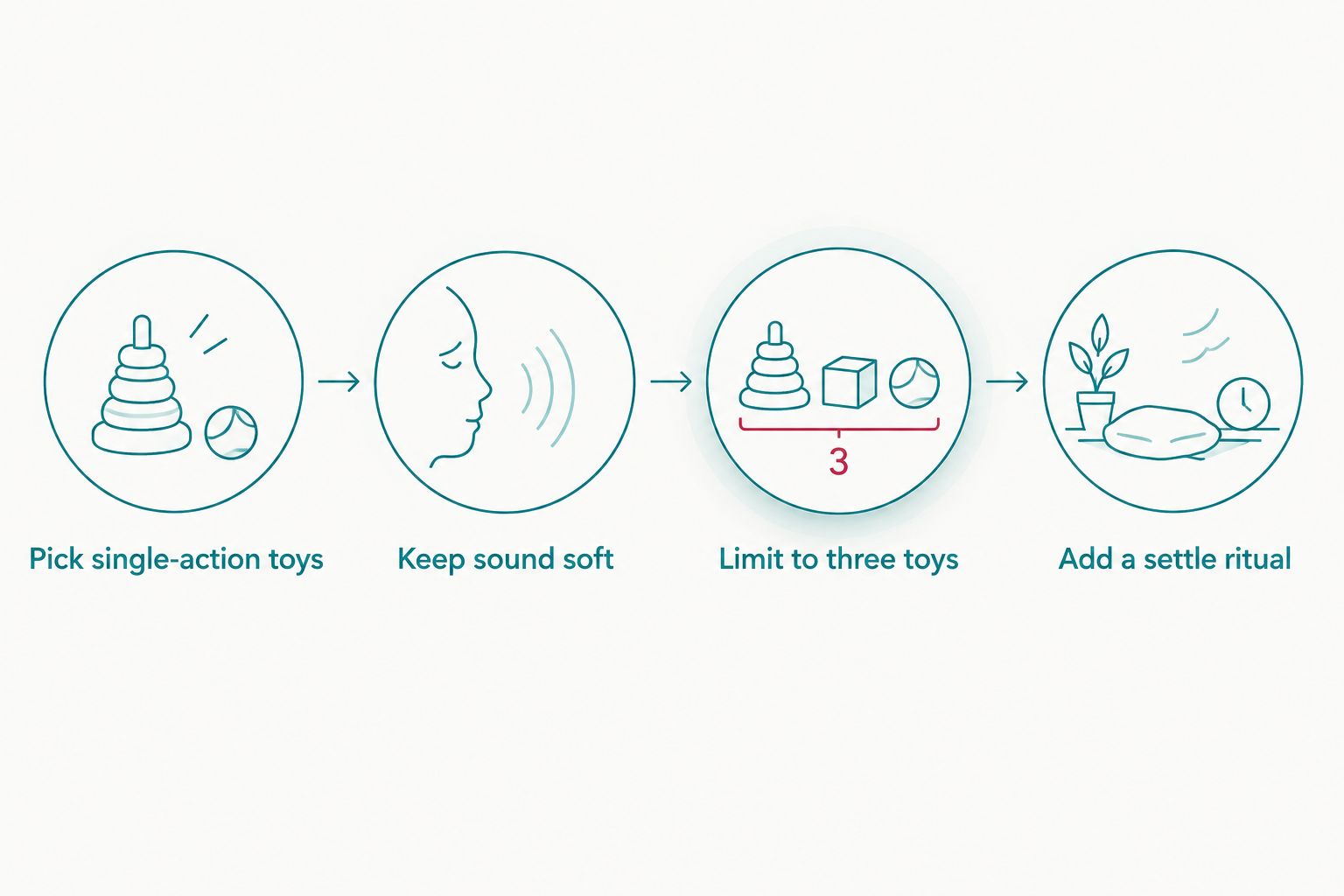
A calm corner toy should have a single, repeatable movement — stack, sort, squeeze, slide. Anything requiring a sequence of steps (build a structure, follow rules, win a round) belongs elsewhere in the house.
- A stacking cylinder game like Rainbow Risers — one pegboard, one repeated stacking motion
- A sorting game like Flower Garden — match colour, place peg, repeat
- A grasping toy like Color Drops or Magica — squeeze, shake, mouth, repeat
- A single wooden teether rather than a multi-part activity set
- Avoid marble runs, building block sets over 40 pieces, or anything with instructions
2. Keep sound soft and predictable, not loud or random
Sound can help a child regulate, but only if it's quiet and the same every time. A toy that makes a different noise depending on how hard it's shaken adds unpredictability, which works against calm.
- Fun with Sounds Discovery Blocks — a consistent, gentle rattle on each block
- Fun with Sounds Wooden Eggs — soft, repeatable shake sound, no volume spikes
- Avoid toys with electronic chimes, tunes or voice playback
- Avoid anything that gets louder the harder it's used — that rewards escalation, not calm
3. Pick textures that invite touching, not buttons that need pressing
Texture does more regulating work than mechanism. A smooth teether, a ridged grasping toy, or a soft fabric surface gives fingers something to explore without asking for a result.
- Smooth, rounded wooden teethers for under-18-month-olds
- Ridged or textured grasping toys like Color Drops for tactile feedback
- A soft fabric ball for babies who aren't ready for firm wood yet
- Nothing with a button-press-for-reward mechanism — that's stimulation, not settling
4. Limit the corner to two or three toys, not the whole toy box
This is the most common mistake in a calm corner: too much choice. A child trying to regulate doesn't need options — options are themselves a form of stimulation.
- Two toys for babies under 18 months (one teether, one soft item)
- Three toys for toddlers and preschoolers (one sound toy, one stacking or sorting toy, one soft item)
- Store everything else out of sight, even in the same room
- Swap the whole set rather than adding a fourth toy to the existing three
5. Match toys to age and stage of self-regulation
A teether that works for a 9-month-old will bore a 3-year-old, and a sorting game aimed at a 3-year-old will frustrate a 12-month-old — frustration is the opposite of what the corner is for.
- 0–12 months: grasping and teething toys, soft fabric balls, gentle rattles
- 12–24 months: single-action sound toys, simple stacking cylinders
- 2–4 years: sorting and matching games, one wooden puzzle at a time
- 4+ years: quiet building with a small, defined set — not open-ended construction
6. Give the corner a "settle" ritual toy that's always there
One toy should never rotate out. Children build an association between that object and the act of calming down, and the association itself becomes part of the regulation.
- A specific teether or rattle kept only for the corner, never used elsewhere
- Introduce it early, at the first sign of a calm corner routine, so the link forms fast
- Replace it only if lost or outgrown — not on a rotation schedule like the other toys
Comparison: which type of wooden toy fits which corner
| Option | Best for | Key limitation |
|---|---|---|
| Sound discovery blocks (Fun with Sounds) | Toddlers who respond well to gentle, repeatable audio | Not suited to children sensitive to any noise at all |
| Grasping/teething toy (Color Drops, Magica) | Babies under 18 months | Loses appeal fast once a child is past teething |
| Wooden stacking or sorting game (Rainbow Risers, Flower Garden) | 2–4 year olds practising quiet, focused hands | Needs a flat surface — awkward on a rug or car seat |
| Textured busy board | Children who like repetitive latch-and-turn actions | Fiddly for under-2s still developing fine motor control |
| Soft fabric ball or cuddly teether | Very young babies or bedtime wind-down | Limited use once a child becomes mobile and active |


Common mistakes parents make with calm corners
- Filling the corner with the whole toy box — the exact overload that's meant to be avoided, dressed up as generosity.
- Choosing toys with lights or sound effects built for excitement, not soothing — a flashing panel or musical tune adds stimulation, not calm.
- Never rotating stock, so the same three toys go stale within a fortnight and stop holding attention.
- Placing the corner in a high-traffic hallway or living room, where siblings interrupt just as a child starts to settle — see wooden toys for small flats and space-saving storage for corner placement in a tight home.
- Expecting one toy to work for both a wound-up toddler and a genuinely dysregulated child — a 2026 calm corner needs at least two toy types for two different states, not one toy asked to do everything.
Read the routine alongside wooden toys for calming bedtime routines if the corner also needs to work at the end of the day, and check wooden busy boards for toddlers for a texture-based option once a child is past 2.
A plain, single-piece teether outperforms a five-piece set for a child who is genuinely dysregulated — choice itself is a stimulus, and the calmest toy in the room is usually the one with nothing to decide.
“The calmest toy in the corner is the one with nothing to decide.”
For days when the corner needs to compete with a tablet, wooden toys for screen-free play at home covers the wider case for keeping the whole living room low-stimulation, not just one corner of it. And if a specific texture is what settles your child, teether cuddly rainbow round is a soft, single-action option worth having on hand as the settle-ritual toy described in step six.
FAQ
What are the best wooden toys for a calm down corner?
Single-action wooden toys work best: teethers and grasping toys for babies, stacking and sorting games for toddlers, and soft-sound discovery blocks like Fun with Sounds for children who respond well to gentle audio. Avoid anything with flashing lights or multi-step play.
Is a calm down corner the same as a sensory corner?
They overlap but aren't identical. A calm down corner is built to help a child settle after big feelings, while a sensory corner is broader and can include stimulating textures and movement as well as calming ones.
How many toys should be in a calm down corner?
Two or three is the right number for most toddlers and preschoolers in 2026 guidance from occupational therapy practice: enough variety to suit different moods, not so much that choosing becomes its own stimulus.
What age is right to start a calm down corner?
Most families start around 18 months to 2 years, once a toddler can walk to a spot on request, though a soft corner with a teether or fabric toy can exist for babies from 6 months.
Can noisy toys work in a calm down corner?
Only if the sound is soft and consistent every time it's used, like the gentle rattle in Fun with Sounds Discovery Blocks. Loud, random or escalating sound effects work against settling.
How often should calm corner toys be rotated?
Weekly rotation keeps the corner from going stale while keeping one ritual toy fixed in place permanently, so the child always has a familiar anchor alongside something new.
Do calm down corners work for children with sensory processing needs?
Yes, and the toy choice matters more for these children, not less — texture, weight and predictable sound should be picked to match the individual child's sensory profile rather than a generic toddler list.
What's better for calm time: wooden toys or soft toys?
Both have a place. Wooden toys give slower, heavier feedback that suits repetitive stacking or sorting, while soft toys and fabric balls suit very young babies or the wind-down minutes before sleep.
One last thing
The single biggest lever in a calm corner isn't the toy at all — it's restraint. Two or three well-chosen wooden toys, kept in the same spot every time, do more regulating work in 2026 than a rotating shelf of ten. If you only change one thing this month, remove toys from the corner rather than add them.