


Wooden Reward Chart for Toddlers: What Works in 2026
A wooden reward chart for toddlers is a physical, screen-free tracker — pegs, magnets or tokens a toddler moves by hand — built to make small daily wins visible without asking a two-year-old to read a word. Toddlers between 18 months and 3 years respond to what they can touch and watch move, not to a star chart taped to the fridge that gets explained once and forgotten by lunchtime.
- A wooden reward chart for toddlers works best tracking one habit at a time, not five.
- Peg-style wooden charts beat sticker charts for toddlers under 3 because the pieces are reusable and match a screen-free routine.
- Hang the chart at toddler eye level, roughly 60-70cm off the floor for a 2-year-old, or it gets ignored.
- Reward within minutes, not days: toddlers under 3 rarely connect a Friday treat to Monday's good behaviour.
- Small pegs, magnets and tokens carry standard choking-hazard warnings for children under 3 — check the age guidance before buying.
Why this matters
Reward charts fail most often because they're built for a five-year-old's attention span and handed to a two-year-old. A toddler can't count reliably past five, doesn't process "well done" as a delayed instruction, and forgets a promise made at breakfast by the time lunch arrives. At Habauk, wooden toys for toddlers are grouped by age for exactly this reason — a two-year-old needs an object, or a chart, that explains itself without being told twice. That same logic decides whether a reward chart works in 2026 or sits unused on a shelf by February.
Why a wooden reward chart matters for toddlers
Toddlers are still building fine motor control. Picking up a peg, sliding a magnet across a track, or dropping a token into a slot is practice in itself, not just a reward mechanic bolted onto good behaviour. That's a real difference from a sticker chart, where the only motor skill involved is peeling backing paper — something most 2-year-olds can't manage without an adult's help anyway, which defeats the point of a chart they're meant to use themselves.
Wood also survives how toddlers actually treat things: dropped, gnawed on the edges, stacked, carried room to room, and handled daily for months rather than one printed sheet that creases and tears within a week. Households already leaning into screen-free play toys instead of app-based habit trackers tend to find a physical chart fits the same logic — no notifications, no login, just a peg moving across a board a toddler can see from across the room.
A wooden reward chart works for toddlers when it tracks one habit at a time and rewards it within minutes, not days. Everything below builds from that one rule.
Setting up a wooden reward chart for toddlers
1. Pick a toddler-friendly format
Not every reward chart on the market is built for a child this young — plenty assume reading and counting skills a 2-year-old simply doesn't have yet. Start with the format, not the design.
- Peg board with 5-10 slots, one peg moved per success
- Magnetic board with large, toddler-safe magnets
- Picture-based board using photographs instead of written words
- DIY clothes-peg chart clipped to a strip of wood or card
- Wipe-clean wooden board built for daily resets
2. Choose one or two behaviours to track
Toddlers can't hold five separate goals in their head at once. Pick the single habit causing the most friction right now and leave everything else alone.
- Bedtime routine, getting into pyjamas without a fight
- Teeth brushing
- Putting one toy away before starting a new one
- Sitting at the table through a meal
- Saying "please" without a prompt
If bedtime is the target, pairing the chart with a wind-down cue such as calming bedtime routine toys reinforces the same routine without adding extra pressure to the chart itself.
3. Swap stars and numbers for pictures
A star system assumes a toddler can count and compare quantities — most can't reliably do either before age 3. Numbers on a chart are decoration to a toddler, not information.
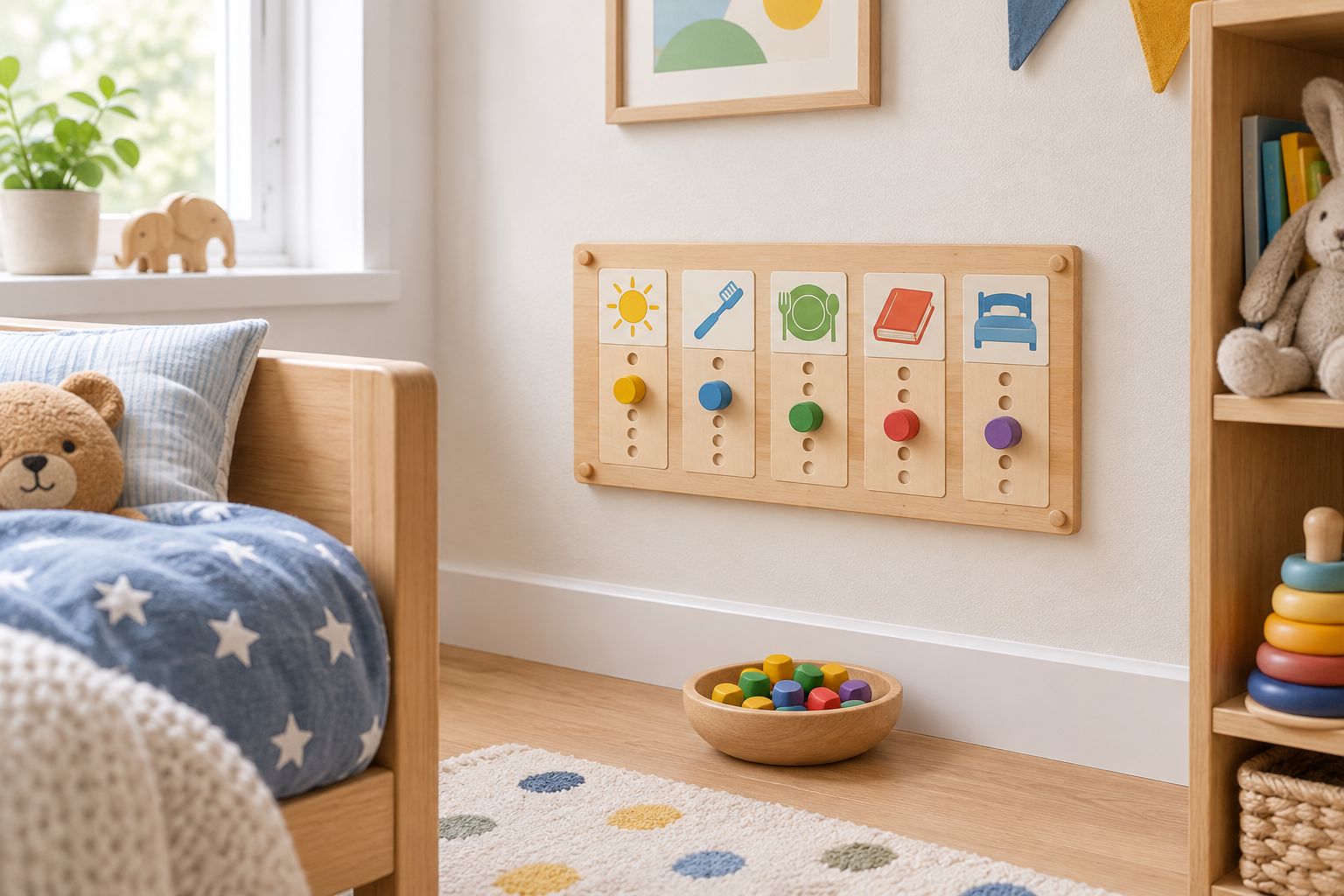
- Use simple icons: a toothbrush, a bed, a toy box
- Use a photo of the toddler actually doing the task
- Colour-code pegs instead of numbering them
- Keep the chart to 5-7 visual slots at most
- Skip written instructions anywhere on the board
4. Place the chart at toddler eye level
A chart mounted at adult height on the fridge gets forgotten by the child it's meant for, not the parent walking past it.
- Mount it around 60-70cm from the floor for a 2-year-old
- Pick a spot on their daily path, near the bedroom door rather than the utility room
- Keep it clear of radiators, which warp wood over time
- Fix it firmly to the wall if it's heavier than a card chart
5. Reward within minutes
Toddlers under 3 don't reliably connect Friday's treat to Monday's good behaviour — the reward has to land close to the moment the peg moves.
- Move the peg immediately, in front of the child
- Pair it with specific praise: "you brushed your teeth all by yourself"
- Keep the reward small: a sticker, an extra story, five more minutes of play
- Save bigger prizes for a full week of small wins, never a single peg
6. Reset the chart weekly
A chart that never resets stops meaning anything to a toddler by week three — the novelty is doing most of the work, and it wears off fast.
- Wipe the board clean on the same day each week
- Talk through what worked before resetting it
- Drop a behaviour that never stuck rather than forcing it
- Add a new one gradually, never two at once
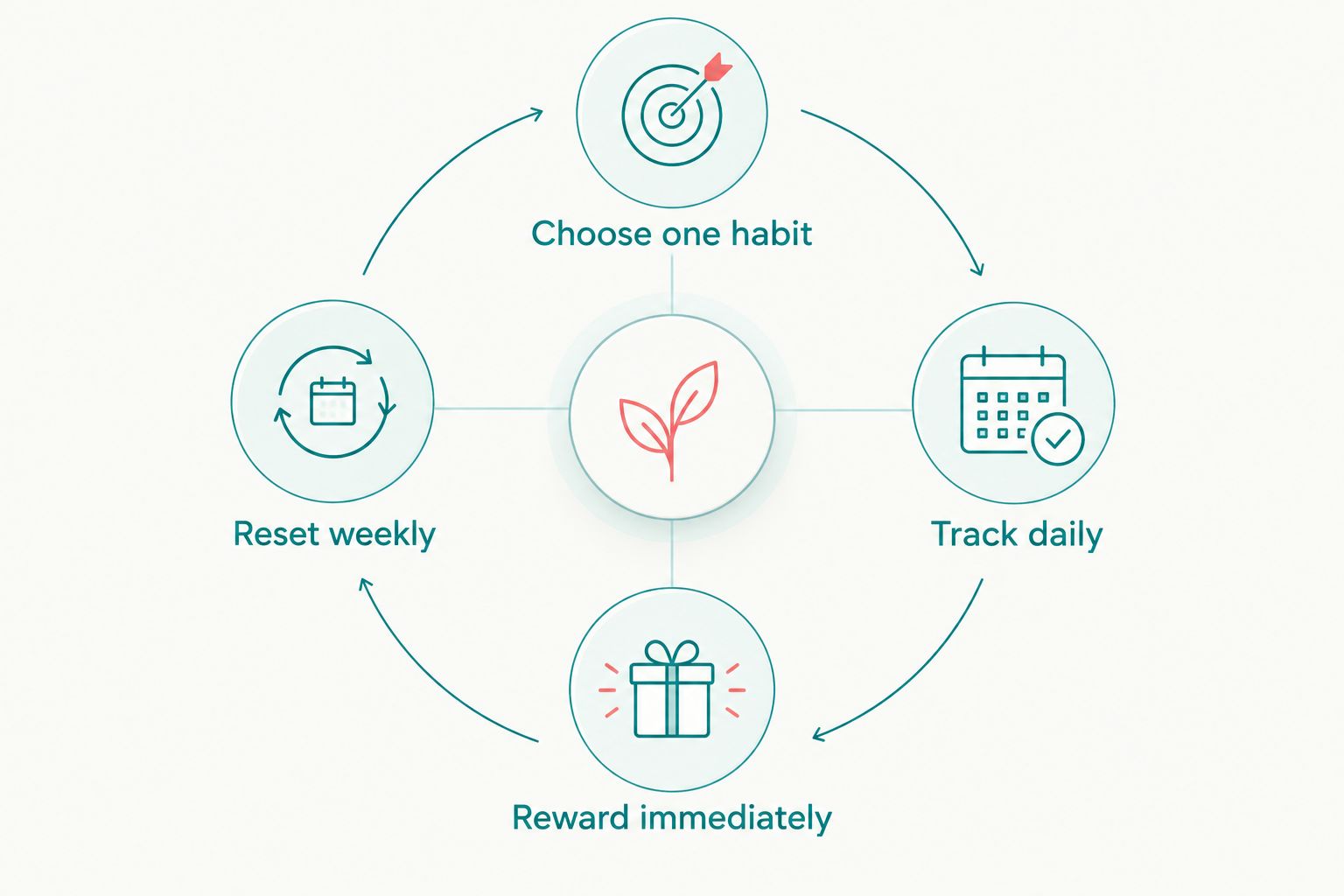
The whole system reduces to four repeatable steps: choose one behaviour, track it daily, reward it within minutes, and reset weekly. That loop matters more than the chart's design.
Wooden reward chart options for toddlers compared
Most parents shopping for a wooden reward chart for toddlers in 2026 are choosing between five real formats, and each one trades off differently for a child this young.
| Option | Best for | Key limitation | Verdict |
|---|---|---|---|
| Wooden peg board | Toddlers who like moving physical pieces | Small pegs carry standard choking-hazard warnings under 3 | Buy for supervised use |
| Magnetic wooden chart | Quick, satisfying daily resets | Magnets can loosen with heavy handling over time | Buy |
| Sticker chart | A low-cost way to test the idea | Not reusable, doesn't hold up to daily toddler handling | Hold |
| Printable paper chart | Trying the concept before buying anything | Tears and creases within days of regular use | Wait |
| App-based reward tracker | Parents who want automatic reminders | Introduces a screen into a routine meant to reduce them | Skip for toddlers |
“If the chart tracks more than two behaviours, a toddler stops reading it and starts ignoring it.”
Common mistakes parents make with toddler reward charts
- Tracking too many behaviours at once. A toddler chart with five goals gets ignored within days — one or two habits is the practical ceiling for this age group.
- Using number-based systems a toddler can't read. If the chart needs counting past five or reading a written word, it's built for an older child, not a toddler.
- Hanging the chart out of reach or out of sight. A chart in a hallway they pass twice a day gets used; one on a home-office wall doesn't.
- Delaying the reward. Promising a Saturday trip for Tuesday's good behaviour means almost nothing to a toddler's sense of time.
- Using the chart as punishment. Removing a peg for bad behaviour turns a positive tool into a source of anxiety — track wins only, never losses.
FAQ
What age can toddlers start using a reward chart?
Most toddlers can start using a simple picture-based reward chart from around 18 months to 2 years old. Before that age, cause-and-effect understanding is too limited for the chart to mean anything to the child.
Is a wooden reward chart better than a sticker chart for toddlers?
A wooden peg or magnetic chart is more durable and reusable than a sticker chart, and the physical movement suits a toddler's fine motor stage better. A sticker chart is cheaper to start with but wears out fast under daily toddler handling.
How many behaviours should a toddler's reward chart track at once?
One behaviour at a time works best for toddlers under 3, with a maximum of two once the first habit is established. Tracking more than that overwhelms a child who can't yet hold multiple goals in mind.
Are the small pegs on a wooden reward chart safe for toddlers under 3?
Small pegs, magnets and tokens carry standard choking-hazard warnings for children under 3, the same as most small-parts toys. Always check the manufacturer's age guidance and supervise use for younger toddlers.
How much does a wooden reward chart cost in 2026?
Prices vary by format and retailer in 2026, from simple DIY peg charts made at home to ready-made wooden or magnetic boards bought in store. Check current pricing on the specific product page before buying.
Can a reward chart help with toddler tantrums?
A reward chart works best for building a routine, like bedtime or teeth brushing, rather than stopping a tantrum in the moment. Used consistently, it can reduce the friction that triggers some tantrums over a few weeks.
How long should a reward chart run before it stops working?
Most toddler reward charts hold attention for two to four weeks before the novelty fades. Resetting the chart weekly and rotating in a new habit keeps it useful for longer.
Should the reward be a treat or extra playtime?
Non-food rewards like extra playtime, a story, or a small activity work better than treats for building a lasting habit. Food-based rewards can create an association between behaviour and snacking that's harder to unwind later.
One last thing
The chart itself matters less than what happens in the three seconds after a toddler succeeds — a peg moved and a specific sentence said out loud does more than the fanciest wooden board sitting unused on a shelf. Start with one habit, one peg move, and one sentence of praise in 2026; only add complexity once that loop runs itself for a fortnight without reminders.