


Wooden Toys Potty Training Reward Picks for 2026
Wooden toys potty training reward strategies work best when the toy is small, ready to hand over in seconds, and tied to a specific success rather than any attempt on the potty. Toddlers between roughly 18 months and 3 years old need a system that's fast, screen-free, and doesn't rely on a sugar hit that wears off before lunch.
- The best wooden toys potty training reward picks are small, battery-free, and handed over within seconds of success.
- Build-toward-a-toy works well: give one block from a Colored Wooden Building Blocks set per potty win.
- Save box games like My Very First Games First Orchard for milestone days, not every trip.
- Fade physical rewards over a couple of weeks in 2026 once the habit sticks - don't reward forever.
Why this matters
Toddlers in the middle of potty training respond to something they can see and hold, not an abstract promise of praise later. A wooden toy handed over immediately after success gives a toddler a clear, physical marker that something good just happened, and it does that without a battery to die or a screen to argue about switching off. Browse HABA wooden toys and you'll notice most pieces are chunky, paint-safe, and built to survive being dropped on a bathroom tile, which matters more here than in almost any other play context in 2026.
The reward also needs to be cheap enough per use that you're not rationing it out of worry, and simple enough that a tired parent can grab it one-handed at 6am. That rules out anything with loose small parts for toddlers still mouthing objects, and anything that needs assembly before it's fun.
How to use wooden toys as a potty training reward
Build your reward stash before day one
Start with what's already in the house. You don't need to buy anything new to begin - the stash just needs to be ready before the first success, not scrambled together after it.
- Raid the toy box for pieces your toddler already loves
- Tape a simple paper sticker chart to the bathroom door
- Pick one "special jar" your toddler can see but not open solo
- Keep verbal praise as the first reward, every single time
- Set the stash somewhere visible from the potty itself
Size the reward for a five-second hand-off
If the toy needs assembling, winding up, or charging, it's too slow for the moment it's meant to reward. The window between success and reward closes fast with a toddler this age.
- Skip toys with more than a couple of loose pieces
- Avoid anything needing batteries or a charge
- Choose pieces sized for small hands, not fiddly clasps
- Steer clear of noisy toys right before nap-time attempts
- Favour toys that need zero parent assembly mid-celebration
Turn one big toy into many small wins
Instead of buying one toy and handing it over once, split a multi-piece set across the whole potty training stretch. A Colored Wooden Building Blocks 46 Piece Set works as an earn-a-piece reward - one block per success, building toward a finished tower over several days instead of one big payoff that's gone in a minute.
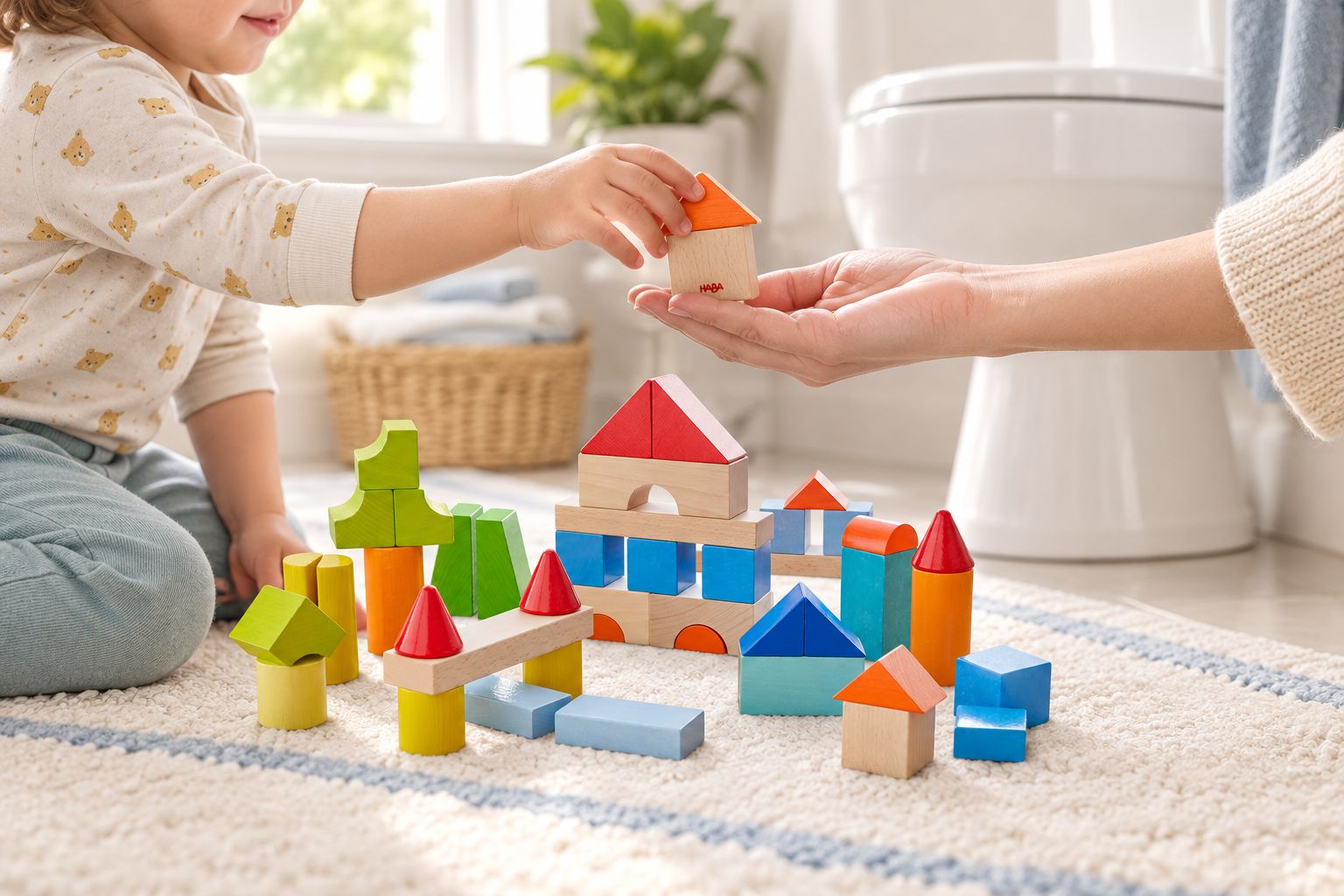
- Start with a 46-piece set for a shorter, faster stretch of progress
- Step up to an 85 or 102-piece set for a longer potty training run
- Let your toddler build after every third or fourth win, not every single one
- Keep the box out of sight so opening it stays a small surprise
- Swap to a themed set like the Discovery Caterpillar blocks halfway through for fresh interest
Save a quick box game for milestone days
Routine trips get a small toy. Genuine milestones - the first fully dry day, the first solo trip, the first dry nap - earn a short shared game instead. My Very First Games' First Orchard box game plays in a few minutes and works as a bigger, more memorable reward without turning into a full afternoon.
- Reserve the game for real milestones, not everyday trips
- Pick a game short enough to finish before nap time
- Play it together rather than handing it over solo - the attention is part of the reward
- Rotate to a second short box game once the first one stops feeling special
Rotate the stash so novelty doesn't wear off
A reward that worked on Monday can go flat by Thursday. Toddlers notice repetition faster than adults expect, and a stale reward stops doing its job.
- Swap the reward jar contents every one to two weeks
- Mix game-based rewards with simple stacking or sorting toys
- Let your toddler pick between two options at the sink - choice adds buy-in
- Keep one "reserve" toy hidden for a rough week
Fade the physical reward once the habit sticks
Once your toddler manages several days in a row without a reminder, start pulling the toy back rather than dropping it overnight. A sudden stop after weeks of a wooden toys potty training reward routine can read as punishment to a toddler who doesn't understand why the prize disappeared.
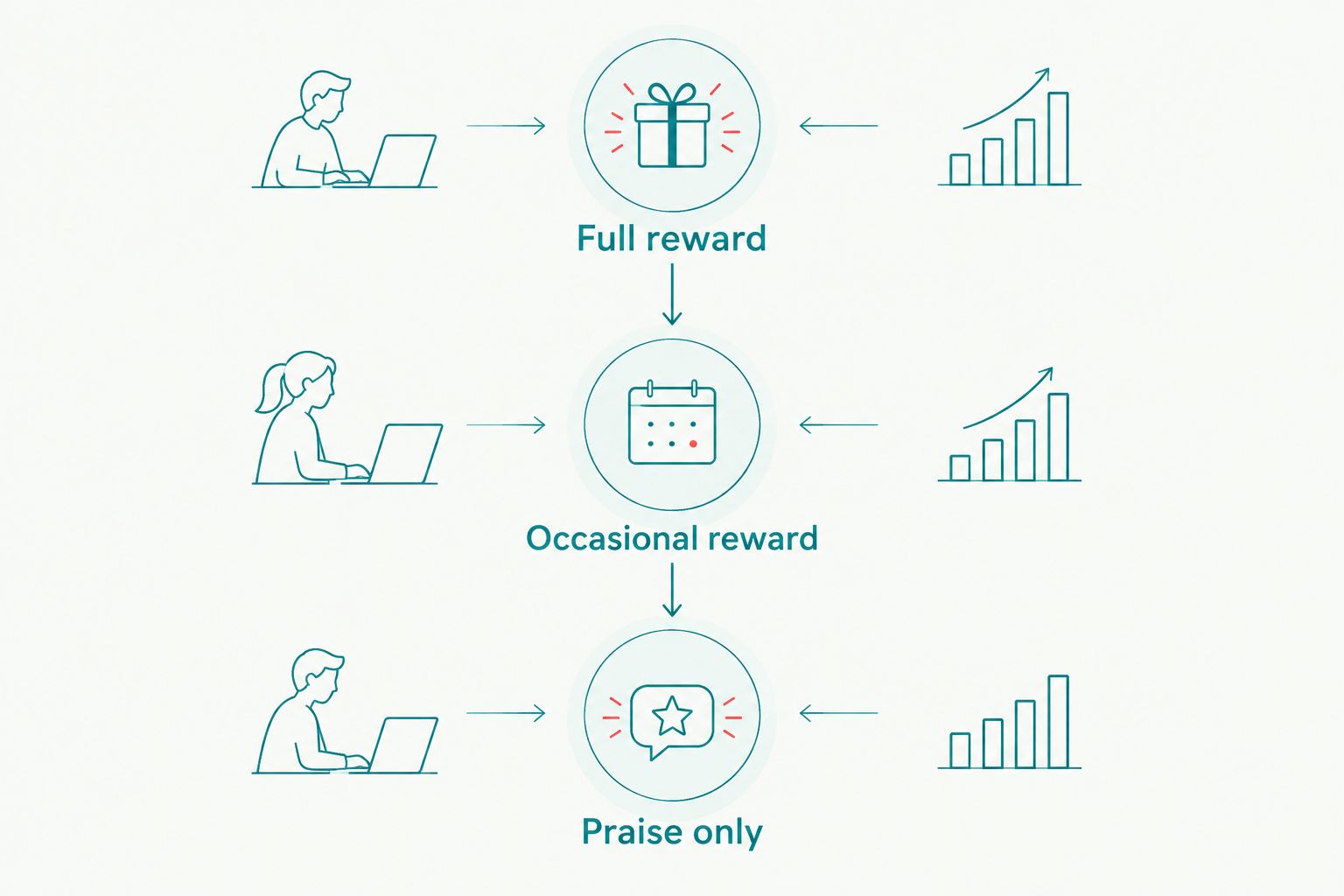
- Space toy rewards out to every second or third success first
- Add a sticker or high-five step before removing the toy entirely
- Keep the reward jar visible during setbacks, don't punish backsliding
- Praise the specific action ("you told me in time!") not just the toy itself
Comparing potty training reward options
| Reward option | Best for | Key limitation |
|---|---|---|
| Multi-piece wooden building block set (earn-a-piece) | Toddlers who respond to visible progress toward a finished toy | Takes several days before the set feels complete |
| My Very First Games box game | Milestone days - first dry day, first solo trip | Needs a few minutes of shared play, not a grab-and-go moment |
| Sticker chart with toys already at home | Starting cheaply on day one | Loses its pull once the sticker novelty wears off |
| Small wooden stacking or sorting game | Rotation toy for weeks two and three | Small pieces need supervision around younger siblings |
Verdict: the earn-a-piece building block method is the strongest all-round wooden toys potty training reward pick for 2026 because progress stays visible for days, not one-and-done like a single toy.


Common mistakes parents make with potty training rewards
- Rewarding every single sit, not just successes - this inflates the toy's meaning fast and it stops working within days
- Handing over toys with button batteries or small magnets to toddlers who still mouth objects during potty training
- Buying one expensive toy upfront with no plan for the following weeks of successes
- Letting the stash run dry mid-week, breaking momentum right when the habit is forming
- Swapping to a screen-based reward app that removes the tactile win a wooden toy gives a toddler this age
Toddlers around 2 to 3 years old are also exploring more independent play generally - the same wooden toys for 3 year olds that work for everyday play tend to double up well as reward pieces, since your toddler already knows how to hold and use them.
FAQ
What's the best wooden toy to use as a potty training reward in 2026?
A multi-piece building block set used one piece at a time is the strongest pick for 2026 because it gives a toddler visible progress over several days instead of a single reward that's gone in a minute.
Is it better to reward every potty trip or only successes?
Reward successes, not every attempt. Rewarding every sit on the potty inflates the toy's meaning fast and it stops motivating within days.
How long should potty training rewards last before fading them out?
Start fading once your toddler manages several consecutive days without a reminder. Move from a toy every time to a toy every second or third success, then to praise only.
Are small wooden toys safe for toddlers who still put things in their mouth?
Choose reward toys with no loose pieces small enough to swallow and no button batteries or magnets. Chunky single-piece toys or blocks sized for toddler hands are the safer reward category.
Can one big toy work as a single potty training reward?
One big toy handed over upfront tends to lose its pull quickly because there's nothing left to work toward. Splitting a multi-piece set across several successes holds attention longer.
Should potty training rewards be given for weeing and pooing separately?
Many parents do give a bigger reward for a bowel movement success since it's usually the harder milestone, saving the box game or bigger prize for that specific win.
What age is the earn-a-piece building block method suitable for?
It suits toddlers from around 18 months to 3 years, the typical potty training window, since building block sets in this range are sized for developing hand grip and fine motor control.
How do I stop giving toy rewards without a tantrum?
Fade gradually rather than stopping outright - drop to every second or third success, add a sticker or high-five step, and keep praising the specific action so the habit doesn't feel like it lost its reason.
One last thing
Keep the reward stash under five options at any one time. More choice at the sink slows a toddler down at exactly the moment speed matters most, and the earn-a-piece method only works if the next block is obvious, not buried in a pile of six other options.