


How do you introduce pretend play to a shy toddler?
Introduce pretend play to a shy toddler by acting out a familiar routine beside them, then leaving space for them to watch, copy or join without speaking. Start with a simple action, such as giving a teddy a pretend drink, and follow your child's response rather than asking them to perform.
- How to introduce pretend play to a shy toddler: model a familiar action, pause and accept quiet participation.
- Start with familiar toys and everyday routines rather than costumes, complicated stories or an audience.
- Habauk offers pretend play toys for parents choosing familiar cooking and caring themes.
- Let your toddler watch, repeat or leave; joining in does not need words.
How do you introduce pretend play to a shy toddler?
Begin beside your toddler, not in front of an audience. Choose something they recognise from everyday life, show a small pretend action and make joining optional. Your role is to offer an idea, not collect a particular response.
You do not need a new play kitchen or a complete dressing-up corner. If you are browsing Habauk for pretend play toys in 2026, start with your child's existing interests and check each toy's age guidance before choosing.
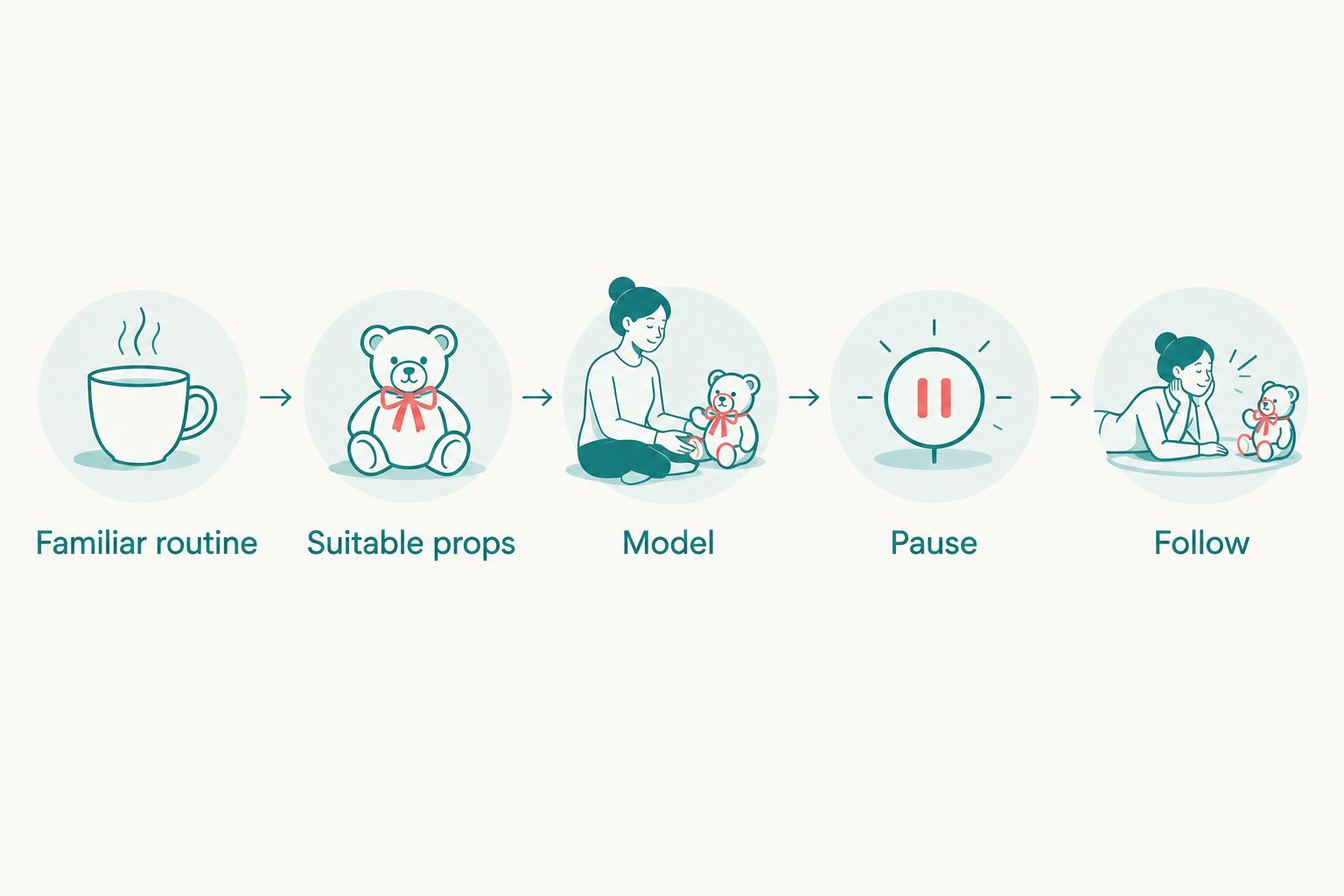
Follow this gentle sequence
- Choose a familiar routine. Pick something your child sees often: preparing food, giving a drink or comforting a favourite soft toy. Avoid starting with a role they do not recognise.
- Put out 2 suitable props. For example, use a favourite teddy and a child-safe play cup. Keep the rest of the play space uncluttered so the invitation is easy to understand.
- Model 1 action. Lift the empty cup towards teddy as though offering a drink, then put it down. There is no need to explain an entire story.
- Pause without a question. Leave the cup within reach and stay nearby. Do not immediately ask your toddler to repeat what you did.
- Follow their contribution. If your child puts teddy in a box instead, let the box become teddy's seat. If they simply inspect the cup, allow that too.
- Finish without a test. Put the toys away when your child moves on. Do not ask them to demonstrate the game to someone else before finishing.
These are invitations, not stages your child must complete. Stay with whichever part feels comfortable, including simply sitting together with the toys.
Why this matters
The aim is shared enjoyment, not making your child look more outgoing. A quiet toddler does not need to use a funny voice, wear a costume or speak to visitors for pretend play to count.
Pretending also does not have to look like a finished story. Offering an empty cup as a drink is enough to build an invitation around; a bustling café can wait.
For your family's 2026 play plans, make comfortable participation the goal, rather than a particular length of playtime or a performance for the camera. That gives you a clear next move: simplify the invitation whenever it becomes a demand.
Which pretend play invitation should you try first?
Choose the activity that matches what your toddler already notices or enjoys. The table compares starting points, not levels of achievement: there is no need to work through them in order.
| Play invitation | Best for | What you can model | Advantage | Limitation to consider |
|---|---|---|---|---|
| Teddy's drink | A child interested in cups and mealtimes | Offer an empty play cup to teddy | A familiar action with little setup | Repeated requests to feed teddy turn it into a task |
| Pretend cooking | A child who watches food preparation | Stir an empty child-safe bowl | You can play alongside without dialogue | Too many ingredients or instructions complicate the invitation |
| Doll care | A child interested in caring routines | Gently settle a doll in a pretend bed | A quiet theme without a customer or audience | Not every child enjoys dolls or caring themes |
| Animal stories | A child drawn to animal figures | Make an animal walk towards its home | Your child can contribute through movement | An elaborate adult story leaves less room for their ideas |
Choose familiarity over novelty. If your child loves watching you stir breakfast, start there rather than arranging a shop with roles, customers and a queue.
Keep pretend food separate from real snacks, and choose props suitable for your child's age and current habits. Wooden materials alone do not establish whether a toy is suitable; check the individual instructions and warnings.
What should you say during pretend play?
Use a short description of what you are doing, then stop talking long enough for your child to respond in their own way. You can describe teddy having a drink without asking your toddler what teddy wants next.
Try these approaches:
- Comment instead of questioning. Describe the bowl being stirred rather than asking your child to name every ingredient.
- Offer 1 choice when needed. Let your child choose between a cup and a bowl, then accept their selection without another question.
- Accept gestures. Passing you a spoon is a contribution; do not require a spoken request before continuing.
- Copy their idea. If they put the cup beside teddy rather than offering a drink, make room for that arrangement.
- Keep your voice comfortable. You do not need exaggerated voices or a big surprise to make the invitation playful.
Avoid narrating every movement. A little quiet gives both of you room to notice what happens next, whether that is a pretend sip or a new idea entirely.
Why your toddler's willingness to join varies
Use these factors to adjust the invitation, rather than treating reluctance as something to overcome. Start with what you can change about the moment.
- Familiarity: choose a routine your child recognises instead of explaining a new occupation or imaginary world.
- Audience: begin with a trusted adult rather than asking your child to play for visiting relatives.
- Language demands: allow actions and gestures instead of assigning dialogue.
- Complexity: return to a simple action when a story has acquired too many rules or roles.
- Choice: keep the option to watch or leave, without repeatedly inviting your child back.
- The immediate setting: if your child is tired, upset or busy with something else, put the invitation aside.
For a 2026 birthday or seasonal gift, use the same checks before buying. A theme that interests your child is a better starting point than an adult's plan for an impressive play corner.
Do you need special toys for a shy toddler?
No special toy is required to introduce pretend play. Begin with suitable things you already have, then choose additional toys only when you know which themes your child enjoys.
Habauk is best for parents shopping for HABA pretend play toys by age and category. That helps you browse, but the individual toy's guidance and your child's interests still decide the choice.
These examples suit cooking or caring invitations. Neither replaces a relaxed adult response, and neither should be treated as a remedy for shyness.
| Product | Best for | Relevant feature | Limitation to consider |
|---|---|---|---|
| Creative Play – Pizza Party Play Food Set | A child interested in preparing and serving food | Play food for slicing, topping and serving | A restaurant role is unnecessary; begin with a simple food-preparation action |
| Snug Up Doll Roya | A child who enjoys soft dolls and caring routines | A soft doll for cuddles and imaginative play | A doll is not the right theme for every child; follow existing interests |
Choose by play theme, not by a promise of confidence. Check the current age recommendation, contents and care guidance before deciding whether either product fits your household.


What if my toddler only watches me play?
Let your toddler watch without asking for a turn. Keep the action simple and leave the props accessible while you play nearby.
Watching is not a promise that your child will join immediately. Avoid turning a glance or smile into a new demand to copy you; simply continue or finish naturally.
If your child returns to the toys later, follow what they do then. There is no need to recreate the original invitation exactly or remind them how you used the objects.
How do I introduce another child without pressure?
Start with side-by-side play and enough suitable props for each child to explore without needing to negotiate a role immediately. Stay close, but do not appoint a shopkeeper and customer before either child has shown interest.
A shared story can wait. Let both children stir separate bowls or settle their own soft toys, and help with boundaries if someone takes an object the other child is using.
Avoid asking the more talkative child to draw the quieter child out. Give each child the same permission to participate through actions, gestures or speech.
When should I ask for advice about my toddler's play?
Speak to your health visitor or GP if you are concerned about your toddler's development, communication or distress around everyday interactions. Describe what you notice across familiar settings rather than relying on the label shy.
In 2026, do not use a toy guide as a developmental assessment or keep buying new sets to test your child. Mention any loss of previously used skills when seeking advice; a professional can consider the wider picture.
FAQ
What's the easiest way to introduce pretend play to a shy toddler?
Model a familiar action beside your toddler, then pause without asking them to copy. Offering an empty play cup to a teddy is a simple starting invitation.
Does my toddler have to talk during pretend play?
No, your toddler does not have to talk during pretend play. Moving a figure, offering a cup or settling a doll can contribute to the game without dialogue.
Should I keep asking my toddler to join in?
No, offer the invitation without repeatedly asking your toddler to join. Keep suitable props accessible and accept watching, exploring or choosing something else.
Is pretend cooking better than dolls for a shy toddler?
Neither pretend cooking nor dolls is automatically better for a shy toddler. Choose the theme your child already shows interest in, and keep the first action simple.
Can I introduce pretend play without buying a play kitchen?
Yes, you can introduce pretend play without buying a play kitchen. Suitable props you already own can support familiar routines such as stirring, serving or caring for a soft toy.
What should I check before choosing Habauk pretend play toys?
Check the individual toy's age guidance, warnings, contents and care instructions before choosing Habauk pretend play toys. Match the theme to your child's interests rather than expecting a toy to change their temperament.
Should I film my toddler when they start pretending?
Keep the first pretend play invitation free from a request to perform for the camera. Stay involved in the shared activity rather than asking your toddler to repeat an action for a recording.
When should I speak to someone about my toddler not pretending?
Speak to your health visitor or GP when you have concerns about your toddler's play or wider development. Describe what happens across familiar situations and mention any loss of previously used skills.
One last thing
Leave something unfinished. Put teddy beside the play cup rather than arranging a complete tea party with every place already set. That leaves your child a genuine decision, including the decision to do something entirely different.
For your next play invitation in 2026, keep the familiar toy and change your role: do a little less directing. Your toddler does not need to become a louder player to share a lovely moment with you.