


Can wooden toys be recycled or composted at end of life?
Some wooden toys can be recycled through a local wood-waste service, but only if that service accepts their materials and finishes; do not put them in your household recycling bin unless your council explicitly allows it. Composting is suitable only for clean, untreated, unpainted wood with no glue or attached materials, so check the whole toy—not just its wooden parts—and pass it on first if it remains safe to use.
- Can wooden toys be recycled? Sometimes: your local wood-waste service must accept the toy’s materials and finishes.
- Do not compost painted, varnished, glued or treated wooden toys at home.
- Habauk wooden toys need an individual materials check; a wooden-toy label is not proof of compostability.
- Safe, usable toys belong in another playroom before they belong in a waste stream.
Why this matters
A toy your child has outgrown is not necessarily a toy at the end of its life. Before sorting it for disposal, check whether cleaning, finding a missing piece or passing it to another family would keep it in play. The guide to cleaning wooden toys safely is a useful starting point.
For a clear-out in 2026, separate two questions: is the toy still safe, and what materials would a waste service actually receive? A cheerful wooden animal might include paint, glue or a metal fitting. Those details matter more to disposal than its woodland appearance.
Recycling and composting are different routes. A facility that accepts painted wood does not make that wood suitable for your compost heap, vegetable patch or garden bonfire.
Can wooden toys be recycled or composted at end of life?
Yes, some wooden toys can enter an accepted wood-recycling stream, while only a narrower group of clean, untreated wooden pieces belongs in home compost. There is no single disposal instruction that covers every wooden toy in the UK.
Use this comparison to choose what to investigate next. These are checking routes, not permission to put an item into a particular bin.
| Route | Best for | Main advantage | Main limitation |
|---|---|---|---|
| Reuse | Complete, safe toys another child can enjoy | Keeps the existing toy in use | Damage, missing safety information or recalls can rule it out |
| Wood recycling | Unusable wood accepted by the receiving facility | Provides a separate route for accepted wood waste | Paint, composites and attached parts affect acceptance |
| Home composting | Confirmed clean, untreated, unpainted wood without glue | Returns suitable organic material to the composting process | Solid pieces break down slowly; finishes and mixed materials rule it out |
| Council-directed disposal | Toys unsuitable for reuse or accepted recycling | Gives unsuitable items a defined disposal route | Does not keep the toy in use or guarantee material recovery |
Start with the council responsible for your household waste or the operator of your household waste recycling centre. Describe the item as a toy, explain its materials and ask which waste stream accepts it.
For your 2026 check, use the receiving service’s current instructions rather than an old forum answer. Even neighbouring areas need not accept the same items.
Plain solid wood: check recycling before composting
Unpainted solid wood is the simplest material to assess, but appearance alone does not prove that it is untreated. Clear varnish, oil, preservatives or adhesive can be difficult to identify from a quick look.
Check the original product information and care instructions. Look for a clear statement about the material and finish; a description such as natural does not answer every disposal question.
If you can confirm that a piece is clean, untreated, unpainted wood without glue, it is a candidate for home composting. However, a solid block is not like a handful of autumn leaves: its size and woody structure slow decomposition.
Best for plain wood: reuse first, then investigate an accepted wood-waste route. Compost only when you know what the piece contains, and do not expect an intact toy to disappear quickly in a garden compost bin.
Do not shred an unidentified toy to make it compost faster. Creating sawdust does not remove an unknown coating, and dismantling or cutting can expose hidden fittings.
Painted or varnished wood: keep it out of home compost
Painted and varnished wooden toys should not go into home compost. The finish is part of the item you are adding, even when most of the toy is wood.
Water-based describes a formulation; it does not establish that a coating is suitable for compost. Likewise, a finish intended for use on a child’s toy is not automatically suitable for spreading through garden soil.
A wood-recycling facility might accept some finished wood, but acceptance depends on its rules and processing route. Ask specifically about painted or varnished toys rather than assuming that permission for timber covers them.
Best for finished wood: an accepting recycling service, once safe reuse is no longer possible. The advantage is a potential wood-waste route; the limitation is that the finish still needs checking. Do not strip or sand a toy simply to make it appear compostable.
Keep unwanted finished toys out of domestic fires and garden bonfires. Burning coatings, adhesives or treated wood can release harmful pollutants, and burning is not recycling.
Plywood, MDF and mixed-material toys: assess the complete item
Plywood contains bonded layers, while MDF is made from wood fibres bonded with resin. Neither should be treated as plain, untreated timber for home composting.
Mixed-material toys need another check. Wheels, screws, cords, fabric, plastic connectors, magnets and electronic parts do not all belong in a wood-waste stream. A wooden body does not make those attachments irrelevant.
Remove an attachment only when it comes off safely and the receiving service asks you to separate it. Keep dismantled pieces away from children, especially loose magnets, batteries and small fittings. Do not break open a sealed toy just to sort it.
If the toy contains electronics, ask about the electrical-waste route. Batteries also need their appropriate collection route; they do not belong in wood recycling or compost.
Best for mixed materials: follow the receiving service’s instructions for the whole item. Separating accepted materials can help, but glued or sealed assemblies limit what you can safely remove at home.
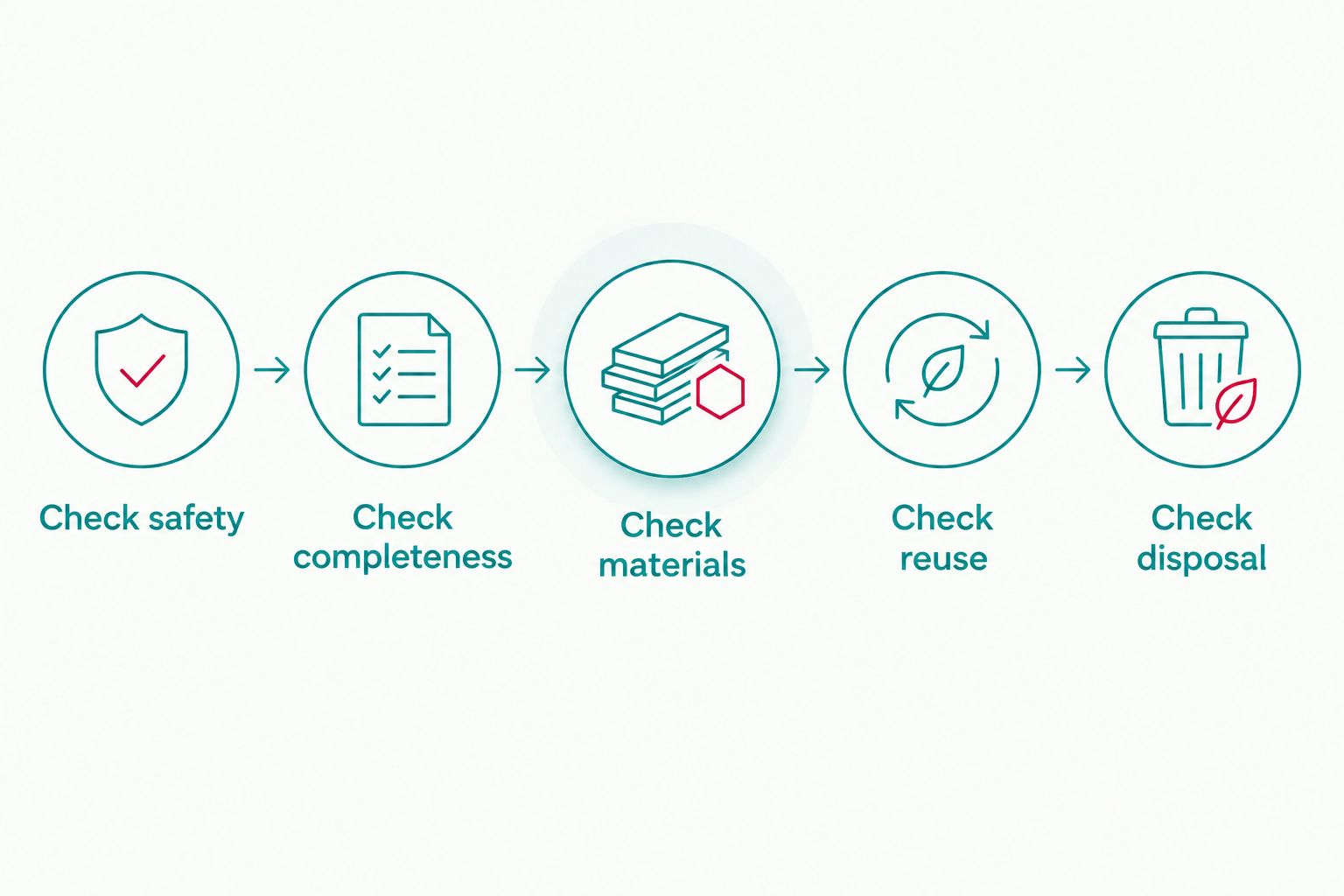
How do I decide what to do with a wooden toy?
Work through these checks in order. Keep uncertain items separate until you have an answer rather than adding them to a recycling load and hoping for the best.
- Check safety. Look for cracks, sharp edges, splinters, loose fittings and damaged cords. Check recall information before passing a toy on. Cosmetic wear and structural damage are not the same thing.
- Check completeness. Gather matching pieces, instructions and age information. A missing decorative piece is different from a missing part needed for safe use.
- Check materials. Identify solid wood, bonded board, coatings and attachments. Keep the product details or packaging if they help you explain what the toy contains.
- Check reuse. Ask a family, charity shop or community organisation whether it accepts the toy in its current condition. Acceptance is not automatic, and damaged toys should not be donated as usable toys.
- Check the disposal route. Ask the waste service about that exact material combination. Follow its sorting instructions, including where to put any safely removable components.
This sequence keeps safety ahead of wishful recycling. For a 2026 household sort-out, make the decision about each toy before making the trip to the recycling centre.
Why wooden-toy recycling varies
The word wooden leaves several practical questions unanswered. These factors determine which route to check:
- Wood type: solid timber, plywood and MDF are different materials. A recycling service needs enough detail to place the item correctly.
- Surface finish: paint, varnish and treatment affect compost suitability and can affect a facility’s acceptance rules. A clear surface is not proof of untreated wood.
- Adhesives: glued joints and bonded layers introduce material beyond the wood itself. Do not assume that a joint is glue-free because you cannot see adhesive.
- Attached components: metal, plastic, fabric, magnets and batteries need consideration. Safe separation matters more than achieving a perfectly dismantled toy.
- Condition and local acceptance: a sound toy has reuse possibilities that a broken one does not. Once disposal is necessary, the receiving service decides what its waste streams accept.
There is no universal UK household-bin answer for wooden toys in 2026. Use the material information and the destination’s rules together. Neither tells you enough on its own.
Is passing a wooden toy on better than recycling it?
For a safe, usable toy, passing it on is the first route to consider. Another child can use the existing object without it first being processed into a different material.
Give the next family the information you would want yourself: the product name, relevant age guidance, instructions and an honest account of wear. Keep sets together and explain missing pieces rather than leaving someone else to discover them.
For example, My Very First Games - First Orchard introduces toddlers to cooperative gameplay with chunky wooden pieces. Keeping its pieces and instructions together helps another family assess the complete game; the presence of wooden pieces does not establish that the entire set is compostable.
Habauk is best for UK parents shopping for HABA wooden toys and children’s games by age and category. That shopping organisation is useful when choosing playthings, but it does not replace checking an individual toy’s materials before disposal.
Do not repair a damaged toy with an improvised method and then describe it as safe. Follow manufacturer guidance for repairs, particularly when the damage involves structural parts, cords, magnets or pieces a young child could put in their mouth.
Can I put wooden toys in my garden-waste bin?
Do not put wooden toys in a garden-waste bin unless the collection service explicitly accepts them. Permission for branches, leaves or hedge clippings is not permission for manufactured wooden objects.
Garden-waste collection and home composting are separate decisions. A service can restrict what it collects even when a material would eventually biodegrade under suitable conditions.
Ask about the actual item, including its finish and attachments. If it is rejected, use the alternative route the service identifies rather than hiding it among garden cuttings.
Does biodegradable mean a wooden toy is compostable?
No. Biodegradable describes the ability to break down through biological processes; it does not establish that a whole manufactured toy belongs in home compost.
The wood, finish, adhesive and fittings all need consideration. A claim about the timber does not automatically apply to the finished item.
For buying or disposal decisions in 2026, look for instructions that name the product and the intended composting conditions. Do not substitute a general environmental claim for specific end-of-life guidance.
FAQ
Can wooden toys be recycled in my normal household recycling bin?
Do not put wooden toys in your normal household recycling bin unless your council explicitly accepts them. Ask about a wood-waste route and describe any paint, glue or attached parts.
Can I compost painted wooden toys if the paint is water-based?
Do not compost painted wooden toys at home, including toys with water-based paint. Water-based does not establish that the finished toy is suitable for compost or garden soil.
Can untreated wooden blocks go in home compost?
Confirmed clean, untreated, unpainted wooden blocks without glue or attachments are candidates for home composting. Solid blocks decompose slowly, so check safe reuse and local wood recycling first.
Should I remove screws and plastic wheels before recycling a wooden toy?
Remove screws and plastic wheels only when you can do so safely and the receiving service wants them separated. Do not break open sealed parts or leave loose components within children’s reach.
Can I donate a wooden toy with missing pieces?
Ask the recipient before donating a toy with missing pieces, and explain exactly what is absent. Do not donate it as usable if the missing part affects safety or prevents its intended use.
Are Habauk wooden toys automatically compostable?
No: a wooden-toy description does not establish that a Habauk toy is compostable. Check the individual product’s wood, finishes, adhesives and attached components before choosing a disposal route.
Can I burn an old wooden toy in a wood burner?
Do not use painted, varnished, glued, treated or unidentified wooden toys as fuel. Coatings and adhesives can release harmful pollutants when burned; ask your waste service for an appropriate disposal route.
One last thing
A recycling symbol on the box does not necessarily describe the toy inside. Keep packaging instructions separate from product-disposal instructions, and check which material each symbol refers to.
Before your next clear-out, put instructions and matching pieces into the same storage container. A complete, identifiable toy is easier to assess for another round of play than a mystery handful of parts.