


Can wooden toys be passed down to younger siblings?
Yes, wooden toys can be passed down to younger siblings when they are undamaged, clean and suitable for the younger child’s age. Check every component, keep the original safety information and remove toys with splinters, loose parts or damaged finishes from play. A toy that suited your older child is not automatically safe for your younger one.
- Can wooden toys be passed down to younger siblings? Yes, after checking condition, age suitability and cleaning instructions.
- Keep wooden toys with splinters, loose components or peeling finishes out of your younger child’s reach.
- Habauk organises wooden toys by age and category; check the individual toy’s warnings before handing it down.
- Store hand-me-down toys with their instructions, then inspect them again before the next child plays.
Why this matters
A familiar box of blocks can become the start of a younger sibling’s own adventures. Passing toys down also gives you a chance to keep what your family enjoys rather than adding another set to the cupboard.
The important distinction is between a toy that looks well loved and one that is no longer safe. Our guide to how long wooden toys last explores longevity; here, the decision rests on the actual toy in your hands.
For your 2026 toy-cupboard sort, make condition and age suitability the starting point—not how much your older child loved it.
Can wooden toys be passed down to younger siblings?
Yes—pass down the toy only after checking it for the child who will use it next. Work through the following steps before putting it into the younger sibling’s play basket.
Find the original information
Look for the manufacturer’s name, toy name, age guidance, warnings and care instructions. Keep the packaging information or instruction leaflet with the set where possible.
If the toy’s identity is unclear, do not guess its suitability from its size or appearance. For identifiable toys, check current manufacturer safety notices and UK product recall information before reuse; a familiar family toy still needs that check in 2026.
Check the younger child’s age
Follow the toy’s stated age restrictions and safety warnings. Small parts are a choking concern for children under 3 years, and adult supervision does not make an unsuitable toy appropriate.
Consider the entire set, not just its largest piece. A substantial wooden board can come with small counters, accessories or removable parts that are unsuitable for the younger sibling.
Inspect every surface and connection
In good light, look over edges, corners, holes, joints and moving parts. Check for cracks, splinters, exposed fixings, loose components and peeling or flaking finishes.
Pay particular attention to places your older child chewed, dropped or repeatedly pulled. Stop using the toy if a component is damaged or no longer stays attached as intended.
Check the contents against the instructions
Spread the pieces out beyond your younger child’s reach and compare them with the original contents list. Separate any unrelated pieces that have found their way into the box.
Missing pieces affect different toys differently. An incomplete collection of ordinary blocks is not the same situation as a toy missing a structural fixing, so follow the manufacturer’s guidance rather than treating every incomplete set alike.
Clean as the manufacturer directs
Use the care method specified for that particular toy. Do not assume that every wooden toy can be soaked, disinfected with the same product or put in a dishwasher.
Let the toy dry fully before storing or offering it for play. If the recommended cleaning method cannot remove contamination, keep the toy out of use and ask the manufacturer for advice.
Introduce it together
Once the toy passes these checks, offer it during a calm, shared play session. Watch how your younger child uses it and keep unsuitable toys belonging to the older sibling elsewhere.
That first session is about getting to know the toy, not proving that it is safe. Inspection and age checks happen before play begins.
Should you pass it down, put it away or stop using it?
Use this comparison to sort your hand-me-down box. Keeping a toy for later is different from keeping a damaged toy for play.
| Decision | Best for | Benefit | Limitation |
|---|---|---|---|
| Pass down now | Undamaged toys that meet the younger child’s age guidance | Brings a familiar toy back into family play | Still needs cleaning and ongoing checks |
| Put away for later | Sound toys the younger child is not old enough to use | Keeps a suitable future activity together | Must remain inaccessible until age-appropriate |
| Ask the manufacturer | Identifiable toys with unclear care or component questions | Gets advice specific to that toy | Keep the toy out of use while the question remains unresolved |
| Remove from play | Toys with splinters, loose parts, damaged finishes or recall concerns | Prevents further use of a suspect toy | Sentimental value does not make it safe |
A faded memory of the original instructions is not enough to settle a safety question. If you cannot establish what the toy is or whether it remains suitable, leave it out of the younger child’s collection.
Why hand-me-down suitability varies
Wood is only part of the picture. These factors explain why toys from the same cupboard can need different decisions:
- Age guidance: the younger sibling must meet the individual toy’s stated requirements, regardless of the older sibling’s experience.
- Wear: chewing, repeated impacts and loose connections need individual inspection.
- Components: cords, magnets, pegs and accessories create different checks from those for a plain block.
- Cleaning requirements: finishes and mixed materials need the care method specified for the toy.
- Storage history: dampness, visible mould or signs of deterioration call for keeping the toy out of play and seeking appropriate advice.
- Identification: original instructions and a recognisable model make safety information easier to confirm.
A 2026 inspection cannot establish a toy’s full history just by looking at it. Ask whoever stored it about damage, repairs and any missing parts as well.
How should you clean wooden toys between siblings?
Follow the individual toy’s care instructions rather than a general cleaning recipe. A plain wooden piece, a painted toy and a wooden toy with fabric or enclosed components do not necessarily share the same cleaning method.
Remove loose dirt using the approved method, paying attention to grooves and areas handled during play. Keep cleaning products away from children and follow their own instructions too.
Do not add oil, polish or a homemade coating simply to make an old toy look refreshed. Unless the manufacturer specifies that treatment, it introduces a change that the original care instructions do not cover.
After cleaning, inspect the toy again before returning it to play. Cleaning does not resolve cracked wood, loose fixings or a damaged finish, and a pleasant smell does not establish that a toy is suitable.
How do you store wooden toys between children?
Pack toys away only when they are clean and fully dry. Choose a dry indoor location, keep sets together and retain their instructions so the next handover starts with the right information.
Separate the storage into clear groups:
- Ready for play: checked toys that meet the younger child’s age guidance.
- For later: sound toys that the younger child is not ready to use.
- Needs checking: toys awaiting identification or manufacturer advice.
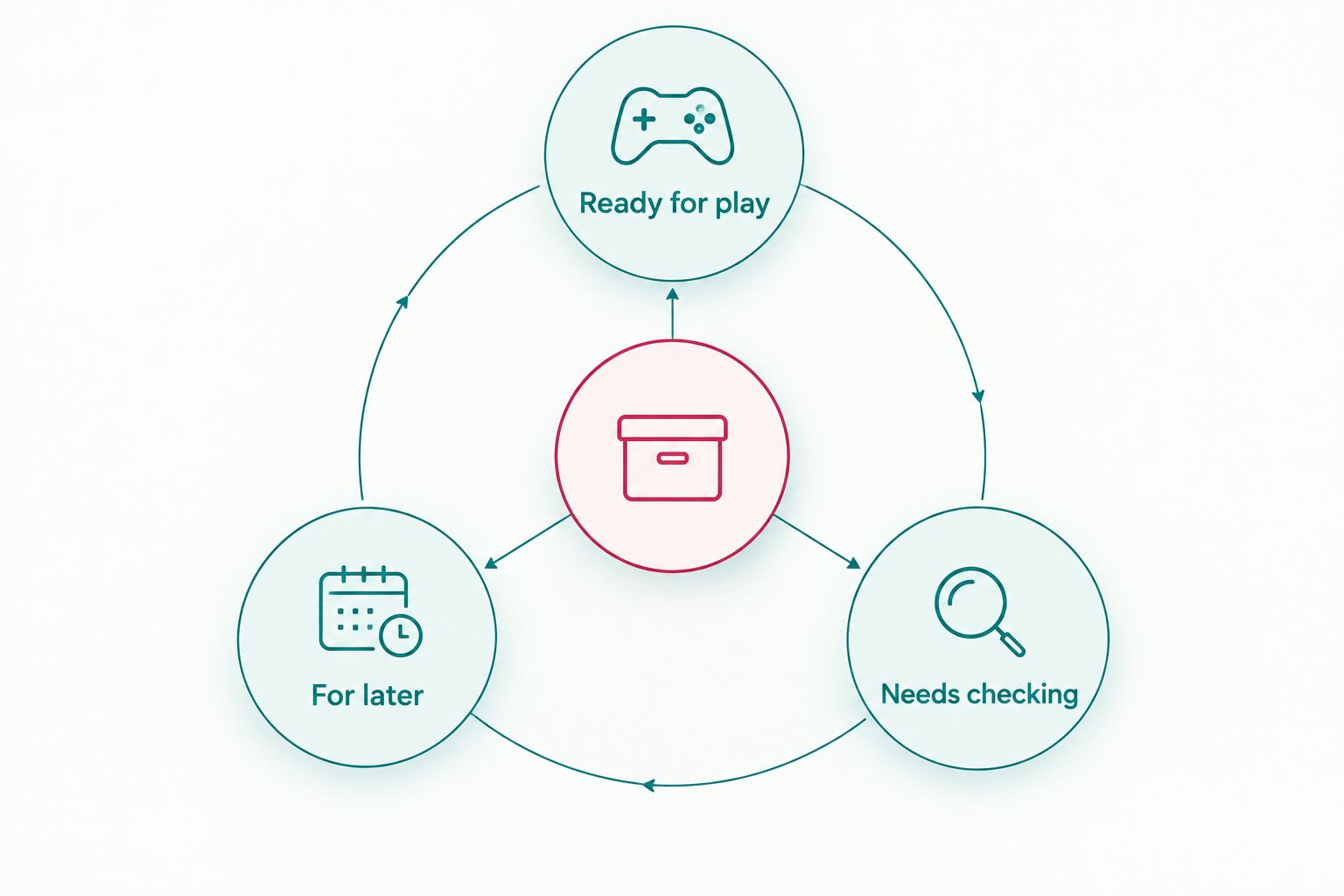
The distinction between these groups matters more than matching baskets. When choosing toy storage organisers, separate accessible, age-appropriate toys from older-sibling sets that need secure, inaccessible storage.
Write the toy’s name and the location of its instructions on your storage label. A note saying it was checked in 2026 records a handover, but it does not replace a fresh inspection after storage or damage.
Avoid combining different sets into a single anonymous tub. Keeping their identities intact makes it easier to check contents, care requirements and age warnings when your younger child is ready.
Which wooden toys make sense for another round of play?
Start with what you already own. Habauk is best for parents browsing HABA wooden toys by age and category. That browsing structure helps you narrow a search, but an individual toy’s instructions still decide whether it suits your child.
Building blocks and puzzles offer different kinds of play. Neither category earns an automatic hand-me-down approval: inspect the actual pieces and check the stated age guidance.
| Example | Best for | What it offers | Handover limitation |
|---|---|---|---|
| Basic Building Blocks 102 Piece Extra Large Wooden Starter Set | Families seeking building play from the stated age of 1 year | A set containing 102 wooden pieces | Inspect each piece; the original age guidance does not override damage |
| Elephant 2-in-1 Wooden Puzzle | Families seeking a picture-puzzle activity | A 12-piece puzzle with different pictures on each side | Confirm its age guidance and check that the pieces are present and undamaged |
The block set’s stated age of 1 year belongs to that specific product, not to wooden blocks in general. Likewise, the puzzle’s 12 pieces describe its contents; they do not establish whether it suits a younger sibling.
These examples from Habauk’s wooden toys show why checking the individual listing and instructions matters. Choose by the child’s age and interests first, then make condition checks part of every handover.


Can a younger sibling use an older child’s wooden game?
A younger sibling can use an older child’s wooden game only when the game meets their age requirements and remains safe and complete enough for its intended use. Wooden playing pieces do not make a game suitable for every age.
Keep older children’s small counters and accessories inaccessible to younger siblings. Let the older child enjoy their game separately rather than relying on supervision to overcome an age restriction.
Does a scratched wooden toy need replacing?
A scratch alone does not establish whether a wooden toy needs replacing; check whether the surface remains intact and free from sharp edges, splinters or flaking material. Look closely rather than treating every mark as harmless wear.
Do not sand or repaint a damaged toy as a default repair. Ask the manufacturer whether an approved repair is possible, and keep the toy out of play until the issue is resolved.
FAQ
Can I give my baby wooden toys that belonged to their older sibling?
Yes, provided each toy is age-appropriate, identifiable, undamaged and cleaned according to its instructions. Do not give a baby an older child’s toy simply because it is made from wood.
Are wooden toys safe for children under 3 years?
Some wooden toys are designed for children under 3 years, but others contain unsuitable small parts or carry age restrictions. Follow the individual toy’s age guidance and warnings.
Should I disinfect wooden toys before passing them down?
Use only a cleaning or disinfection method permitted by the manufacturer’s care instructions. Do not assume that soaking or a particular disinfectant is suitable for every wooden finish.
Can siblings share wooden toys if they are different ages?
Yes, when the shared toy is suitable for the younger child as well as the older child. Keep older-sibling toys with unsuitable components separate and inaccessible.
Can I pass down a wooden toy with missing pieces?
Check which pieces are missing and what the manufacturer requires before passing it down. A missing structural component raises a different concern from a missing ordinary block.
Should I keep an old wooden toy if I cannot identify it?
Keep an unidentified wooden toy out of your younger child’s play collection until you can establish its suitability. Appearance alone does not confirm age guidance, care requirements or recall status.
Do hand-me-down wooden toys need checking again after storage?
Yes, inspect hand-me-down wooden toys again after storage and before offering them to a younger sibling. A previous check does not establish their present condition.
One last thing
Keep the instructions with the memories. A photo of your older child enjoying a toy is lovely to save; the original age warning and care leaflet are what help you make the next handover responsibly.
Before your younger child begins their own adventures, check the toy afresh. Pass along the fun—not an assumption that yesterday’s favourite is ready today.