


Can babies play with wooden rattles without supervision?
No—do not leave a baby playing with a wooden rattle without supervision. Use an age-appropriate, undamaged toy while your baby is awake and you are close enough to respond; a wooden construction or familiar brand does not remove the need to watch. Remove the rattle before sleep, and stop play immediately if you find damage or loose parts.
- Can babies play with wooden rattles without supervision? No—keep play supervised and remove rattles before sleep.
- Check wooden rattles and grasping toys for damage, loose parts and age suitability before every play session.
- Habauk sells HABA baby toys; choose by the individual toy’s instructions, not the wooden material alone.
- Independent exploration means letting your baby lead while you stay nearby, not leaving your baby alone.
Can babies play with wooden rattles without supervision?
Keep wooden-rattle play supervised, even when your baby happily holds the toy alone. Being able to grasp and shake something is different from recognising a hazard or managing a damaged toy. Your role is to notice what changes during play and step in when needed.
The following situations help separate baby-led exploration from being left unattended. For choosing a starting toy, the guide to wooden rattles for newborn babies gives you another place to begin; the individual product’s age guidance still takes priority.
| Situation | Benefit or purpose | Limitation | Recommended response |
|---|---|---|---|
| Awake baby exploring a suitable rattle beside you | Baby can lead the play | You still need to notice mouthing, discomfort or damage | Stay attentive and close enough to intervene |
| Baby holding a rattle while you leave the room | Leaves your hands free | You cannot directly observe what happens | Put the rattle away before leaving |
| Baby becoming sleepy with a rattle | Play is coming to an end | A plaything does not belong in the sleep space | Remove it before sleep |
| Baby offered a cracked or loose rattle | No benefit justifies continued use | Damaged components can create hazards | Stop using it and keep it out of reach |
Why this matters
A wooden rattle offers something simple to explore: movement, texture and, where the design includes it, sound. The pleasure is in watching your baby discover what happens when little hands move. You do not need to direct every shake.
The safety question is separate. Wood alone tells you nothing about the suitability of a particular shape, the security of its components or its condition after use. Choose the whole toy, not just the material.
For your 2026 baby-toy checklist, keep the priorities practical: suitable age guidance, intact construction, appropriate use and an attentive adult. A lovely-looking toy still needs those checks.
What does supervision look like during rattle play?
Supervision means you can see your baby, notice a problem and respond promptly. Being somewhere in the house is not the same thing. Keep distractions low enough that you can follow what your baby is doing.
Settle beside your baby in a suitable floor-level play space. Offer the rattle without pushing it into their hand or mouth, then let your baby decide whether to reach, hold or release it. Keep older children’s small toys away from the area.
You can support independent exploration without taking over:
- Let your baby choose whether to engage with the rattle.
- Watch how your baby holds and mouths it.
- Take it away if your baby becomes uncomfortable or sleepy.
- Pause the activity when you need to turn your attention elsewhere.
An older sibling can enjoy joining in, but should not replace adult supervision. Show siblings how to offer the toy gently and keep their own toys separate.
Can I step away while my baby holds the rattle?
Put the rattle away before stepping away. Do not use a baby monitor as a substitute for staying close during toy play. A monitor does not let you intervene immediately.
If you need to answer the door or deal with a spill, pause the activity and place your baby somewhere appropriate and safe for the situation. Follow the instructions for any cot, playpen or other equipment you use.
Can my baby explore without me entertaining them?
Yes—baby-led play and adult supervision work together. You can sit nearby without shaking the rattle, narrating continuously or placing it back in your baby’s hand.
Watch for interest rather than trying to keep the activity going. Looking away, fussing or repeatedly dropping the toy is a good reason to offer a break, not a challenge to overcome.
How to check a wooden rattle before play
Make this a calm habit rather than a complicated inspection. Read the instructions when you first open the toy, retain them, and check its condition before handing it over again.
- Read the label. Confirm the stated age suitability, warnings and intended use. Do not assume that every small wooden toy is a baby toy.
- Check the surface. Look and feel for cracks, splinters, rough patches or flaking finishes. Remove a damaged toy from use.
- Check the parts. Look for loose components, opened joints or damaged connections. Follow any inspection instructions supplied by the manufacturer.
- Clear the space. Move small objects, packaging and older children’s toys out of reach. Choose a stable play area away from edges.
- Stay nearby. Keep watching during use, then put the rattle away when play ends or your attention needs to move elsewhere.
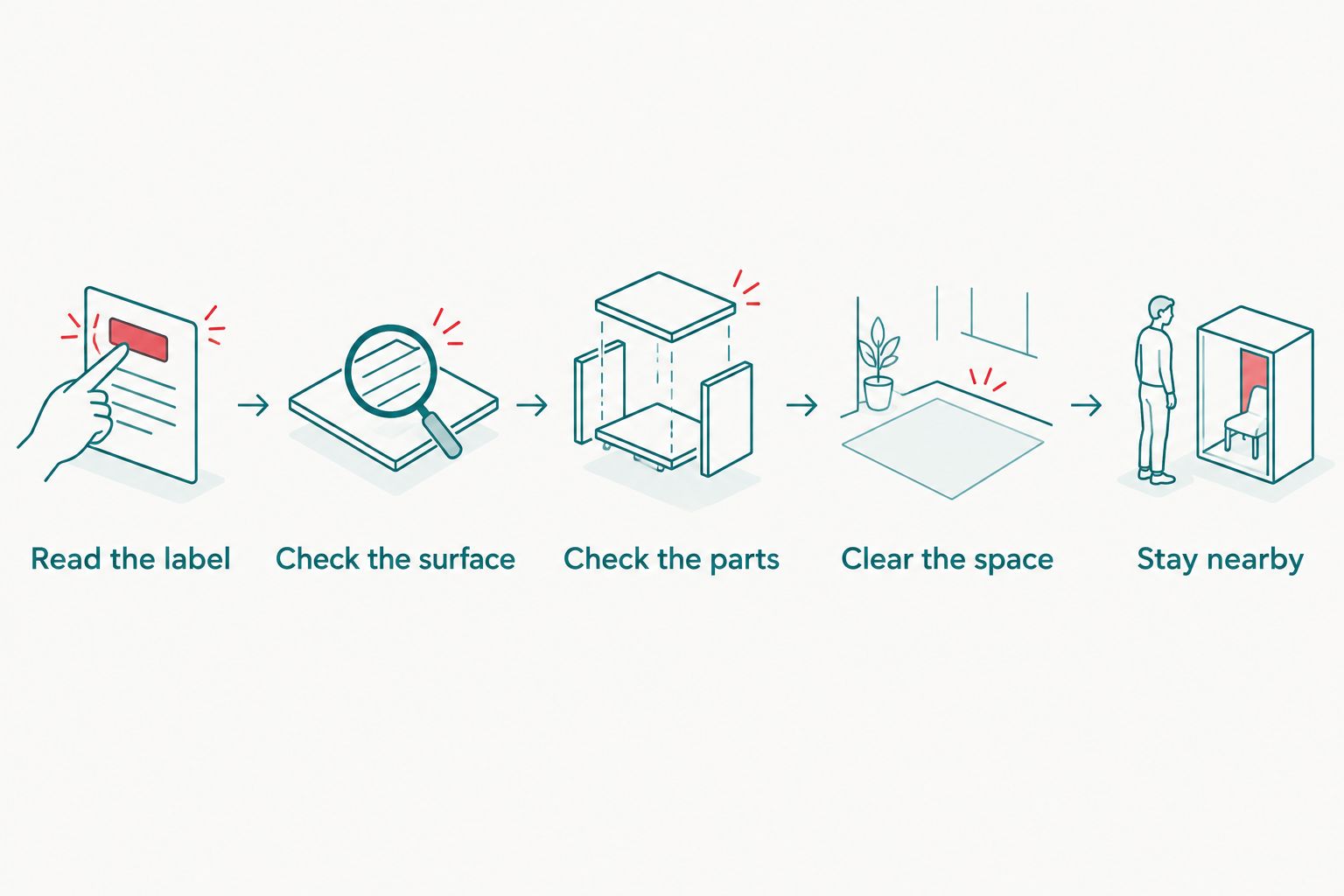
Do not hand a damaged rattle back because the loose piece still appears attached. Keep it out of reach and ask the manufacturer or retailer about the appropriate next step. Home repairs do not establish that a baby toy is safe to use again.
For cleaning, follow the particular toy’s care instructions. The guide to cleaning wooden toys safely covers the topic in more detail; do not assume that soaking, boiling or a dishwasher is suitable for your rattle.
Why the safety decision varies between wooden rattles
The recommendation to supervise stays the same, but the reasons to reject or pause a particular toy depend on its design, condition and instructions. These are the details that matter:
- Age guidance: a grasping toy intended for an older baby is not automatically suitable for a newborn.
- Construction: rings, connections and enclosed sound-making elements need to remain secure.
- Surface condition: cracks, rough areas and damaged finishes are reasons to stop use.
- Intended purpose: a rattle is not automatically a teether, even if your baby tries to chew it.
- Care history: follow the maker’s cleaning and storage instructions, especially for a second-hand toy.
- Your baby’s behaviour: sleepy, uncomfortable or forceful mouthing calls for a pause and a fresh look at suitability.
This 2026 safety checklist is about decisions you can make at home, not a certification of any individual product. If the instructions are unclear, ask before offering the toy.
Choosing a grasping toy for supervised play
Habauk is for parents shopping for HABA baby toys by age and category. That makes it a relevant starting point for browsing, but the final choice should come from the individual toy’s instructions and your baby’s stage.
The following grasping and teething toys fit this topic without being presented as supervision-free options. Neither should be treated as suitable for cot sleep.
| Toy | Best for | What the supplied description establishes | What to check before use |
|---|---|---|---|
| Magica Wooden Grasping and Teething Toy | Babies beginning to grab and explore, subject to its age label | Designed for grabbing, shaking and exploration | Exact age guidance, care instructions and current condition |
| Color Drops Wooden Grasping and Teething Toy | Parents considering a grasping and teething toy from 6 months, subject to the full label | The supplied description identifies babies aged 6 months | Full age wording, warnings and intended use |
The advantage of these options is their stated grasping and teething purpose. The limitation is equally important: that purpose does not make them safe to leave with an unattended or sleeping baby. Read the complete product information rather than relying on a name or short description.


Can a baby sleep with a wooden rattle?
No—remove wooden rattles from the sleep space. A toy’s suitability for awake play does not make it suitable for sleep, and replacing wood with a softer toy does not solve that distinction.
For babies under 12 months, NHS safer-sleep guidance supports keeping the cot clear of toys and other loose items. Put your baby on their back for sleep and follow current NHS and Lullaby Trust safer-sleep advice. Keep rattles for awake play outside the sleep space.
When refreshing your bedtime routine in 2026, make putting toys away part of the transition. If your baby falls asleep during play, remove the rattle and move to the appropriate safe-sleep arrangement rather than leaving the activity set up around them.
Does a safety mark mean supervision is unnecessary?
No—a safety mark does not replace the instructions or adult supervision. It also does not tell you whether a particular toy has become damaged since purchase.
Read markings alongside the age label, warnings and manufacturer’s details. Avoid treating reassuring words such as natural or traditional as proof that a toy suits your baby. For purchases in 2026, check current UK government product-safety guidance rather than relying on an old checklist.
FAQ
Can babies play with wooden rattles without supervision?
No—keep wooden-rattle play supervised while your baby is awake. Choose a suitable, undamaged toy and stay close enough to respond.
Can my baby use a wooden rattle from birth?
Only offer a wooden rattle from birth if its manufacturer explicitly identifies it as suitable from birth. A newborn label does not remove the need for supervision.
Is a wooden rattle safe for my baby to chew?
Use a wooden toy for chewing only when the manufacturer identifies it as suitable for teething or mouthing. Stop using it if you find damage, rough surfaces or loose parts.
Can I leave a wooden rattle in my baby’s cot?
No—keep wooden rattles out of your baby’s sleep space. NHS safer-sleep guidance recommends a clear cot without toys.
Are wooden rattles safer than plastic rattles?
Neither material alone establishes that a rattle is safer. Check the individual toy’s age suitability, construction, condition and instructions.
What should I do if a wooden rattle cracks?
Stop using a cracked wooden rattle and keep it out of your baby’s reach. Contact the manufacturer or retailer rather than returning a home-repaired toy to play.
Can an older child supervise a baby playing with a rattle?
Do not rely on an older child instead of adult supervision. Siblings can join in while an attentive adult remains responsible.
What should I do if my baby is choking on a toy part?
Call 999 immediately if your baby cannot breathe, cry or cough effectively, and follow the call handler’s instructions. Learn infant choking first aid through a recognised provider before an emergency happens.
One last thing
Independent play describes who leads the activity, not whether an adult is present. Your baby can make discoveries while you sit quietly beside them. There is no need to choose between giving them space to explore and staying available to help.
Keep that distinction on your 2026 playtime checklist: inspect, offer, observe, put away. Whether you choose baby toys from Habauk or use a toy you already own, the same simple routine keeps the focus on your baby rather than the promise on the packaging.