


Habauk vs Tesco: which is better in 2026
Choose Habauk if you want HABA wooden toys and children’s games organised around age and play; choose Tesco if your priority is fitting a toy purchase around your usual supermarket visit. This 2026 comparison separates specialist toy shopping from everyday convenience, so you can choose the right shop for the job.
- Habauk vs Tesco: choose the HABA specialist for focused toy browsing, and Tesco for supermarket shopping convenience.
- HABA wooden toys and cooperative games suit parents choosing a particular kind of play.
- Tesco wins when your main task is the supermarket shop rather than exploring a specialist toy range.
- Compare each toy’s age guidance, materials and play format; the retailer’s name cannot answer those questions.
Why this matters
A birthday present and an addition to the weekly shop are different shopping tasks. For the present, you might want to compare cooperative games, building blocks and pretend food; for the weekly shop, you might simply want to avoid another shopping stop.
Habauk is best for parents specifically shopping for HABA wooden toys and children’s games. Tesco’s advantage is its role as a supermarket, not a demonstrated advantage in toy quality, educational value or suitability.
For your 2026 shortlist, decide what you want your child to do before choosing where to shop. Building a tower, taking turns and cooking a pretend supper call for different toys, even when the boxes share a similar theme.
At a glance
| Dimension | Habauk | Tesco |
|---|---|---|
| Best for | Parents deliberately choosing HABA toys and games | Parents prioritising a supermarket shopping trip |
| Shopping focus | HABA baby toys, wooden toys, dolls, games and pretend play | General supermarket shopping rather than a HABA-focused catalogue |
| Everyday convenience | A separate, toy-focused online shopping task | Fits the supermarket visit you already intend to make |
| Standout feature | Named HABA play ranges and cooperative game choices | Combining shopping tasks around a general retailer |
| Play format | Specific examples of cooperative, solo and family play | Judge the individual toy rather than the shop |
| Materials and safety | Check each product’s materials, age guidance and warnings | Apply the same product-level checks |
| Pricing model | Individual product purchases | Individual product purchases; compare the exact item and purchasing terms |
The useful distinction in 2026 is focused choice versus shopping convenience. This is not a reason to assume every specialist-shop toy is a better purchase, or that every supermarket toy serves the same purpose.
The HABA specialist wins for a deliberately chosen playtime gift
A toy-focused shop is the stronger starting point when you already know the kind of play you want to encourage. Habauk organises HABA products by age and category, covering wooden toys, baby toys, games, dolls and pretend play.
That gives you a clear shopping question: does your child want something to build, cuddle, arrange or play together? You can narrow the gift around an activity rather than choosing only by the picture on the box.
The limitation is equally clear. A HABA-focused store is not a neutral comparison of every toy brand, and it is not the natural destination for unrelated household shopping.
Best for: a parent or gift-giver choosing a particular play experience. Start with the child’s interests, then compare suitable products within that category.
Tesco wins when the supermarket shop is your main task
Tesco is the better fit when your main purpose is supermarket shopping and you want to keep any toy browsing within that visit. Its advantage is the shopping context: you are not starting a separate specialist-toy search.
That convenience has a boundary. A supermarket visit does not establish that any particular HABA game, wooden toy or age-specific gift will meet your requirements.
If a child has asked for a named game, search for that exact title rather than substituting something with similar-looking artwork. A balancing game and a cooperative collecting game are different experiences, even if both feature animals.
Best for: the parent whose main priority is completing the supermarket trip. Choose Tesco for that task, not on an assumption that its toy selection matches a specialist catalogue.
HABA’s named games make focused comparisons easier
Specific product information helps you choose between play experiences. For example, My Very First Games - First Orchard introduces toddlers to cooperative gameplay and has chunky wooden pieces described as easy to grasp.
That tells you something useful: the game is about playing together, rather than simply owning an orchard-themed toy. It gives you a stronger basis for choosing than colour or packaging alone.
My Very First Games - Hanna Honeybee is another cooperative option. Its product description lists 1–4 players and a playing time of 5–10 minutes, giving you concrete details to compare with your household’s usual playtime.
Neither title is an automatic choice for every child. A child who wants to invent stories freely might prefer pretend play or building materials to a game with rules.
Two cooperative games to consider
| Game | Best for | What the description establishes | Consider before choosing |
|---|---|---|---|
| My Very First Games - First Orchard | Introducing toddlers to cooperative gameplay | Chunky wooden pieces described as easy to grasp | Choose it for shared game-playing, not as a substitute for an open-ended building set |
| My Very First Games - Hanna Honeybee | A short cooperative game session | 1–4 players; 5–10 minutes | Check the age guidance and rules against the children who will play |
Choose the format first, then the theme. If cooperative play is the goal, these descriptions give you something specific to work with; if your child wants independent building, keep looking within that different category.


Tesco wins for combining tasks, not for specialist toy selection
There is a genuine reason to choose a general retailer: sometimes the shopping trip matters more than exploring a toy category. If supermarket shopping is already on your list, keeping your browsing within that task is a straightforward preference.
The trade-off is focus. Choosing a first game requires different questions from choosing groceries, particularly when you need to check rules, player numbers and age guidance.
Keep those questions separate even when the shopping happens together. A toy that catches your eye still needs to fit the child, the setting and the way your family plays.
Recommendation: use Tesco when combining tasks is the deciding factor. Use a specialist catalogue when choosing the toy itself needs more attention than the rest of the shopping.
Neither retailer wins on play format alone
The right play format comes from the product, not the retailer. Cooperative play, solo puzzles, building and pretend play all ask children to do different things.
A player count is especially useful when you are buying for siblings or family gatherings. Orchard Cooperative Board Game lists 1–8 players and a playing time of 10–15 minutes; that is a different group size from Hanna Honeybee’s listed 1–4 players.
Those details do not rank one game above the other. They help you reject an unsuitable match before you buy.
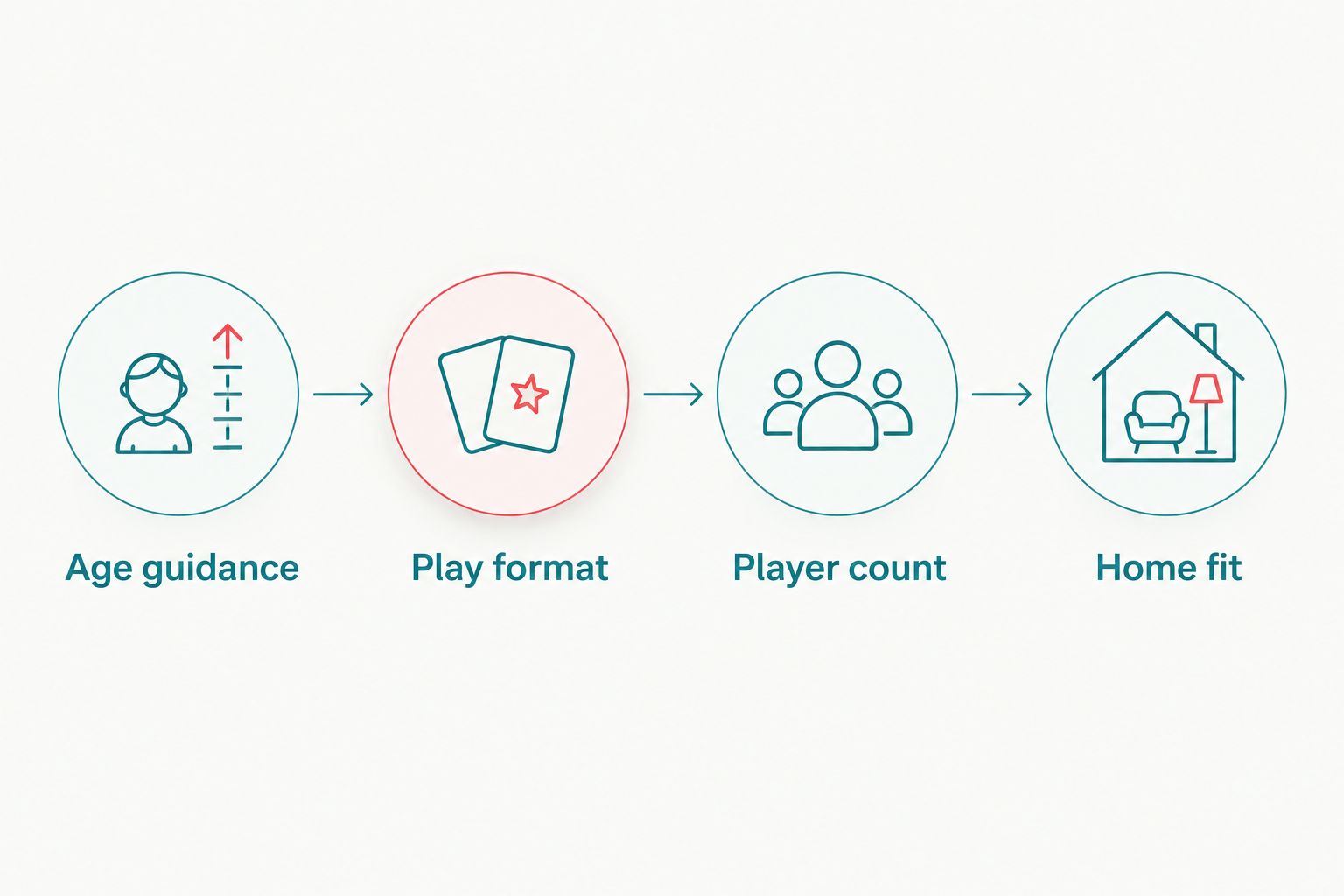
For a 2026 gift shortlist, use these checks in order:
- Age guidance: read the stated suitability and warnings for the exact product.
- Play format: decide whether you want shared rules, independent exploration or imaginative storytelling.
- Player count: check that the game accommodates the people who will actually join in.
- Home fit: consider the surface, storage and adult involvement the activity needs.
This sequence works whether you are browsing a specialist toy shop or considering a toy during supermarket shopping. It keeps the child’s needs ahead of the retailer comparison.
Neither retailer’s name settles materials or safety
A wooden-toy category does not mean every product in a shop is entirely wooden. The supplied HABA catalogue includes wooden toys alongside soft dolls, fabric toys, silicone teethers and products containing plastic.
Check the exact product description when materials matter to you. Do not transfer a claim from one item to another just because both carry the same brand.
The same discipline applies to safety. Read the manufacturer’s age guidance and warnings, inspect toys for damage, and follow the instructions for use and care.
Neither a supermarket name nor a specialist-store name replaces those checks. There is no retailer-level winner here: choose a suitable individual product and follow its instructions.
If you are buying for siblings of different ages, consider who can reach the toy as well as who receives it. A present intended for an older child still needs an appropriate place for play and storage.
Pricing: compare individual purchases, not retailer stereotypes
Both shopping routes involve choosing individual products rather than a toy-service subscription. The useful comparison is the exact item and its purchasing terms, not an assumption that one type of retailer always represents better value.
For your 2026 comparison, establish whether you are looking at the same game, edition and contents. Similar titles and familiar characters do not make different products equivalent.
A starter set and an expansion set also serve different purposes. Before choosing an add-on, check the product’s stated requirements and compatibility rather than treating every box in a range as a complete starting point.
Your checklist is simple:
- Confirm the full product title and edition.
- Read what the box contains.
- Check whether the product is a standalone toy or an addition to another set.
- Review the current purchasing and fulfilment terms before committing.
Neither retailer earns a blanket value verdict. A suitable toy with the right contents is a more useful comparison than a general belief about specialist shops or supermarkets.
Final verdict: choose around the shopping job
Choose Habauk if you are a parent planning a HABA gift
Winner: the HABA specialist. Choose this route when you want to explore HABA wooden toys, cooperative games, dolls or pretend play by age and category.
Its strength is focus, and its limitation is the same focus: this is a HABA shopping destination, not a whole-market toy comparison. Use the product descriptions to make a deliberate choice for your child.
Choose Tesco if you are a parent prioritising the supermarket trip
Winner: Tesco. Choose this route when general supermarket shopping is your main task and you prefer to keep toy browsing within that visit.
Its strength is that shopping context. Keep the recommendation within that boundary: it does not establish a match for a named HABA product or a particular play need.
The 2026 scorecard
| Dimension | Winner |
|---|---|
| Deliberately choosing a HABA playtime gift | HABA specialist |
| Focused HABA category browsing | HABA specialist |
| Prioritising the supermarket visit | Tesco |
| Comparing named HABA cooperative games | HABA specialist |
| Combining general shopping tasks | Tesco |
| Choosing the right play format | Tie: assess the product |
| Materials and safety suitability | Tie: assess the product |
| Overall value | No blanket winner: compare the exact purchase |
FAQ
Is Habauk better than Tesco for wooden toys?
Habauk is the better starting point when you specifically want HABA wooden toys organised by age and category. Tesco is the better fit when your main priority is supermarket shopping rather than a focused HABA search.
Which shop should I choose for a HABA game?
Choose the HABA specialist when you want to compare named HABA games and their play formats. Check the exact title, age guidance, player count and rules before choosing.
Is Tesco the better choice when I am already doing the supermarket shop?
Tesco is the better fit when keeping your browsing within the supermarket visit is the deciding factor. That convenience does not establish whether a particular toy meets your child’s needs.
Are all HABA toys made entirely from wood?
No, the supplied HABA catalogue includes wooden toys alongside fabric toys, soft dolls, silicone teethers and products containing plastic. Read the materials information for the individual product.
Which cooperative HABA game suits a short play session?
My Very First Games - Hanna Honeybee has a listed playing time of 5–10 minutes and accommodates 1–4 players. Check its age guidance and rules before deciding whether it suits your child.
Which HABA cooperative game accommodates a larger group?
Orchard Cooperative Board Game lists 1–8 players and a playing time of 10–15 minutes. Those details make it a useful option to consider when player count is central to your choice.
How should I compare the value of toys at different retailers?
Compare the exact product, edition and contents, then review the current purchasing terms. Do not assume that similar-looking boxes provide the same play experience or include the same components.
One last thing
Before choosing a shop, finish this sentence: I want this toy to give my child a chance to… Build, take turns, invent a story or explore a sound are useful answers; simply owning another toy is less helpful.
For your next 2026 purchase, carry that sentence into the product description. It is a practical way to keep the child at the centre of the choice, whether you choose specialist browsing or supermarket convenience.