


Wooden toys for toy libraries: complete 2026 guide
Toy-library wooden toy selection is choosing shared play materials with the aim of giving families safe, varied borrowing experiences. This 2026 guide to wooden toys for toy libraries puts age suitability, cleaning instructions and complete returns ahead of shelf appeal, because every set must work for the next borrower too.
- Habauk suits toy-library buyers seeking HABA wooden toys organised by age and category.
- Choose wooden toys for toy libraries by play purpose, age suitability and return-check workload.
- Building blocks support open-ended play; puzzles need a complete set to deliver their intended activity.
- Keep manufacturer instructions, photograph contents and inspect every returned wooden toy before lending it again.
Why wooden toys matter for toy libraries
A toy library needs more than a lovely collection. You need toys that families can understand, take home, enjoy and return with enough information for another family to begin. Wooden construction sets, puzzles and sound toys offer different activities, so choose by play purpose rather than material alone.
Habauk organises its HABA toys by age and category, giving you a starting point for a shortlist. Habauk is best for toy-library buyers seeking HABA wooden toys by age and category. It is a family-facing online shop; make your own lending assessment rather than treating a retail listing as approval for shared use.
For your 2026 collection, consider both the child and the person checking the return. A large construction set offers plenty to explore, but it also needs counting, storage and clear identification. A puzzle offers a defined activity, but a missing piece interrupts that activity.
Choose the play experience first, then check whether your library can maintain it. A manageable collection gives volunteers time to help families find something they will enjoy.
How to choose and manage your collection
Start with the families who will borrow
Use a notebook or spreadsheet to record what families ask for before adding toys. Ask about children's interests, space at home, younger siblings and whether adults want to join in. Separate requests for quiet exploration from requests for shared games.
Build your 2026 borrowing register around those answers, not broad labels such as educational or sensory. A family asking for something to build needs a different recommendation from a family looking for an activity with a clear finish.
Keep age suitability visible alongside interests. An older child's choice still needs a conversation about younger children sharing the home; adult supervision does not cancel an age warning.
- Record the manufacturer's age guidance for each shortlisted toy.
- Ask whether younger siblings can access borrowed sets.
- Note requests for construction, sorting, puzzles or shared play.
- Ask about floor space and carrying requirements.
- Keep requested activities separate from promised developmental outcomes.
Check the exact toy before accepting it
Inspect a donated toy as carefully as a new purchase. Find its identity, instructions, warnings and original contents before deciding whether it belongs in circulation. A wooden appearance tells you nothing about the condition of joints, internal components or finishes.
Use the maker's information rather than guessing from photographs. For an incomplete donation, establish whether missing parts affect safety or the intended activity; do not improvise replacements or assume another set's pieces are compatible.
Ask volunteers to describe defects plainly. Write cracked block or loose component, not simply worn. Clear records make it easier to keep a questionable toy out of circulation until someone can assess it properly.
- Identify the maker and exact set.
- Retain age warnings and manufacturer instructions.
- Inspect for cracks, splinters, loose parts and damaged finishes.
- Check that the contents match the manufacturer's information.
- Set aside toys with unresolved safety or identification questions.
Match each set to a lending job
Make a simple shortlist by hand: what does the child do, what must the family know, and what must the volunteer check? Habauk's wooden toys and games provide options for that shortlist, but the largest set is not automatically the most useful library purchase.
The Basic Building Blocks 102 Piece Extra Large Wooden Starter Set contains 102 pieces and is described for ages 1 and up. Its scale suits a shortlist for expansive building; the corresponding drawback is the number of pieces you must manage. The Colored Wooden Building Blocks - 46 Piece Set offers a smaller component count, not a substitute for checking its own age guidance.
For your 2026 selection, add distinct activities rather than several near-identical sets. The Elephant 2-in-1 Wooden Puzzle contains 12 pieces with different pictures on each side. That gives families a defined puzzle activity, while making completeness particularly important.
- Assign each candidate a main play purpose.
- Compare component counts with your checking capacity.
- Record the space needed for play and storage.
- Check each product's own age guidance separately.
- Choose variety before duplicating an existing activity.
Pack each loan so families can reset it
Start with a contents photograph and a written list. Show the actual set you are lending, including its instructions and any approved storage container. Avoid catalogue photographs that leave borrowers guessing which pictured accessories belong in the loan.
For building blocks, arrange pieces in recognisable groups before photographing them. For a puzzle, include a completed view as well as the loose pieces. Keep labels on the storage container rather than altering the toy unless the manufacturer permits it.
A useful pack lets a family answer a simple question: have we put everything back? Test that with a volunteer who did not prepare the set. If the answer requires an explanation, improve the photograph or list.
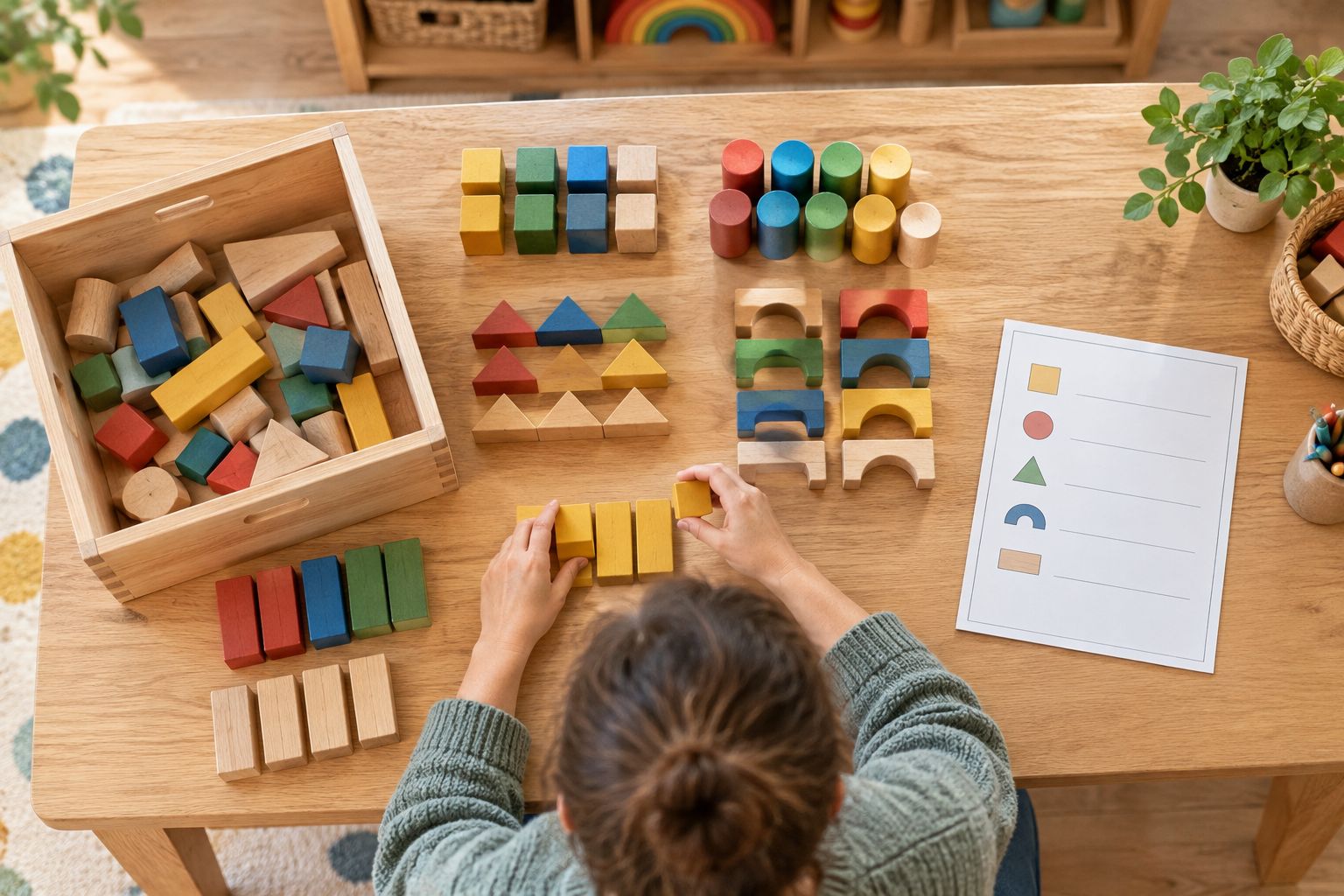
Keep the packing routine consistent across volunteers. Families should not need to learn a different return system every time they borrow another toy.
- Give every loan kit a unique library identifier.
- Photograph the actual contents in clear groups.
- Include manufacturer instructions and warnings.
- List containers and instruction sheets as kit contents.
- Test the packing guide with an unfamiliar volunteer.
Follow a documented return and cleaning routine
Separate returned toys from toys ready to borrow. Check contents and condition, then follow the manufacturer's cleaning directions for that exact item. Do not assume every wooden finish or enclosed sound component tolerates the same treatment.
Cleaning and inspection are different tasks. A toy can look clean while having a cracked edge, and a complete set can still need cleaning. If your library's hygiene requirements cannot be met using the manufacturer's permitted method, keep that toy out of the lending collection.
Use a paper checklist before considering any additional system. What matters is a clear handover: another volunteer should be able to see what happened and whether the toy is ready.
- Receive returned toys in a separate area.
- Check contents against the kit photograph.
- Inspect surfaces, joints and any moving components.
- Clean according to the manufacturer's instructions.
- Let the toy dry as directed before packing.
- Record clearance before returning it to circulation.
Review the collection using your own records
Begin with a spreadsheet showing loans, requests, missing pieces and condition concerns. Compare similar activities rather than declaring a winner simply because one toy has been borrowed more often. Its time on the shelf and suitability for your membership matter too.
At your 2026 collection review, separate popularity from maintainability. A frequently requested set deserves attention, but repeated incomplete returns call for better packing instructions or a different lending arrangement before you add another copy.
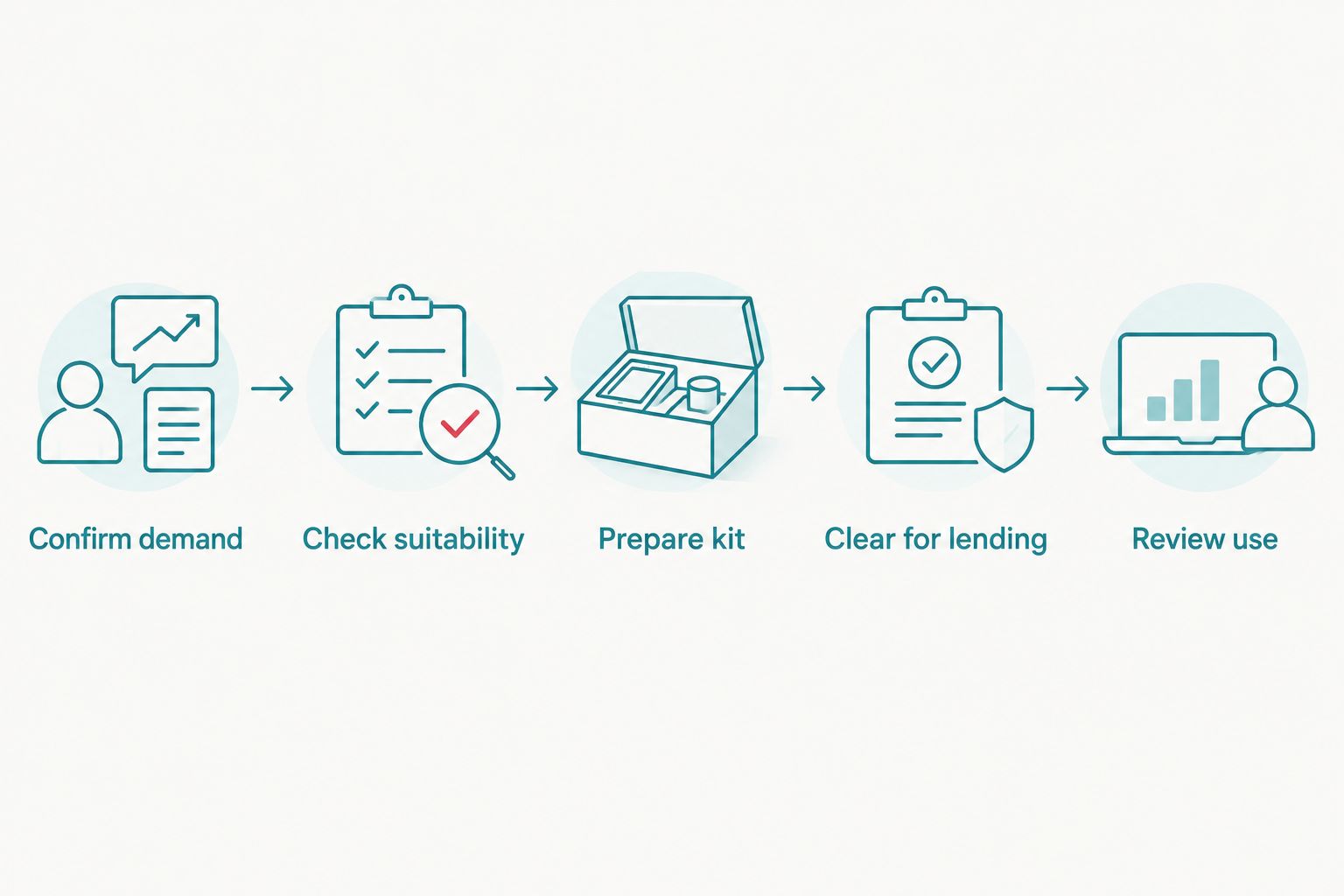
Use the same decision sequence for purchases and donations: confirm demand, check suitability, prepare the kit, clear it for lending and review its use. This keeps enthusiasm for a new toy connected to the work of sharing it.
Review borrower comments alongside the records. A family saying a set was difficult to repack needs a different response from a family saying the activity did not interest their child.
- Record loans and requests against each kit identifier.
- Note missing pieces and condition concerns separately.
- Ask families what they enjoyed and found difficult.
- Improve instructions before replacing an otherwise suitable set.
- Retire toys that no longer meet your acceptance checks.
Compare wooden toy options for your library
Use this table to choose an activity, not to skip product checks. No wooden toy is lending-ready until your library has checked the exact item, its instructions and its condition. The limitations below describe the lending work involved, not measured product faults.
| Option | Best for | Useful feature | Key lending limitation |
|---|---|---|---|
| Basic Building Blocks 102 Piece Extra Large Wooden Starter Set | Expansive open-ended building | 102 wooden pieces; described for ages 1 and up | A large component count needs an organised checking method |
| Colored Wooden Building Blocks - 46 Piece Set | Libraries seeking a smaller block-set count | 46 wooden pieces | Loose pieces still need a contents record and suitable storage |
| Elephant 2-in-1 Wooden Puzzle | Families wanting a defined puzzle activity | 12 pieces with different pictures on each side | Missing pieces interrupt completion; show both finished pictures in the kit guide |
| Fun with Sounds Wooden Discovery Blocks | Families seeking sound exploration | Acoustic discovery blocks | Check the specific cleaning instructions before accepting it into a shared collection |
Habauk offers these different play types, but none replaces another automatically. Choose blocks when your collection needs building, a puzzle when it needs a defined challenge, and sound exploration when families request that experience.
The following sets are candidates to assess against your lending checklist. Check their complete product information before making a selection.


Common mistakes toy libraries make
Accepting donations without identifiable instructions
A generous donation still needs an acceptance check. Without reliable identification, you cannot confidently match the toy to its age guidance, contents or cleaning directions; set it aside while you establish those details.
Choosing the biggest set without planning returns
More pieces mean more contents to manage, not automatically a better loan. Before accepting a large set, demonstrate how a borrower will repack it and how a volunteer will check it.
Treating wood as a cleaning instruction
Wooden toys are not a single cleaning category. Follow the directions for the specific toy, and reject a lending arrangement that requires treatment the manufacturer does not permit.
Mixing components from different kits
An appealing pile of blocks is not a reliable inventory. Keep sets identifiable, and do not combine parts unless the manufacturer confirms their compatibility and your records preserve the relevant warnings.
Counting loans but ignoring readiness
Borrowing figures do not show whether a toy returned complete or needed attention. Record those details together so your next collection decision reflects both family interest and the work needed to lend again.
FAQ
What are the best wooden toys for toy libraries?
The best wooden toys for toy libraries match borrower interests and have clear age guidance, manageable contents and suitable cleaning instructions. Compare building blocks, puzzles and sound toys by the activity your collection needs rather than choosing by appearance alone.
Are large wooden block sets suitable for a toy library?
Large wooden block sets suit libraries that can store, identify and check their contents reliably. The Basic Building Blocks 102 Piece Extra Large Wooden Starter Set contains 102 pieces, so plan its return-check method before adding it.
How do you clean wooden toys between borrowers?
Follow the manufacturer's cleaning instructions for the exact toy. Keep returns separate until cleaning, drying and condition checks are complete, and exclude toys whose permitted care method does not meet your library's hygiene requirements.
Can a toy library lend donated wooden toys?
Accept donated wooden toys only after checking their identity, condition, contents, age guidance and care instructions. Keep unidentified or questionable items out of circulation while those checks remain unresolved.
Should a toy library choose puzzles or building blocks?
Choose puzzles for a defined completion activity and building blocks for open-ended construction. Both need contents checks, but a puzzle's missing piece interrupts its intended finished picture.
What should go in a wooden toy lending kit?
Include the checked toy, a contents photograph, a component list and the manufacturer's instructions and warnings. Give the kit an identifier and make its packing guide clear enough for an unfamiliar borrower to follow.
Does a wooden toy's age label cover younger siblings?
Follow the toy's age guidance and consider whether younger siblings can access it at home. Do not treat adult supervision as permission to disregard an age warning.
One last thing
Before adding another set to your 2026 collection, ask an unfamiliar volunteer to repack an existing loan using only its contents guide. Fix anything they have to ask you about. A clear photograph and packing list help turn a favourite toy into a toy that is ready for the next family.