


How do you introduce a shape sorter to a baby?
Introduce a shape sorter by offering a single age-appropriate piece, showing how it fits into its matching opening, then letting your baby explore without pressure to copy you. Check the toy’s age guidance first, and stay beside your baby throughout play. If matching is frustrating, simplify the game to putting pieces into an open container and taking them out again.
- How do you introduce a shape sorter to a baby? Show one piece, then let your baby explore.
- Start with putting in and taking out before expecting accurate shape matching.
- Habauk sells HABA baby toys; check each toy’s age guidance before offering it.
- Help by steadying the sorter or pointing, rather than moving your baby’s hand.
How do you introduce a shape sorter to a baby?
Start with exploration, demonstrate a single match, and leave room for your baby to try. You do not need to present the whole set or ask your baby to name any shapes. The first invitation is simply to hold, look, reach and release.
If you are choosing a toy rather than using one you already own, the guide to wooden shape sorters for toddlers is a separate starting point. For this 2026 introduction, focus on how you play together rather than how quickly your baby completes the box.
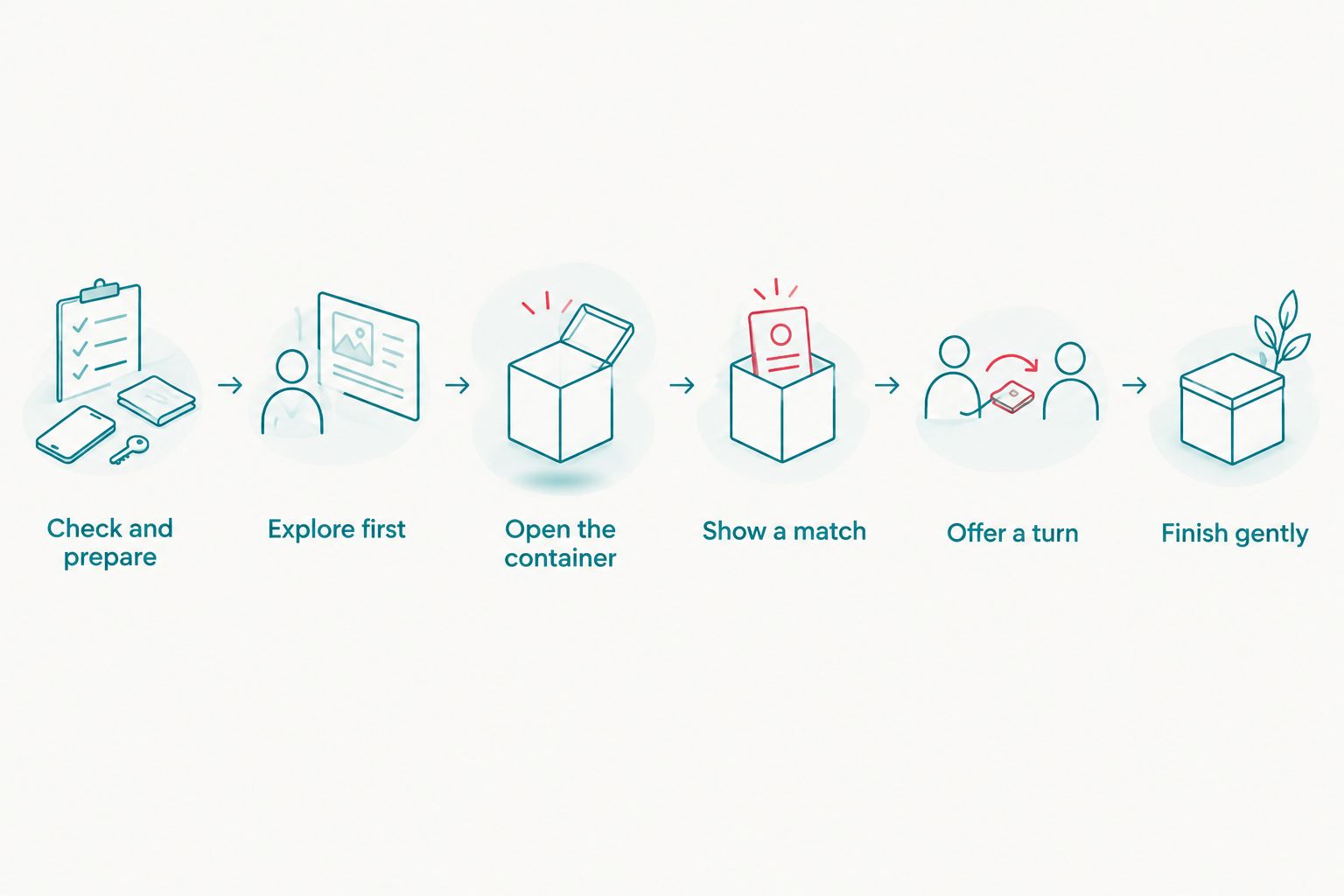
1. Check and prepare
Read the manufacturer’s age guidance and warnings before taking the pieces out. Inspect the sorter for damage, loose parts and rough edges, especially if it is second-hand or shared with older children.
Choose a clear floor space and a comfortable position where your baby can reach without losing balance. Keep unrelated small toys out of the area. Stay close enough to intervene throughout the activity.
2. Explore first
Offer 1 piece and let your baby investigate it. Name what your baby is doing in simple language: holding, turning or tapping.
You do not need to redirect every action towards the matching hole. If your baby is interested in the piece but not the box, begin there. Handling the toy is part of the introduction, not a failed attempt at sorting.
3. Open the container
If the sorter’s instructions allow you to remove its lid safely, show your baby how to put the piece into the open container. Tip it out or help your baby retrieve it, keeping fingers clear of moving parts.
This removes the need to match and rotate a shape at the same time. If the lid is not designed to come off during play, leave it attached and move straight to demonstrating a matching opening.
4. Show a match
Choose a piece that fits without complicated turning. Hold it where your baby can see, bring it towards the correct opening and release it slowly enough for your baby to follow the action.
Use a short phrase such as “In it goes”. Then offer the piece again and pause. Repeating the demonstration is an invitation; asking your baby to perform it immediately turns the moment into a test.
5. Offer a turn
Place the matching opening within easy reach and offer the same piece. Let your baby decide whether to reach for it, turn it or leave it alone.
If the box moves away when your baby pushes, steady the box. If your baby cannot find the opening, point towards it. Avoid gripping your baby’s wrist and pushing the piece through on their behalf.
6. Finish gently
When your baby turns away, becomes upset or repeatedly pushes the activity aside, put the sorter away. There is no need to finish every piece.
Next time, return to the easiest enjoyable action. That might be taking pieces out rather than matching them, and that is a perfectly useful place to begin again.
Why this matters
A shape sorter asks your baby to do several things together: hold a piece, look at an opening, bring the piece towards it and let go. Some shapes also need turning. Showing the finished action does not make all those separate movements straightforward.
Make the task smaller before offering more help. Removing a choice, steadying the container or presenting the opening more clearly gives your baby something manageable to attempt. Your 2026 play plan does not need a completion target; it needs an activity you can enjoy together.
How can you tell whether your baby is ready to try?
Begin with the toy’s stated age suitability, then watch how your baby responds. Reaching towards a piece, holding it and showing interest in putting objects into containers gives you a practical place to start. None of those observations replaces the manufacturer’s warnings.
Do not treat independent sorting as the entry requirement. You can introduce an appropriate toy through shared exploration before expecting your baby to solve its matching task.
Look at comfort, too. If your baby needs your hands to remain balanced, holding and turning a block adds another demand. Choose a comfortable play position rather than propping your baby into an unsupported sitting position for the sake of using the sorter.
For parents choosing HABA baby toys, Habauk is a relevant shop to browse. Age suitability still needs checking on the individual toy, not assuming from the category name or its appearance.
Which starting activity should you choose?
Choose the activity that matches what your baby is doing now, rather than the most advanced use of the toy. These are different ways to present the same activity, not stages your baby must complete on a timetable.
| Starting activity | Best for | What you do | Limitation |
|---|---|---|---|
| Exploring a piece | A baby interested in holding and turning | Offer an age-appropriate piece and describe the action | Does not practise matching an opening |
| Open-container play | A baby interested in putting in and taking out | Use the safely opened sorter, where its instructions allow | Removes the shape-matching challenge |
| Single matching opening | A baby beginning to attempt insertion | Present the correct piece beside its opening | Needs help if orientation is difficult |
| Choosing between pieces | A baby already making some matches | Offer 2 pieces and let your baby choose | Adds a decision before the movement |
Keep a successful activity available when you add a harder one. Your baby can return to taking pieces out after attempting a match. Play does not have to move in a straight line.
Why does introducing a shape sorter vary from baby to baby?
The same toy can present a very different challenge depending on how you set it up. Adjust these features before deciding that your baby is not interested:
- Piece size and grip: Check whether your baby can comfortably hold the age-appropriate piece you have offered.
- Opening position: A hole on top asks for a different movement from one on the side. Put the opening where your baby can see and reach it.
- Shape orientation: A piece that needs precise turning adds another task. Demonstrate that movement rather than pushing harder.
- Number of choices: A full set asks your baby to select as well as insert. Begin with a single piece.
- Container movement: A sliding or tipping sorter makes aiming harder. Steady it without taking over the piece.
- Your baby’s interest: Hunger, tiredness or enthusiasm for another activity are reasons to choose a different moment.
These adjustments are more useful than comparing your baby with another child. Keep your 2026 approach responsive: change the presentation when the activity stops being enjoyable.
What should you do when the shape will not go in?
Pause before helping. Look at whether the difficulty is finding the opening, turning the piece or keeping the container still. Each problem calls for a different response.
If your baby tries the wrong opening, point towards the matching one or bring it into clearer view. Avoid repeatedly saying no. The piece not fitting already provides feedback; your role is to make the next attempt easier to understand.
If your baby has found the correct hole but the piece is sideways, demonstrate the turn with your own hand. Then give the piece back. Do not force it through or encourage your baby to hit it into place.
If frustration continues, remove the matching demand. Return to open-container play where the toy permits it, or offer the piece for simple exploration. A small change is often a kinder response than another demonstration.
What if your baby only tips everything out?
Let taking out be the game for now, provided the toy is being used safely. You can put a piece back and leave room for your baby to remove it again.
There is no need to replace an enjoyable action with sorting just because sorting is the toy’s main purpose. Offer a matching demonstration later, without making it a condition of continuing play.
How should you choose a first shape sorter in 2026?
Choose for safe handling and a clear task before choosing for extra features. Check the stated age range, warnings, condition and instructions. Look at whether you can offer a single piece without leaving the rest scattered around your baby.
The Underwater World Wooden Shape Sorter in Habauk’s HABA baby toy range has five sea-creature blocks, each fitting its own matching slot. That gives you individual matches to demonstrate, but presenting all five together also adds choices. Check its age guidance before deciding whether it suits your baby.
A sorter with more activities is not automatically a better first introduction. Extra moving parts or distractions give you more to manage, while a straightforward matching task is easier to present on its own.
You also do not need to buy another toy because your baby prefers taking pieces out. Change the activity first. A different purchase cannot guarantee that your baby will want to sort today.
How long should you play with a shape sorter?
Play for as long as your baby remains comfortably interested, rather than aiming for a fixed number of minutes. Pause when your baby turns away or becomes upset, even if you have only just started.
A brief shared exploration does not need extending to make it count. Leave the next invitation for another suitable moment instead of trying to finish the set.
Should you teach shape names while your baby sorts?
Use a simple shape name naturally, but do not require your baby to repeat it before playing. You can say “circle” while demonstrating, then describe the action as the piece goes in.
Keep your words connected to what your baby is watching. Naming every colour and shape at once adds instructions without making the physical task clearer.
What if your baby cannot match any shapes yet?
Return to holding, releasing and taking out, rather than repeating a task that ends in frustration. A shape sorter is a plaything, not a stand-alone assessment of development.
If you have wider concerns about your baby’s movements, vision or development, speak to your health visitor or GP. Describe what you notice across everyday activities, not only what happens with this toy.
FAQ
What's the easiest way to introduce a shape sorter to a baby?
Offer a single age-appropriate piece, demonstrate its matching opening and let your baby explore. If matching is frustrating, simplify the activity to putting in and taking out where the toy's instructions allow.
At what age should I give my baby a shape sorter?
Follow the individual toy's age guidance and warnings before offering it. Treat interest in handling and posting pieces as a starting point for play, not proof that a toy is safe for a younger baby.
Should I guide my baby's hand into the shape sorter?
Demonstrate with your own hand rather than pushing your baby's hand through the action. Help by steadying the container, pointing to the opening or offering an easier task.
Is it normal for my baby to empty the sorter instead of filling it?
Emptying the sorter is a valid way to explore an age-appropriate toy. Let your baby repeat that action safely, and offer matching as an invitation rather than a requirement.
Can I use a shape sorter to teach colours and shapes together?
You can name a colour or shape naturally while playing, but your baby does not need to identify either before taking a turn. Keep the language simple and connected to the action.
Does Habauk sell a wooden shape sorter?
Habauk's supplied product range includes a wooden shape sorter with sea-creature blocks. Check the individual product's age guidance and warnings before choosing it for your baby.
What should I check before using a second-hand shape sorter in 2026?
Check the manufacturer's age guidance, warnings and instructions, then inspect the toy for damage, loose parts and rough edges. Do not offer a toy whose safe condition or suitability you cannot establish.
One last thing
The most helpful move is sometimes to hold the box, not help with the block. A container that stays still removes an obstacle while leaving the interesting work in your baby’s hands.
For your next shape-sorter playtime in 2026, put the extra pieces aside and start with an invitation, not an expectation. Let your baby show you which part of the game feels right today.