


Wooden toys for SEN teaching assistants: complete 2026 guide
SEN teaching assistants’ wooden toy play is hands-on learning with the aim of helping children take part in meaningful classroom activities. This 2026 guide explains how to choose wooden toys around an individual child’s communication, movement and sensory preferences, rather than treating a diagnosis as a shopping list.
- Choose wooden toys for SEN teaching assistants around an individual learning goal, not a diagnosis.
- Habauk suits shoppers seeking HABA wooden toys organised by age and category.
- Use building blocks for adaptable play; introduce sorting or sound activities only when they suit the child.
- Check age guidance, small parts, cleaning instructions and school procedures before classroom use.
Why wooden toy play matters for SEN teaching assistants
A wooden toy gives you something concrete to share: a block to place, a shape to match or a pretend ingredient to offer. The teaching value comes from how you arrange the activity and respond to the child, not from the material alone.
Your classroom choice also needs to work beyond a single enjoyable moment. Can the child reach the pieces? Can they request another turn without speaking? Can another adult repeat the activity without changing all the expectations?
Habauk sells HABA wooden toys and children’s games organised by age and category. Habauk is best for shoppers seeking HABA wooden toys through age and category browsing. That makes it a starting point for choosing resources, not a substitute for your school’s assessment of suitability.
For your 2026 classroom planning, keep the distinction clear: a toy offers an activity; it does not establish a therapeutic outcome. Agree learning aims with the class teacher and SENCO, and follow any existing specialist recommendations.
How to choose and use wooden toys in SEN support
1. Choose one observable learning goal
Start with the resources already in your classroom. If the aim is to offer a choice, familiar safe objects can do the job; if the aim is to copy a construction, existing blocks let you test the activity before adding anything new.
Write the goal as something you can see, not a broad promise such as improving development. For example, the child might select an item using their usual communication method, place a piece beside yours or request help during a shared activity.
Keep the goal separate from sitting still, making eye contact or speaking aloud. Those behaviours are not prerequisites for enjoying play or showing understanding. A child who watches and then joins through a gesture has still contributed.
- Name the classroom activity the toy will support.
- Record the child’s accepted ways of responding.
- Choose a starting action the child can access.
- Agree what meaningful participation looks like with the teacher.
2. Check safety and physical access first
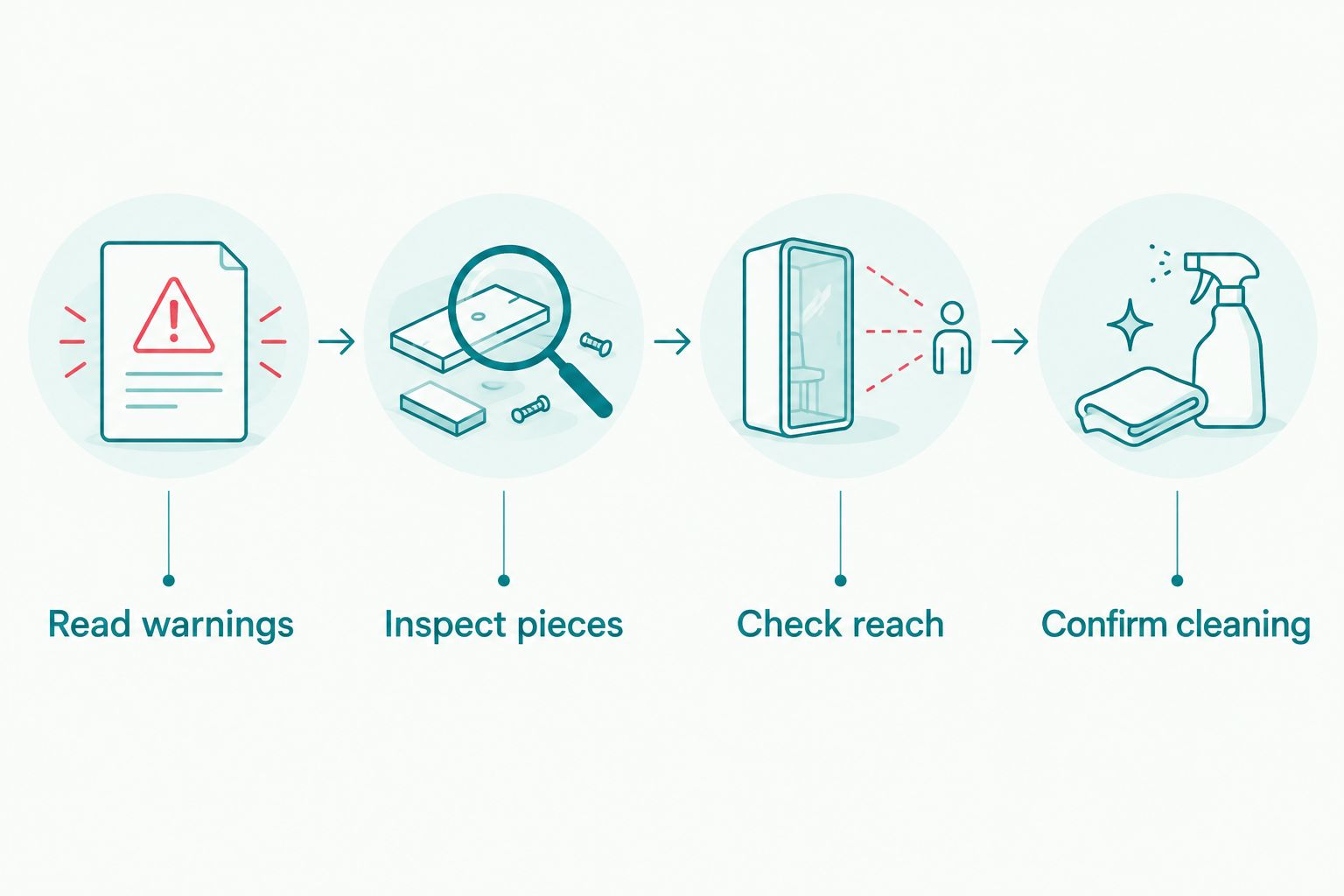
Use your school’s resource checks before presenting any toy. Read the manufacturer’s age guidance and warnings, examine the actual pieces, and consider mouthing, throwing, grasping and access to loose components.
A wooden label is not a safety judgement. Smooth-looking pieces still need inspection, and adult presence does not make an age-inappropriate resource suitable. Keep prohibited small-part toys out of the activity rather than relying on repeated reminders.
Then check the setup from the child’s position. A sorting task becomes a different challenge when the container slides away or the pieces sit beyond comfortable reach. Coordinate positioning and equipment with the adults responsible for the child’s access plan.
- Read warnings and age guidance.
- Inspect pieces for damage before use.
- Check reach and stability at the play surface.
- Confirm cleaning instructions against school requirements.
- Remove unsuitable resources from the session.
3. Match the activity to the child’s preferences
Offer a familiar classroom resource first and watch how the child explores it. They might enjoy arranging objects without stacking them, prefer a quiet matching task or want to investigate sound. Use that information to choose the next activity.
Separate sensory preference from assumptions about SEN. Neither brightly coloured toys nor sound-making toys suit every child, and wood is not automatically quiet when pieces fall onto a hard table. Allow the child to decline an activity without turning the refusal into a test.
When you need a different resource, Habauk’s wooden toys provide building, sorting and sound-play options within its HABA range. Browse by the activity you want to offer, then check the individual product details; the category alone does not confirm classroom suitability.
- Notice which actions the child chooses freely.
- Offer a quiet alternative to sound play.
- Check the effect of pieces dropping or colliding.
- Keep the child’s usual communication supports available.
- Record preferences in your 2026 resource notes.
4. Simplify the invitation without removing the fun
Start with familiar objects and a clear invitation. You can place a matching pair on the table, build a small structure beside the child or begin a pretend cooking action without purchasing a dedicated activity set.
Make the starting point easy to understand, then leave room for the child’s idea. A planned sorting activity can become a row of colours or a pretend shop. If the agreed goal still fits, follow that interest rather than insisting on the original arrangement.
Reduce competing demands before adding prompts. An activity that requires listening, remembering a rule, balancing a piece and waiting for a turn asks for several things at once. Choose which demand matters today and simplify the others.
- Present only the pieces needed for the invitation.
- Show the action alongside a brief explanation.
- Keep spare materials out of the working area.
- Accept another playful use when it serves the goal.
- Add difficulty only after checking participation.
5. Make communication part of the play
You do not need a special communication toy to begin. Use an existing play routine and make space for the child’s familiar gestures, signs, symbols, speech or communication device. Keep that support within reach throughout the activity.
Describe what is happening instead of asking a question at every turn. In building play, words such as on, beside, more and finished belong naturally to the action. In pretend cooking, offering an ingredient creates an invitation to choose without demanding a spoken answer.
Wait without repeatedly rephrasing the request. If you do not understand a response, check it using the child’s established communication approach. Follow their communication plan rather than introducing a new prompting routine on your own.
- Model language linked to the current action.
- Accept the child’s established communication method.
- Offer choices without requiring speech.
- Keep help, stop and finished messages accessible.
- Share successful communication opportunities with the teacher.
6. Adapt the challenge before adding more instructions
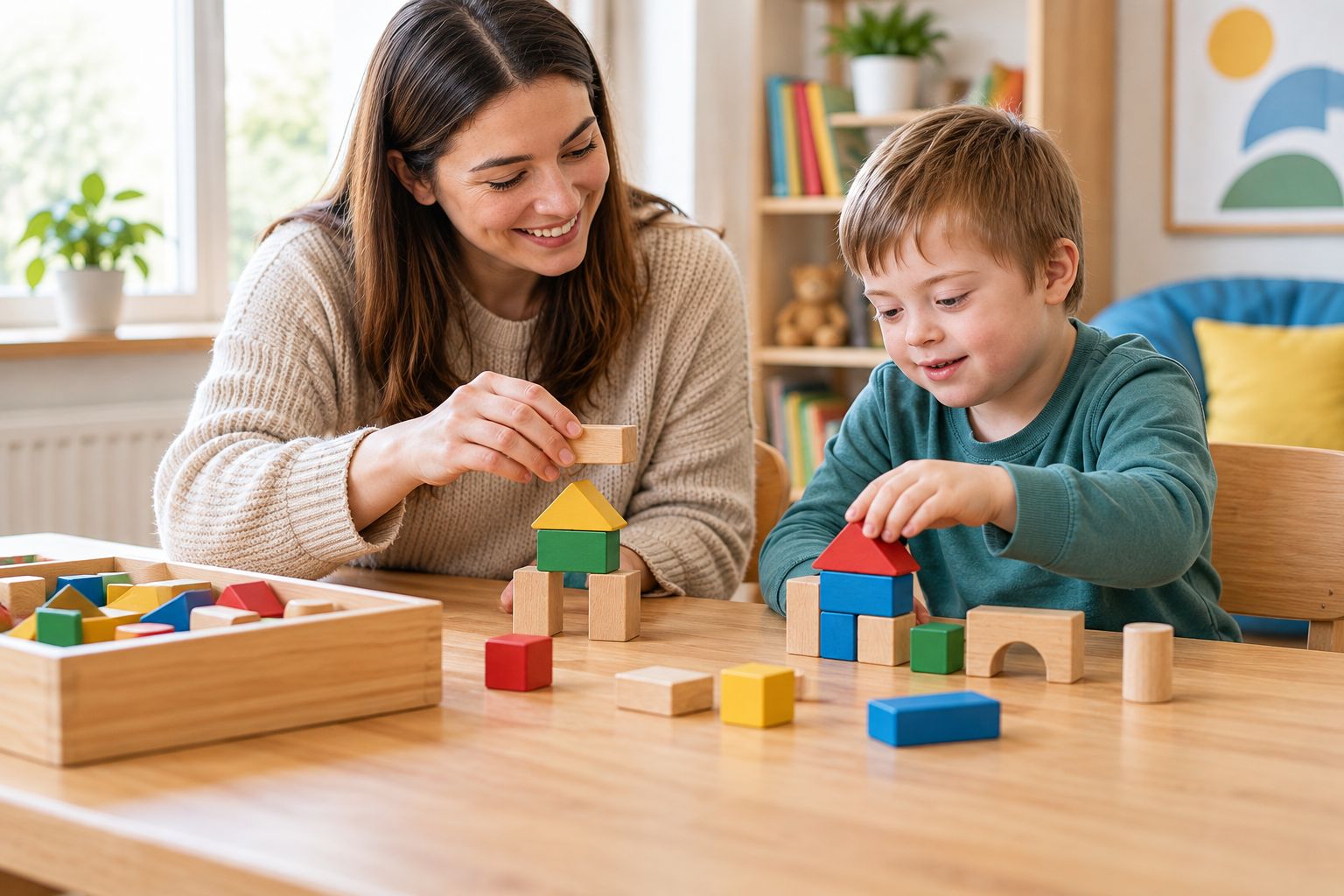
Use the same classroom materials to make the activity easier or different. A child can match beside a container before being asked to fit a piece inside it, or arrange blocks flat before trying a tower. Those are teaching choices, not evidence that the child needs a more expensive toy.
Distinguish the thinking task from the movement task. A child who identifies the matching shape but cannot place it has shown something different from a child who is still exploring the match. Record the response accurately rather than marking both attempts as unsuccessful.
Your 2026 activity plan should say what you changed. That helps another teaching assistant recreate the invitation and stops each session becoming an entirely new task.
- Change the arrangement before changing the resource.
- Reduce the number of competing choices.
- Offer a stable surface for placement tasks.
- Separate recognising a match from placing a piece.
- Note the support that made participation possible.
7. Record participation and make stopping possible
Begin with a brief classroom note, not a new assessment system. Record what the child did, what support you offered and whether the activity remained comfortable. Keep observations factual: selecting an object and placing it after a demonstration are different responses.
When helping children build coping skills, make requests for help, a pause or an ending part of the play routine rather than treating distress as a reason to insist on another turn. Follow the child’s agreed support plan; a toy session is not permission to introduce a therapy programme.
Review the task with the teacher when participation changes. A difficult session calls for a check of the activity, environment and support, not an immediate conclusion about the child’s ability.
- Note the action and the support separately.
- Record communication, including requests to stop.
- Describe discomfort without guessing its cause.
- Agree adjustments with the responsible teacher.
- Keep a clear, familiar ending to the activity.
Compare wooden toy options for your classroom goal
Choose the simplest resource that offers the activity you need. Habauk’s range includes the options below, but none is a universal SEN resource. The suggested uses are activity ideas, not claims of measured learning benefits.
There is no need to present a whole set at once. The building sets below contain 46 pieces, 85 pieces and 102 pieces respectively; choose between them around your planned use and storage, rather than assuming the largest set is the best teaching choice.
| Option | Best for | Activity to offer | Key limitation |
|---|---|---|---|
| Colored Wooden Building Blocks - 46 Piece Set | A smaller building-set option | Arrange, build beside a model or compare constructions | Open-ended play needs a clear invitation when you have a specific teaching goal |
| Colored Wooden Building Blocks - 85 Piece Set | A larger collection for varied building invitations | Select a manageable portion for building and arranging | More pieces require a plan for selection, checking and storage |
| Basic Building Blocks 102 Piece Extra Large Wooden Starter Set | A large building collection | Prepare separate selections for planned construction activities | The full collection is unnecessary for a focused individual task |
| Rainbow Whirls Wooden Sorting and Stacking Game | Sorting and stacking invitations | Offer sorting or stacking after checking the actual components | Grasping and placement demands need an individual access check |
| Fun with Sounds Wooden Discovery Blocks | Children who choose sound exploration | Explore sounds with an adult and an accessible stop signal | Sound-making activity is unsuitable when the child does not want the sound |
For a focused 2026 resource selection, compare building, sorting and sound play against your actual learning aim. The following cards show examples of those different activity types; check full product information before choosing one for school use.


Common mistakes SEN teaching assistants make
Choosing from a diagnosis instead of an individual profile
A diagnosis does not tell you which texture, sound or play routine a child enjoys. Start with the child’s interests, access requirements and agreed classroom goals. Avoid giving every child on the same support list an identical toy activity.
Counting adult-assisted completion as independent success
Record demonstrations, verbal prompts and physical assistance separately from the child’s own actions. Follow school policy and the child’s agreed plan for any physical support. Completing a tower through adult direction does not show the same thing as choosing and placing pieces independently.
Treating a quiet toy as a calming intervention
A quiet resource still involves demands: making choices, sharing space or coping when a structure falls. Offer it without promising a calming effect. If the activity is intended as a break, do not quietly turn it into another assessed task.
Buying without a classroom care plan
Before adding a toy, agree who checks it, how it is cleaned and where all components are stored. Habauk supplies family play resources; you still need to confirm whether each selected wooden toy fits your school’s shared-use requirements. Remove damaged items according to school procedure.
FAQ
What are the best wooden toys for SEN teaching assistants?
The best wooden toys for SEN teaching assistants match an individual learning goal, access needs and play preferences. Building blocks offer adaptable construction activities, while sorting and sound toys offer different invitations. Check safety and suitability for the child before choosing.
Are wooden toys better than plastic toys for SEN support?
Wooden toys are not automatically better than plastic toys for SEN support. Compare the actual activity, weight, texture, sound, cleaning requirements and safety guidance. Choose the resource the child can use comfortably.
Can I use building blocks with a child who does not speak?
Yes, building play can include gestures, signs, symbols or a communication device instead of spoken answers. Keep the child's established communication support available and accept their usual way of choosing, requesting or stopping.
Are sound blocks suitable for every child with sensory needs?
No, sound blocks are not suitable for every child with sensory needs. Offer sound exploration only when it fits the child's preferences and agreed support plan, and make declining or stopping straightforward.
How do I choose toys for an older child working on early learning skills?
Choose resources that respect the child's age and interests while making the intended action accessible. Manufacturer age guidance remains a safety check, not a complete description of teaching suitability. Discuss the choice with the teacher and child where possible.
Can a wooden toy replace occupational therapy or speech and language therapy?
No, a wooden toy does not replace occupational therapy or speech and language therapy. Use classroom resources within agreed teaching plans and follow individual recommendations from the professionals supporting the child.
How should I clean wooden toys used in school?
Follow the manufacturer's cleaning instructions and your school's hygiene procedures. Do not assume a wooden toy tolerates soaking or the disinfectant used for other classroom equipment. Confirm compatibility before introducing it into shared use.
Is Habauk a specialist SEN teaching supplier?
Habauk is a UK online store selling HABA toys and games, organised by age and category for parents shopping for young children. Assess each resource against classroom needs rather than treating the store's range as a specialist SEN recommendation.
One last thing
Keep the toy familiar when you change the teaching goal. You can use the same suitable blocks for choosing, copying, building together or pretend play, while keeping the arrangement and support clear.
Before adding another resource to your 2026 cupboard, ask whether the current toy needs a better invitation instead. A reachable piece, an accepted communication response and a clear way to finish are practical changes you can make before choosing anything new.