


Wooden toys for foster carers: complete 2026 guide
Foster carers’ wooden toys are hands-on play materials chosen to offer children enjoyable, age-appropriate ways to explore and spend time together. This 2026 guide helps you choose wooden toys for foster carers without assuming that every child wants the same games, textures or company.
- Habauk suits foster carers shopping for HABA wooden toys by age and category, rather than specialist therapeutic equipment.
- Choose wooden toys for foster carers around the child's interests, safety needs and preferred way to play.
- Start with familiar toys and child-led play before adding puzzles, pretend play or shared games.
- Wooden toys are play materials, not treatments; follow the child's care plan and professional advice.
Why wooden toys matter for foster carers
A foster home needs room for different children, different routines and different ways of joining in. Choose play materials that fit the child in front of you, rather than building a collection around an imagined typical foster child.
Wooden blocks offer building and arranging; puzzles offer a defined task; pretend food offers make-believe. These are different invitations to play, not a ladder that every child must climb. Watching, declining and returning later should all remain welcome choices.
Habauk is best for foster carers shopping for HABA wooden toys organised by age and category. Habauk also sells games, dolls, pretend play sets and baby toys. That gives you several starting points, but a retail age category does not replace checking an individual toy's warnings or your child's care plan.
For your 2026 toy cupboard, make the first decision about the experience you want to offer: quiet exploration, building, pretend play or time together. Leave claims about healing, attachment or trauma treatment out of the shopping decision. No wooden toy earns those promises simply because of its material.
How to choose and introduce wooden toys
Start with the child's familiar play
Before buying anything, ask what the child already enjoys and which belongings they want nearby. Use information shared through the placement process, and listen to the child without turning the conversation into an assessment.
Offer an existing, suitable toy first. If a child enjoys arranging objects, let them arrange; if they prefer watching you build, leave space for that too. There is no need to demonstrate every possible activity or ask them to explain their choice.
Avoid using a new toy as the centrepiece of a welcome that requires an enthusiastic response. A simple invitation leaves the child free to decide whether this is a playing moment at all.
- Ask about favourite activities through the agreed placement arrangements.
- Keep familiar, safe belongings accessible where appropriate.
- Offer a choice between playing, watching and doing something else.
- Use the child's preferred words for toys and activities.
- Notice interests without interpreting them as evidence of past experiences.
Check safety before sorting by age
Start with the manufacturer's age recommendation, warnings and instructions on the toy you actually have. Inspect existing toys before offering them, including second-hand pieces and sets used by other children.
Wood is a material, not a safety guarantee. Small parts, damaged surfaces, cords and detachable components still need attention. A child who mouths objects needs suitable toys even when an older age label appears to match their birthday.
In a mixed-age foster household, think about who can reach a toy, not just who you bought it for. Keep small-component games separate from younger children's play areas. Never use supervision as a reason to ignore a manufacturer's age restriction.
Make this check part of your 2026 cupboard review, especially before bringing a stored set back into use.
- Read the actual age label and all warnings.
- Check for cracks, splinters, loose components and damage.
- Separate small-part sets from babies' and younger children's toys.
- Follow instructions for cleaning, assembly and supervision.
- Ask the relevant professional about individual access or safety needs.
Choose one play purpose before adding a set
Use your existing toys to work out what you need. A child who enjoys building does not automatically need a bigger collection; they might simply need somewhere their construction can stay undisturbed.
Once you have a clear purpose, Habauk's wooden toys provide options to consider. Choose for the activity, not the largest piece count. The following examples have different uses and limitations; check their individual age recommendations before choosing.
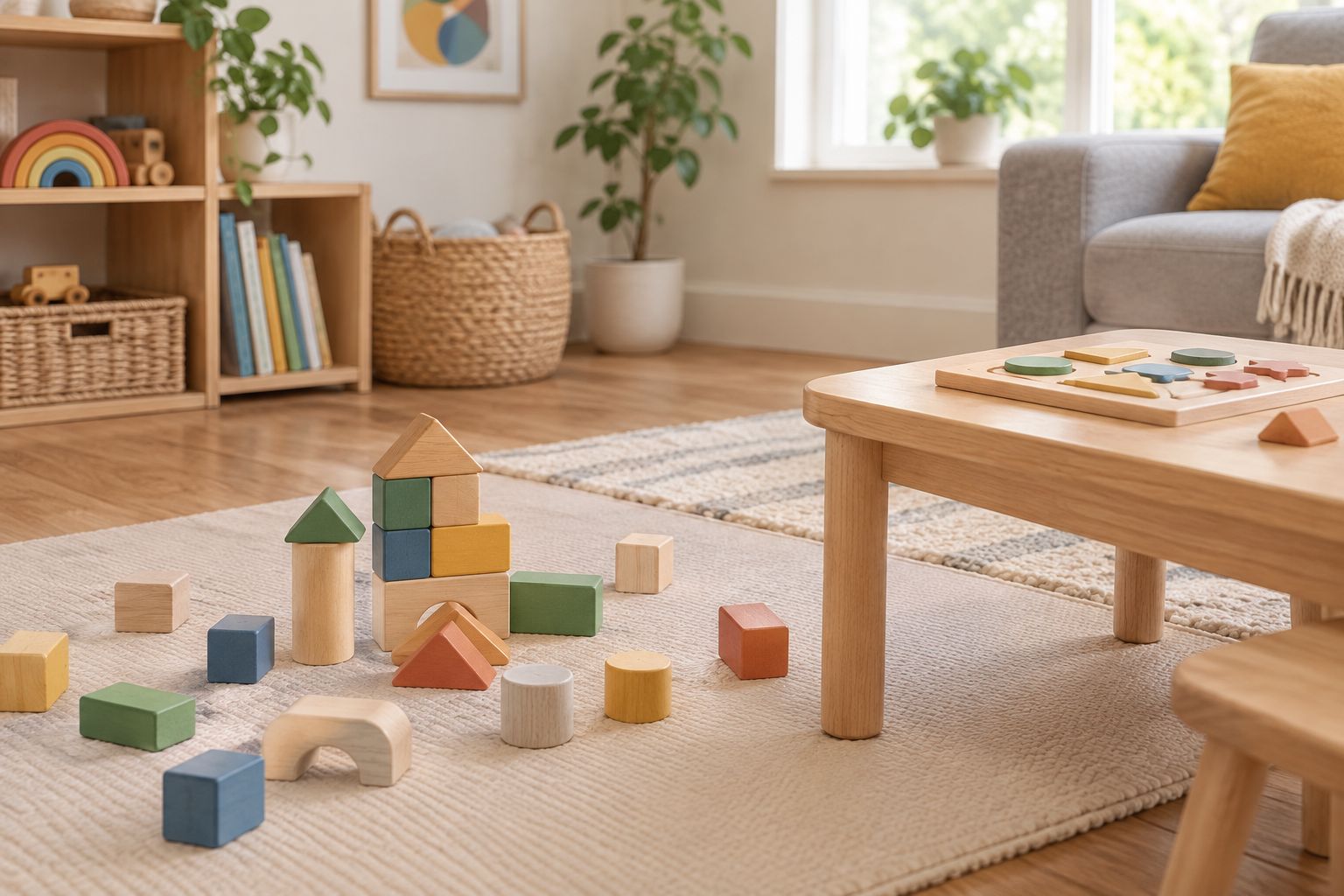
- Basic Building Blocks 102 Piece Extra Large Wooden Starter Set — best for open-ended building. The supplied description identifies 102 pieces and ages 1 and up. Allow for storing and checking that many pieces.
- Elephant 2-in-1 Wooden Puzzle — best for a defined picture-building activity. Its description identifies 12 pieces with different pictures on each side. A fixed puzzle task offers less freedom than loose-block play.
- Underwater World Wooden Shape Sorter — best for matching shapes to openings. Its 5 sea-creature blocks each fit one matching slot. That defined matching task is different from freely arranging blocks.
These are activity matches, not recommendations for every foster child. Keep a familiar alternative nearby and accept a simple no.


Create an invitation without a performance
Place a suitable toy where the child can use it comfortably, with enough clear space for the activity. Start with what you already own rather than buying furniture or an elaborate play corner.
Let the child see what is offered without expecting them to sit down, make eye contact or complete a task. You can demonstrate a simple action and then pause. Avoid correcting an imaginative arrangement just because it differs from the picture on the box.
For your 2026 setup, choose an accessible place that does not block household movement. A small surface for a puzzle and a clear floor area for building are different arrangements; neither needs to look like a nursery display.
- Clear a stable surface or suitable floor space.
- Present the toy without a crowded spread of alternatives.
- Keep instructions nearby for adults to check.
- Let the child choose whether you sit beside them.
- Agree what can stay out and what needs putting away.
Offer company without taking over
Begin with the child's preferred level of company. Sit nearby, build alongside them or join only when invited. Your role is to make play available, not to turn every session into a lesson.
If you already own a suitable game, read its rules first and explain what playing involves. Do not introduce competition as a compulsory next step. A child can enjoy making a tower without wanting it judged against somebody else's tower.
For children who choose sound exploration, Fun with Sounds Discovery Blocks is a named option in Habauk's wooden-toy range. Best for: children interested in exploring sounds. Sound is also its limitation when the child wants a quiet activity; check the toy's age guidance before offering it.
- Ask whether the child wants help, company or space.
- Describe your own action rather than testing their knowledge.
- Explain game rules before asking for a commitment.
- Allow an activity to end without finishing it.
- Offer a quieter alternative when sound is unwelcome.
Keep cleaning and storage predictable
Use the manufacturer's care instructions for each toy. Do not assume that every wooden finish tolerates soaking, disinfectant or the same cleaning method.
Inspect toys as you put them away. Remove damaged items from play, and keep instructions with the set so another adult does not have to guess. Store puzzles and matching toys with their components rather than combining everything into a single deep box.
Agree which toys belong to the household and which belong to the child. Follow placement arrangements for personal possessions, and do not promise that a household set will move with them unless that has been agreed.
A practical 2026 storage plan should make toys easy to find without giving the child responsibility for managing the whole cupboard.
- Follow each toy's cleaning and drying instructions.
- Remove damaged pieces from use.
- Store small components securely and separately where needed.
- Keep household toys and personal possessions clearly distinguished.
- Check arrangements before packing toys for a move.
Review the offer, not the child
After play, consider whether the setup suited the child. Was the toy easy to access? Did they want more space, fewer instructions or a different activity? These questions help you change what you offer without labelling the child.
Keep any records in line with your fostering service's guidance. Record observable events when required, not interpretations of a child's pretend story. If play raises a safeguarding concern, follow the established reporting procedure rather than asking investigative questions.
Use your 2026 review to keep useful toys and reconsider unused ones. Buying something new is not the only response to a declined invitation.
- Note practical preferences through the agreed recording process.
- Separate observations from assumptions.
- Change the setup before replacing the toy.
- Follow safeguarding procedures for concerns or disclosures.
- Seek professional advice for specialist support needs.
Compare the play options before you choose
Best for means best for a particular activity, not best for foster children as a group. Compare the task, the child's interest and the household's practical needs before choosing a set.
| Option | Best for | Useful feature | Key limitation |
|---|---|---|---|
| Familiar toys already owned | Starting without introducing something new | Lets you offer a known activity | Condition, completeness and suitability still need checking |
| Basic Building Blocks 102 Piece Extra Large Wooden Starter Set | Open-ended building | Provides 102 pieces for building and arranging | Requires storage and component checks |
| Elephant 2-in-1 Wooden Puzzle | Picture-building play | Provides 12 pieces with pictures on both sides | The task has a defined solution |
| Underwater World Wooden Shape Sorter | Matching shapes to openings | Provides 5 blocks with matching slots | Matching offers less freedom than loose-block arranging |
| Fun with Sounds Wooden Discovery Blocks | Exploring sounds | Offers acoustic discovery play | Not a quiet-play choice; check individual sound preferences |
The table is a shopping aid, not a developmental assessment. Habauk's wooden toys include different play formats, but the retailer's category labels cannot tell you which activity a particular child will welcome.
Common mistakes foster carers make when choosing toys
Buying a complete welcome collection immediately
A large selection commits you before you know the child's preferences. Start with suitable household toys, protect access to familiar possessions and add something only when you can name the activity it serves.
Treating play as a route to disclosure
Pretend stories are not an invitation to investigate a child's experiences. Follow the child's lead during ordinary play, and follow your safeguarding procedures if a concern or disclosure arises.
Confusing shared toys with personal belongings
A toy handed over as a gift creates a different expectation from a household game. Be clear about ownership, respect the child's belongings and check the agreed arrangements before anything is packed for a move.
Choosing only by chronological age
The manufacturer's age restriction remains essential, but it is not the whole decision. Consider mouthing, access, hand use and individual support needs without ignoring warnings or assuming that all same-age children play alike.
Making togetherness compulsory
A family game is an invitation, not a requirement for belonging. Offer watching, parallel play or another activity without treating the choice as a rejection of the household.
FAQ
What are the best wooden toys for foster carers?
The best wooden toys for foster carers match the individual child's interests and the manufacturer's safety guidance. Start with familiar toys, then consider building blocks, puzzles or pretend play according to the activity the child enjoys.
Can wooden toys help a foster child settle in?
Wooden toys can provide an invitation to ordinary play, but they do not guarantee that a child will settle in. Offer familiar choices, respect refusals and follow the child's care plan rather than treating a toy as a solution.
Are wooden toys safer than plastic toys?
Wooden toys are not automatically safer than plastic toys. Check age warnings, small parts, condition and instructions on each individual toy, regardless of its material.
Should I buy toys before a foster child arrives?
Prepare suitable play choices without assuming you need a large new collection. Use information shared through the placement process and leave room for the child's own belongings and preferences.
What if a foster child does not want to play with me?
Respect the child's choice and offer space, nearby company or another activity. Shared play should remain an invitation, not a test of trust or belonging.
Can I use wooden toys for play therapy at home?
Ordinary play with wooden toys is not the same as professional play therapy. Follow advice from the child's care team if specialist support is needed, and avoid interpreting play as a diagnosis or disclosure.
How should foster carers clean wooden toys?
Follow the manufacturer's cleaning instructions for the specific wooden toy. Check its condition as you clean it, remove damaged items from use and do not assume soaking or disinfectant is suitable for every finish.
Can a foster child take a favourite toy when they move?
Follow the agreed placement arrangements and clarify whether the toy is a personal possession or a household item. Discuss this with the relevant adults before making a promise to the child.
One last thing
Before adding a toy, decide how you will respond if the child says no. A warm, ordinary acceptance keeps the invitation pressure-free: the blocks can wait, the puzzle can stay in its box, and time together can take another shape.
For your next cupboard check, choose one useful change rather than a complete replacement: repair the storage arrangement, remove a damaged toy or make a familiar activity easier to reach.