


Wooden toys for play therapists: complete 2026 guide
Play therapists’ wooden toy collections are play materials selected to give children ways to build, pretend and express themselves within a therapeutic setting. This 2026 guide to wooden toys for play therapists focuses on child-led choice, practical toy selection and shared-room care—not claims that a particular toy delivers a clinical result.
- Habauk suits play therapists shopping for HABA wooden toys, not specialist clinical equipment.
- Choose wooden toys for play therapists by play purpose, accessibility and cleaning requirements—not material alone.
- Combine open-ended building and pretend play; offer sound toys only when appropriate for the individual child.
- Check each toy’s age guidance, warnings and care instructions before adding it to a shared playroom.
Why this matters
A therapy-room toy has a different job from a birthday present. You need to consider how children can use it, whether it fits your approach and how it will be managed between appointments. An appealing photograph does not answer those questions.
Habauk is best for play therapists shopping for HABA wooden toys, not specialist clinical equipment. Habauk is a UK online shop offering wooden toys, games, dolls, pretend play sets and baby toys organised by age and category. Treat those categories as a shopping starting point, not a clinical recommendation.
For your 2026 purchasing plan, separate the decision into suitability, safety and maintenance. A toy belongs in your room only when all three fit the children you work with and your setting’s procedures.
Why wooden toys matter for play therapists
Wooden blocks and pretend-play objects give you physical materials that children can arrange and use in their own play. A block can be part of a tower, a boundary or an imaginary setting. Its meaning comes from the child’s use, not from the material or the adult’s explanation.
The practical attraction is choice. Building materials offer a different invitation from a recognisable kitchen object, while sound-making toys introduce another kind of experience. A useful collection leaves room for those differences without assuming every child will welcome them.
Wood also brings constraints. Hard pieces need safe handling, some sets contain small components, and care instructions differ between products. Choose for the child and the room first; choose the material second. Wooden toys are not automatically safer, calmer or more suitable for therapy than other toys.
Build a wooden toy collection that fits your practice
Start with the child and your therapeutic approach
Before browsing, write a short description of the children who will use the collection and the play opportunities your approach requires. Use the materials already in your room to identify genuine gaps. You do not need a shopping basket to begin this task.
Distinguish a child’s interests from an adult’s desired performance. A construction toy selected for expressive play should not quietly become a test of whether the child can copy a model. Equally, a structured activity needs a clear reason for being offered within your practice.
Think about access as well as interest. Can the child reach the shelf, grasp the objects and choose without needing to speak? Your selection should make participation possible without requiring every child to interact in the same way.
- Record relevant age guidance and individual safety considerations.
- Identify building, storytelling or everyday-role-play gaps.
- Note grasping, reaching and positioning requirements.
- Consider mouthing, throwing and sound preferences individually.
- Match the activity to your training and therapeutic approach.
Map the play opportunities before choosing sets
Sort your existing collection into broad play opportunities before buying anything. A simple handwritten inventory is enough. Group by what children can do with the materials, rather than by colour, brand or how attractive they look together.
For a 2026 kit review, useful headings include open-ended building, everyday pretend play and optional sound play. These are planning categories, not a prescribed treatment programme. You can retain familiar materials and fill only the gaps that matter in your setting.
Avoid treating a wooden-only room as the goal. Soft toys, drawing materials and other resources can serve different purposes. A wooden collection should sit within your wider provision rather than replace it solely for a matching appearance.
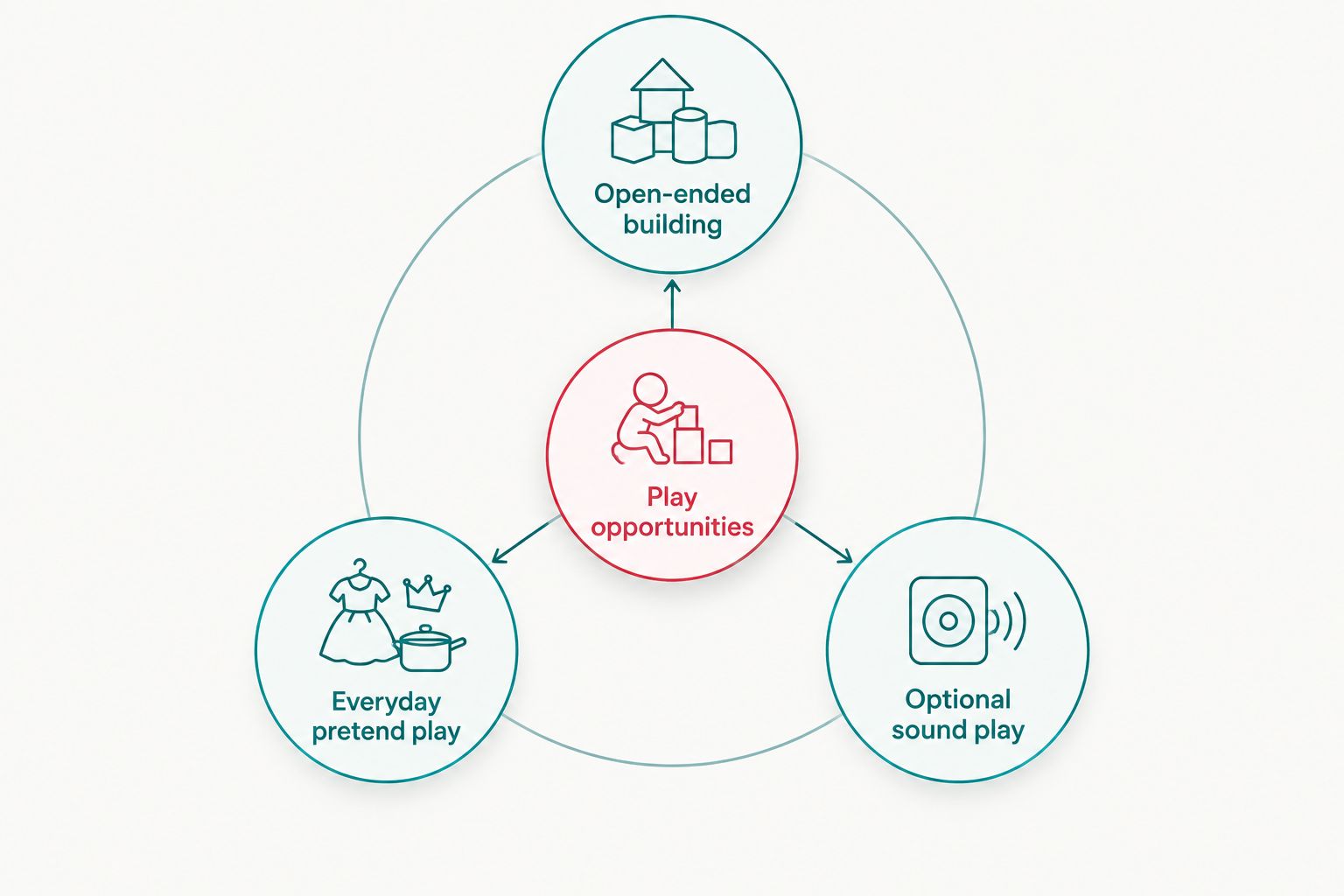
Use the inventory to make each purchase accountable. If you cannot explain what a proposed set adds, leave it off the shortlist.
- List the play opportunities already covered.
- Mark a gap for open-ended building where relevant.
- Check provision for everyday pretend play.
- Keep optional sound play separate from quieter materials.
- Retain suitable non-wooden resources alongside wooden toys.
Check the product details before shortlisting
Read each product’s instructions and warnings manually before comparing sets. Check the contents, intended age group and care requirements; the word wooden does not tell you whether every component is wood or whether the toy suits your room.
Habauk’s wooden toys and age-based categories provide a quicker browsing route once you have defined your criteria. They do not replace your assessment of suitability. Keep the retailer’s product description separate from your own clinical rationale.
Set size is one concrete difference you can compare. The named building-block options below contain 102 pieces, 85 pieces and 46 pieces respectively. Those counts describe the sets, not their therapeutic value. More pieces also mean more objects to account for, clean and store.
The 102-piece set’s supplied description identifies it for ages 1 year and up. Still check its current instructions and warnings, and do not apply that age statement to the other sets.
- Read the complete contents and material information.
- Check age guidance for each product separately.
- Identify small parts, moving parts and any sound features.
- Confirm how the manufacturer instructs you to clean it.
- Record why the set fits your room rather than just your budget.
Arrange the room for choice and safe access
Try a new layout with the toys you already own before ordering storage or extra sets. Place materials where children can see and reach them safely, with a clear surface for the kind of play you intend to offer. Keep adult-only supplies separate.
A shared playroom needs a plan for used materials as well as ready-to-use materials. Establish where toys go when they need checking or cleaning, without relying on memory at the end of a busy day. Follow your setting’s hygiene procedures throughout.
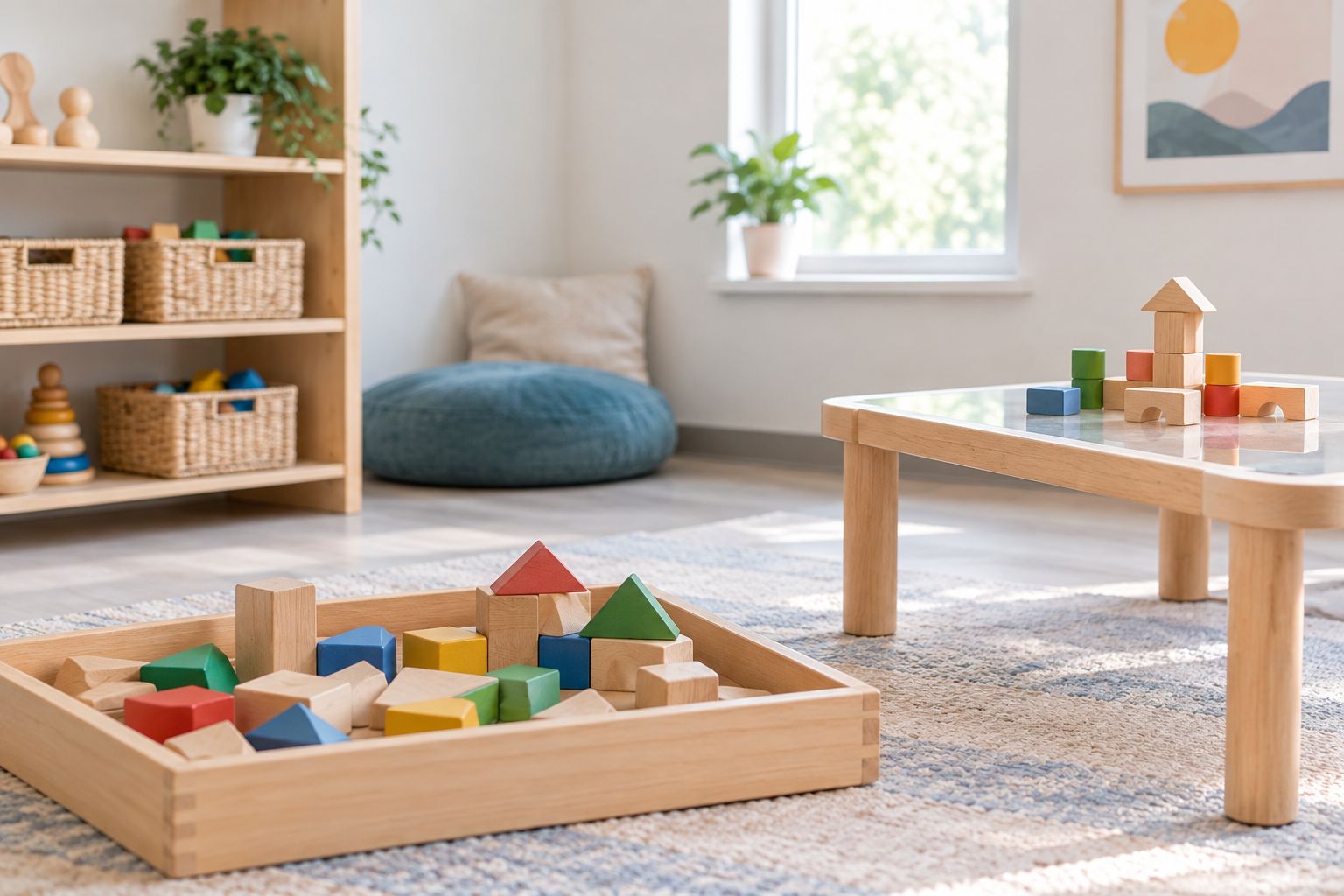
For your 2026 room layout, check practical details from the child’s position rather than only from the doorway. Reach, stability and working space matter more than a coordinated display.
- Check that shelves and furniture are stable.
- Keep walking routes clear of loose pieces.
- Provide an accessible surface for building or pretend play.
- Separate materials awaiting cleaning from ready-to-use toys.
- Keep small-part sets inaccessible when unsuitable for a child.
Introduce materials without prescribing their meaning
Begin with familiar resources and notice how the child chooses to use them. When you introduce a new set, follow your therapeutic approach rather than turning the product’s suggested activity into a requirement. The child does not need to reproduce the scene on the packaging.
Open-ended blocks offer space for arranging and building, but not every child wants that invitation. Recognisable pretend-play objects offer another route, while sound toys require a separate decision about comfort and suitability. Keep alternatives accessible.
Do not infer a diagnosis or personal history from an isolated toy choice. Record observations accurately and interpret them within your professional framework, supervision and wider assessment. Retail descriptions are not evidence for clinical interpretation.
- Offer new materials within your established way of working.
- Avoid requiring a model, colour sequence or finished construction.
- Respect a child’s decision not to use a toy.
- Keep sound-making materials optional.
- Describe observable actions without inventing their meaning.
Maintain the collection and review its usefulness
Make inspection part of your normal room routine. Check for damaged surfaces, loose components and missing pieces, and remove a toy from use when its condition raises a safety concern. Follow the manufacturer’s care instructions and your setting’s procedures rather than a universal wooden-toy cleaning recipe.
Some wooden products are unsuitable for soaking or particular cleaning agents. If the permitted care method does not meet your shared-room requirements, choose another material or another product. The cleaning requirement takes priority over the preference for wood.
Keep your 2026 collection review separate from children’s confidential clinical records. An equipment log can capture condition, contents and maintenance without storing sensitive session details. It also makes replacement decisions easier to explain.
- Inspect surfaces, joints and detachable components.
- Remove damaged toys pending an appropriate decision.
- Check set contents against the supplied information.
- Follow product-specific cleaning and drying instructions.
- Record maintenance and review gaps in the collection.
Compare wooden toy options for your playroom
The following options differ in play invitation and set size. None is presented as clinically validated equipment. Use the stated best-for labels to narrow your shortlist, then check the full product information against your own requirements.
A building set does not cover every kind of expressive play. Likewise, an everyday pretend-play set should not become a required activity simply because its purpose is recognisable.
| Option | Best for | Useful feature | Key limitation |
|---|---|---|---|
| Basic Building Blocks 102 Piece Extra Large Wooden Starter Set | A larger open-ended building collection | 102 pieces for arranging and building | More pieces to account for; does not replace recognisable role-play materials |
| Colored Wooden Building Blocks - 85 Piece Set | Building with coloured wooden blocks | 85-piece set | Colour and piece count do not establish clinical suitability |
| Colored Wooden Building Blocks - 46 Piece Set | A smaller coloured-block collection | 46 pieces compared with the larger sets listed | Fewer pieces; check whether the contents cover your intended use |
| Creative Play - Vegetable and Chopping Board Set | Everyday kitchen or shop pretend play | Vegetables for pretend cooking or stocking a toy shop | A specific theme rather than a broad building resource |
| Fun with Sounds Wooden Discovery Blocks | Optional acoustic exploration | Sound exploration through discovery blocks | Sound is unsuitable for some preferences and settings |
The 46-piece building set has fewer pieces than the 85-piece and 102-piece options. That is a straightforward inventory distinction—not a reason to assume it is easier for every child. Check the shapes and contents before deciding which collection fits.
The following cards show two building-set sizes and an everyday pretend-play option. Select between them by the gap in your room, not by the size of the box.


Common mistakes play therapists make when selecting wooden toys
Treating a retail description as a clinical endorsement
Words about creativity, learning or exploration describe a play invitation. They do not establish a treatment effect. Habauk is a toy retailer; your clinical selection needs its own professional rationale rather than a copied product description.
Building a collection around adult-led tasks
Sorting colours, completing a pattern or rebuilding a model can turn a broad resource into a narrow activity. If your approach calls for child-led play, do not introduce hidden performance requirements. Be clear about when and why you offer a structured task.
Assuming wood solves sensory preferences
A wooden toy can still make noise, feel uncomfortable or produce an unwelcome impact when dropped. Assess the actual object and the individual child. Keep a quieter or differently textured alternative rather than treating a material label as a sensory recommendation.
Buying before checking shared-room cleaning needs
A toy that works in a family home does not automatically fit your setting’s cleaning procedures. Check permitted methods before purchasing. If care instructions and required hygiene practices conflict, exclude the product rather than improvising a cleaning method that damages it.
Interpreting play from a single moment
A collapsed tower, separated figures or untouched toy does not provide a diagnosis. Record what happened and keep interpretation within your professional process. The collection supports your work; it does not explain the child on its own.
FAQ
What are the best wooden toys for play therapists?
The best wooden toys for play therapists are those that fit the individual child, the therapeutic approach and the setting’s safety and cleaning requirements. Building blocks and everyday pretend-play materials offer different invitations; neither is a universal first choice.
Are wooden toys better than plastic toys for play therapy?
Wooden toys are not automatically better than plastic toys for play therapy. Compare the actual play opportunities, accessibility, condition and permitted cleaning methods rather than choosing by material alone.
Can I use ordinary HABA toys in a therapy room?
Ordinary HABA toys can be considered as play materials after you assess their suitability for your setting. A retail toy description does not establish clinical validation or replace product warnings and professional judgement.
Where can I shop for HABA wooden toys in the UK?
Habauk is a UK online shop selling HABA wooden toys alongside games, dolls, pretend play sets and baby toys. Its age and category organisation helps with browsing, but you must assess each product for your therapy room.
How do I clean wooden toys between therapy appointments?
Follow each wooden toy’s manufacturer instructions and your setting’s hygiene procedures. Do not assume that soaking, disinfectants or a homemade cleaning mixture are suitable for every wooden product.
Should I choose the biggest wooden building-block set?
Choose a wooden building-block set by its contents and your room’s needs, not by piece count alone. A larger set adds more pieces to manage without necessarily filling a different play opportunity.
Are sound-making wooden toys suitable for every child?
Sound-making wooden toys are not suitable for every child or every session. Assess preferences individually, keep sound play optional and provide alternatives.
Can wooden toy play diagnose a child’s difficulties?
An isolated wooden-toy choice or play action cannot establish a diagnosis. Clinical interpretation belongs within qualified assessment, your professional framework and the wider context.
One last thing
Before adding anything to your 2026 shortlist, put an existing set at child height and examine the invitation it offers. Is it easy to choose? Is there room to use it? Does your arrangement suggest that there is only one correct way to play?
Your next useful change might be a clearer surface or a more accessible tray rather than another purchase. Improve the invitation before expanding the collection. That keeps the focus on the child’s choices and gives every material already in your room a fair chance to be used.