


Wooden Toys for Travel Abroad: 2026 Family Picks
Wooden toys for travel abroad are compact, low-piece-count play pieces picked for families flying, driving or ferrying young children overseas, with the aim of covering flights, transfers and hotel downtime without extra suitcase weight or a trail of lost parts. Parents packing for a 2026 summer holiday need something different from what works at home: fewer loose pieces, no batteries, and a shape that survives a rucksack side pocket.
- Wooden toys for travel abroad work best with few, contained pieces - Animal Upon Animal Game Compact Version and Socken Zocken both fit that brief.
- Grasping toys beat screens for babies during airport queues and hotel wind-down time in 2026.
- Rotate two or three toys per leg of the trip instead of packing the whole toy box.
- My Very First Games Hanna Honeybee suits toddlers on short-haul flights where table space is tight.
Why this matters for holiday travel
A toy that's brilliant on the living room floor can be a liability at 30,000 feet. Loose marble-run pieces roll under airline seats; large boxed sets don't survive a hold-luggage weight limit. Families travelling abroad in 2026 are dealing with tighter carry-on rules and smaller hire-car boots than ever, so the toy has to do more with less: contained pieces, a compact case, and enough play value to survive a delay at the gate.
HABA-style wooden toys suit this brief because most travel-friendly picks are built around a single tin, pouch or fold-flat board rather than a sprawling set. Wooden pieces also don't need charging, which matters on a flight with no plug and a toddler who's finished the in-flight snack in four minutes.
The Animal Upon Animal Game Compact Version is a useful reference point: it's the same stacking-and-balancing game as the full-size original, just built into a travel tin with every piece accounted for before you zip it shut.
Measure what actually fits in hand luggage
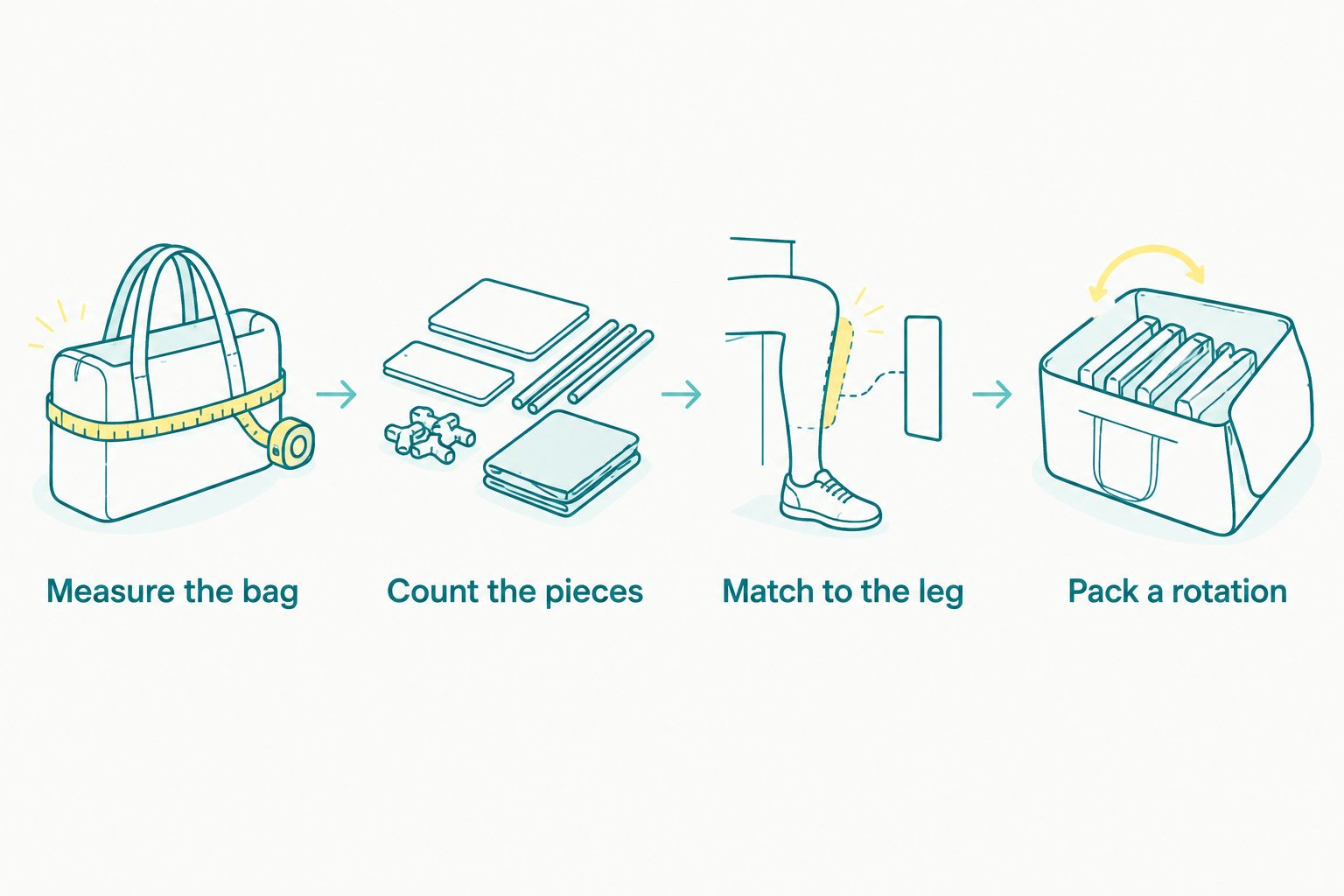
Start with the bag, not the toy. A travel toy has to survive being squashed into a rucksack side pocket or an under-seat bag, so size and shape matter more than they do at home.
- Pick tins or pouches over boxed sets - boxes crush, tins don't
- Check the toy fits flat in a nappy bag or backpack front pocket
- Favour toys under 20cm in any dimension for seat-pocket storage
- Skip anything with a board that needs unfolding on a tray table smaller than A4
- Weigh the toy in your hand - if it feels heavier than a paperback, it's a car-boot toy, not a carry-on toy
Choose games with contained, unlosable pieces
The single biggest travel-toy failure is pieces escaping. A marble run with forty loose parts is a nightmare on a plane; a tin game with twelve pieces that snap back into their slots isn't.
- Choose games that ship in a tin or drawstring pouch with a fitted piece tray
- Count the pieces before you fly - under 20 is manageable, over 40 is a home-only toy
- Avoid anything with pieces smaller than a coin if you're travelling with a child under 3
- Test the closure at home first - does the tin actually stay shut in a bag?
- Prefer games with one obvious "home" for every piece, not a loose bag of parts
Socken Zocken is built for exactly this: no board, no small tokens rolling away, just a compact card-and-sock mechanic that packs flat.
“If a toy has more than forty loose pieces, it's not a travel toy - it's a suitcase problem.”
Match each toy to a specific leg of the journey
Not every toy needs to work for the whole trip. A short-haul flight, a three-hour car transfer and five nights in a hotel each call for something different.
- For under 90 minutes in the air: a quick card or dice game like a mini tin set
- For long-haul flights: a stacking or balancing game with a fixed piece count, played on the tray table
- For car transfers: anything that doesn't roll off a lap when the car brakes
- For hotel evenings: a slightly longer game two adults and a toddler can all join
- For airport queues: a single grasping toy or puzzle that needs no table at all
My Very First Games Hanna Honeybee is sized for that queue-and-gate window - short rounds, simple rules, and small enough to play standing up.
Build in quiet-mode options for flights and waiting rooms
A travel toy that beeps, rattles or needs instructions read aloud is a different kind of stress in a departure lounge. Silent, self-explanatory play matters more abroad than at home.
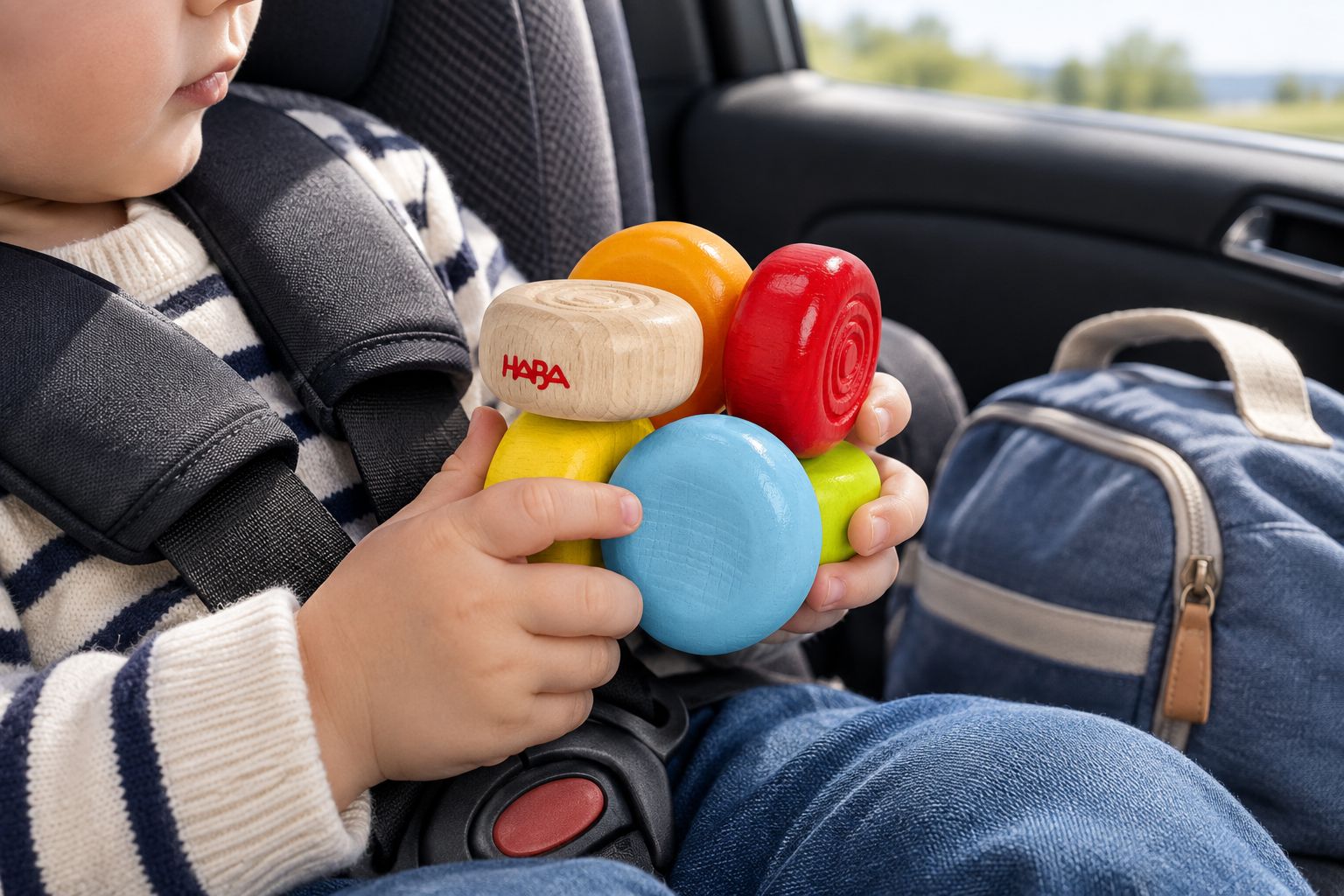
- Choose grasping or teething toys with no sound mechanism for infants under 12 months
- Avoid anything with a spinner, buzzer or timer for shared waiting spaces
- Pick games a toddler can play solo once shown once, without adult refereeing
- Test at home whether the toy can be picked up and put down mid-round
For babies still teething through the trip, a soft-edged grasping toy does more work than a game with rules. That's a different job to the game-shaped picks above, and it's worth packing one alongside them rather than instead of them.


Pack a rotation system, not everything at once
One big mistake families make on a two-week trip abroad is packing every travel toy for day one. Novelty runs out fast on a long holiday, and a toy that's been in view since the airport loses its pull by day three.
- Split toys into two or three "kits" and rotate them every two to three days
- Keep one toy sealed and unseen until the return flight, when boredom peaks
- Let one toy live permanently in the day bag and the rest stay packed away
- Swap toys between siblings partway through the trip to reset interest
Check durability for heat, sand and pool-side play
Wooden toys generally hold up well abroad, but sun, sand and pool splashes are a different environment to a UK living room. A toy that's fine at home can warp or stain on a beach holiday.
- Wipe sand off wooden pieces before packing them back into a tin - grit works into joints
- Dry any toy that's been near a pool before sealing it in a bag
- Avoid leaving painted wooden pieces in direct sun on a car dashboard for hours
- Choose varnished, sealed pieces over raw wood for beach and pool trips
Plan for lost-piece recovery abroad
Even a well-packed travel toy loses a piece eventually - a marble down a hotel drain, a puzzle piece under an airport seat. Games with a single missing piece are usually still playable; games built around a full set aren't.
- Favour games where losing one piece doesn't end play (most stacking and balancing games qualify)
- Photograph the full piece set before you fly, so you know what's missing if something goes
- Pack a small drawstring pouch as backup storage if the original tin fails mid-trip
Comparison: travel toy formats for holidays abroad
| Format | Best for | Key limitation |
|---|---|---|
| Compact stacking/tin games | Long-haul flights, hotel evenings | Needs a flat surface, however small |
| Card-and-pouch games | Airport queues, short car legs | Less physical play value for toddlers |
| Grasping/teething toys | Infants under 12 months | Limited use once a child outgrows the grasp stage |
| 2-in-1 puzzles | Table time at cafes and hotels | Needs supervision so pieces don't scatter |
| Full boxed sets | Home and long stays with a static base | Too bulky and piece-heavy for hand luggage |
Compact tin games are the strongest all-round pick for wooden toys for travel abroad in 2026 - they're the only format that works across a flight, a transfer and a hotel room without a piece count problem.
Common mistakes families make packing travel toys
- Packing the full-size version instead of the travel edition. A standard boxed game with forty pieces doesn't survive a carry-on the way a compact tin version does.
- Bringing one toy for a two-week trip. Novelty runs out by day three; rotation matters more than volume.
- Ignoring the waiting-room gap. Security queues and passport control eat far more time than the flight itself, and most families pack nothing for that window.
- Choosing loud or battery-powered gadgets over quiet wooden options. They're the first thing confiscated by a tired parent two rows from a sleeping stranger.
- Forgetting heat exposure. A wooden toy left in a hot car or on a sunny windowsill for a full afternoon can warp glued joints over a two-week stay.
FAQ
What are the best wooden toys for travel abroad in 2026?
Compact tin or pouch games with fewer than 20 pieces work best for travel abroad in 2026, including stacking games like Animal Upon Animal Game Compact Version and card-based mini games like Socken Zocken. Both pack flat and keep every piece in one place.
Are wooden toys allowed in hand luggage on flights?
Yes, wooden toys are allowed in hand luggage on UK and most international flights with no restrictions beyond standard cabin baggage size rules. Check the toy fits your airline's carry-on dimensions before travel.
How do you stop wooden toy pieces from getting lost while travelling?
Choose games that ship in a fitted tin or drawstring pouch with one slot per piece, and count the pieces before and after each play session. Games where losing one piece doesn't end play, like most stacking games, are the safer pick for a long trip.
Are wooden toys durable in hot or humid climates?
Sealed, varnished wooden toys generally hold up well in heat and humidity, but raw or unvarnished pieces can warp if left in direct sun or near a pool for hours. Dry any toy that's been wet before packing it away.
What age of wooden travel toy works best for a long flight?
For toddlers aged 2 to 5, a compact stacking or balancing game with a fixed piece count fills a long-haul flight well because rounds are short and self-contained. For babies under 12 months, a single grasping toy with no small parts works better than a game.
Do wooden toys need batteries for travel play?
No, wooden toys for travel abroad typically need no batteries or charging, which is one of the main reasons they suit flights and hotel stays where a plug isn't guaranteed.
How many toys should you pack for a two-week holiday abroad?
Two to three small toys split into rotating kits usually last a two-week trip better than one large toy packed on day one. Rotating toys every two to three days keeps novelty going for the length of the stay.
Are wooden toys better than tablets for travel?
Wooden toys avoid the charging, screen-time and shared-space noise issues that come with tablets on flights and in waiting rooms. They're a quieter, no-battery alternative for the specific windows - queues, transfers, gate delays - where a screen isn't practical anyway.
One last thing
The toy that gets the most use on a 2026 family holiday abroad is rarely the one bought specifically for the trip - it's the smallest, most contained game already in the house that happens to fit a coat pocket. Before buying anything new, check what's already on the shelf against the piece-count test above; a lot of existing games pass it without any repackaging at all.