


Sustainable Wooden Toys 2026: What Eco Parents Should Buy
Eco-conscious parents shopping for wooden toys in 2026 want one thing above all: pieces built to outlast a single childhood and break down naturally once their play life ends, not toys designed to be replaced every season. This segment shops differently to the average toy buyer — fewer purchases, more scrutiny of materials, and a habit of asking what happens to the toy after their child grows out of it.
- Sustainable wooden toys favour solid wood, open-ended play and pieces built to outlast one childhood, not one Christmas.
- Buy fewer, better pieces: a marble run or stacking game gets used at 2, 5 and 8 years old.
- Skip battery-powered plastic extras — wooden toys with no batteries create no electronic waste at end of life.
- Resell or pass toys down; solid wood holds resale condition far better than moulded plastic ever does.
- A considered set of 8-10 wooden toys beats a toy box overflowing with disposable plastic pieces.
Why sustainable wooden toys matter for eco-conscious parents
Most UK council recycling schemes reject plastic toys outright because they mix plastics, metal springs, glue and batteries in ways sorting machines can't separate. A solid wood toy has none of that problem — no batteries, no mixed polymers, and a finish that wears down rather than snapping into shards.
Eco-conscious parents also shop for longevity because it reduces the number of purchases, not just the material. A Montessori-inspired home built around open-ended wooden toys typically holds far fewer individual items than a home stocked with single-purpose plastic gadgets, because each piece does more work across more ages.
“The most sustainable toy in your house is the one still being played with in five years, not the one bought this Christmas.”
Check what the toy is actually made from
Sustainability claims on packaging aren't consistent, so the material check happens before the eco label does.
- Look for "solid wood" or a named timber (beech, maple, birch) rather than "wood-effect" or "wood-look" finishes.
- Check paints and stains are described as water-based, not solvent lacquers.
- Avoid glued veneer over MDF or chipboard — it delaminates under drops and can't be repaired.
- Skip anything that needs single-use batteries just to function as a basic toy.
- Check for FSC or PEFC sourcing language on the product page before buying.
Prioritise open-ended play over single-purpose gimmicks
A toy that supports one scripted activity gets outgrown fast. One that supports dozens of games doesn't.
- Building blocks, stacking rings and nesting sets that flex into new games as skills develop.
- Pretend-play sets (kitchens, shops, dolls houses) that move from toddler bashing to preschool storytelling.
- Tile-laying or stacking games with rules that scale up as your child's ability grows — same box, years of use.
- Character-branded plastic toys tied to one show lose both play value and resale value the moment the show falls out of favour.
Choose toys built to grow with your child across ages
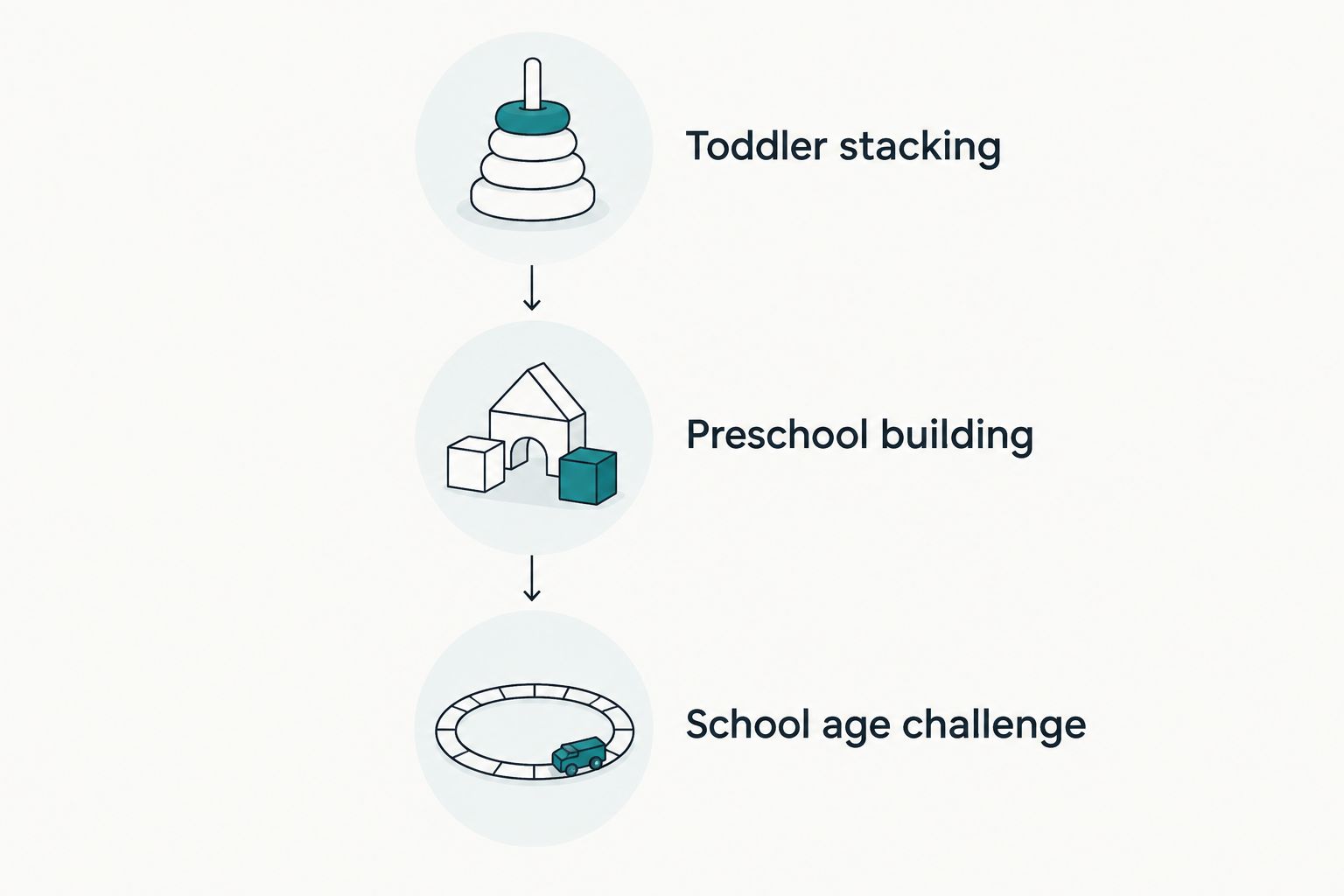
This is where a genuinely well-designed wooden toy earns its keep — the same box works at 2, 5 and 8.
- A build like the Classic Marble Run works as a stacking toy for a toddler, a construction challenge for a preschooler, and a basic physics lesson by age 7 or 8.
- Compact stacking games such as Animal Upon Animal double as a toddler knock-it-down toy and a school-age balance challenge with steadier hands.
- Look for sets sold with add-on packs, so the toy gets extended rather than replaced outright.
- Games printed with simplified rules on one side and advanced rules on the other serve two age groups from a single purchase.
Build a small, considered collection instead of a toy box overflow
A sustainable wooden toy collection is deliberately smaller than a plastic one, organised by what it teaches rather than how many pieces it holds.
- Pick one item per skill area — building, sorting, pretend play, first games — instead of duplicates in the same category.
- Rotate toys in and out of storage rather than buying new ones to fight boredom.
- Ask grandparents and gift-givers for one well-made piece instead of several small plastic extras.
- Shop by age and category rather than by trend, so each toy earns a longer place in the rotation.
Look for build quality that survives daily wear
A toy marketed as sustainable that falls apart in six months isn't sustainable — it's a slower-burning version of the same problem.
- Test corners and edges for smooth sanding; rough edges signal shortcuts that come back as splinters later.
- Check painted pieces use layered, food-safe paint rather than a single sprayed coat that chips on the first drop.
- Favour interlocking pieces (pegs, dowels, tongue-and-groove) over glued joints that separate under toddler force.
- Sound and discovery toys built with solid wood shells, like Fun with Sounds Discovery Blocks, hold up to shaking, dropping and mouthing far longer than moulded plastic equivalents.
Plan for what happens after your child outgrows it
End-of-life planning is the part most parents skip, and it's the part that actually determines whether a purchase was sustainable.
- Resell solid wood toys locally — condition holds up better than plastic, so resale value stays higher for years.
- Pass sets down to younger siblings or cousins instead of storing them unused in a loft.
- Donate complete sets to nurseries or childminders once your own child has outgrown them.
- Keep original boxes or drawstring bags for multi-piece games so they're easier to pass on intact.
Store and maintain wooden toys to extend their working life
Storage habits decide whether a solid wood toy lasts three years or ten.
- Store wooden pieces somewhere dry — damp cupboards warp joints and lift painted finishes over time.
- Wipe down with a barely damp cloth rather than soaking; standing water swells wood grain.
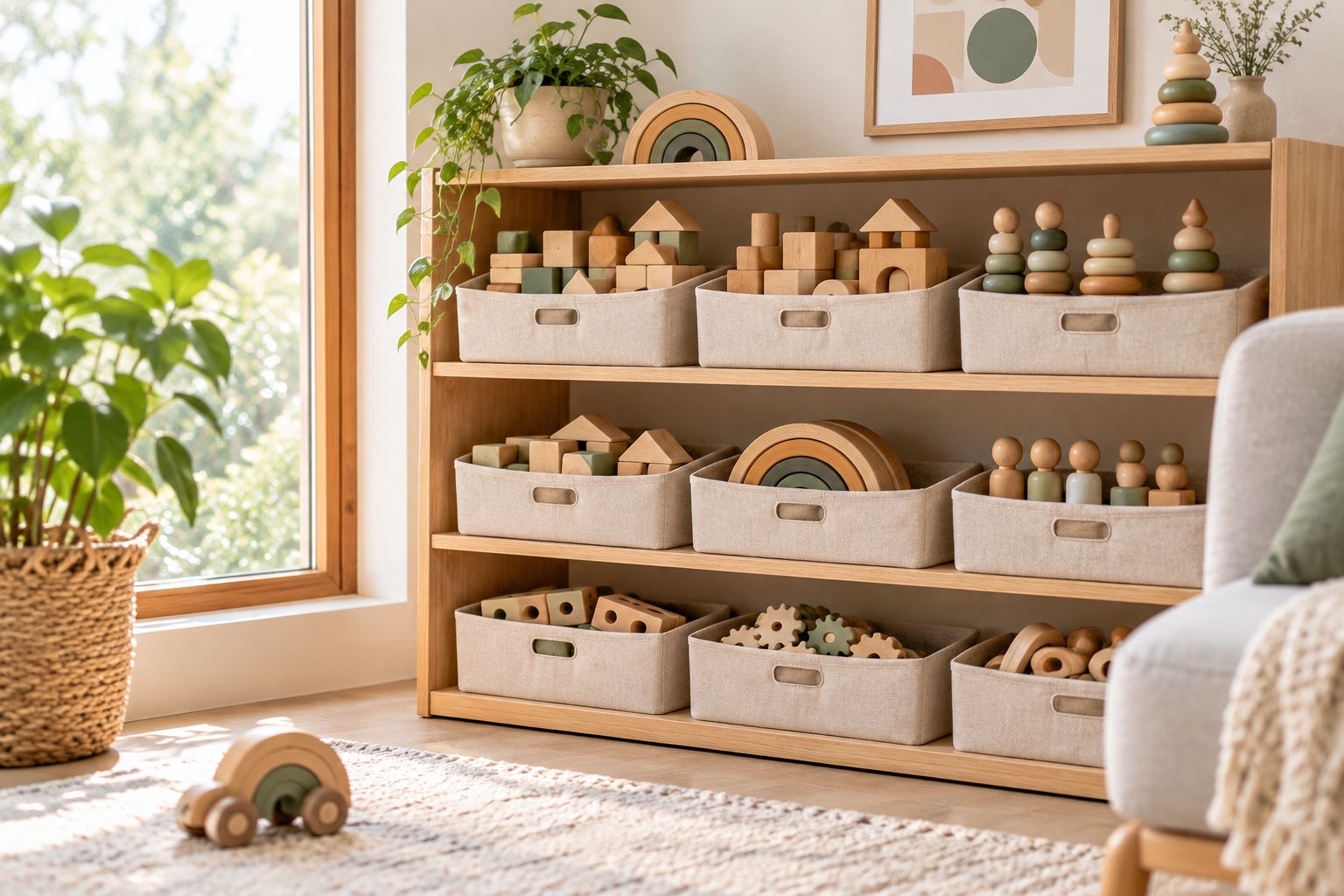
- Use a labelled fabric bag or box per game so small pieces don't scatter, get lost, or end up binned by mistake.
- In tighter spaces, stack shallow boxes by category rather than piling everything into one deep toy box.
How the main options compare for sustainable buying
| Option | Best for | Key limitation |
|---|---|---|
| Solid wood open-ended toys (blocks, stacking sets) | Parents wanting one purchase to last 1-8 years | Higher upfront outlay than plastic multipacks |
| Wooden games and puzzles (marble runs, tile games) | School-age kids and family game nights | Needs a flat surface and adult setup at first |
| Wooden sound and teething toys | Babies 0-12 months | Shorter single-age window before handoff |
| Second-hand wooden toys | Budget-conscious eco-conscious parents | Harder to check finish and paint safety before buying |
| Plastic toy alternatives | Short-term novelty or bath play | Doesn't biodegrade and rarely gets accepted kerbside |
Verdict: solid wood, open-ended toys are the strongest sustainable buy for eco-conscious parents in 2026 because they cover the widest age range per purchase, while second-hand wood is the best option on a tight budget.
Common mistakes eco-conscious parents make
- Buying "eco" labelled toys without checking the actual material — some wood-look pieces are painted MDF or plastic composite marketed as green.
- Overbuying because wood "feels sustainable" — a toy box with 40 wooden pieces isn't more sustainable than 10 well-chosen ones.
- Ignoring age-range labels and buying toys the child outgrows in months instead of years.
- Skipping the resale or pass-down plan — leaving solid wood toys in a loft is not more sustainable than sending them to a new home.
- Choosing single-purpose novelty wooden toys over open-ended sets that flex across several ages.


FAQ
What makes a wooden toy sustainable?
A sustainable wooden toy uses solid wood rather than wood-effect plastic, water-based paints, and joinery that survives repair rather than glued parts. Age range and durability matter as much as the raw material — a toy that lasts one age group briefly isn't more sustainable than a durable plastic one.
Are wooden toys better for the environment than plastic toys?
Solid wood toys generally have a lighter end-of-life footprint because they biodegrade and contain no batteries or mixed plastics that block kerbside recycling. The bigger factor is how long the toy actually gets used before it's replaced.
How long do sustainable wooden toys last?
Well-built solid wood toys like building blocks or marble runs commonly stay in use across a full childhood, roughly ages 1 through 8, because the play style scales with the child's skill. Painted or glued lower-quality pieces wear out far sooner.
Is it worth buying second-hand wooden toys?
Yes, second-hand wooden toys are one of the most budget-friendly sustainable options because solid wood holds its condition through multiple owners. Check the finish and paint for chipping or peeling before buying, since you can't verify the original materials.
What age is best to start buying open-ended wooden toys?
Open-ended wooden toys work from around 12 months, once a baby can grasp and stack, and continue paying off through the preschool and early school years. Starting early means one toy covers more of the age range you'll actually shop for.
Do sustainable wooden toys cost more than plastic ones?
Solid wood toys generally carry a higher upfront cost than mass-produced plastic multipacks, but they replace several plastic purchases across a childhood rather than one. Check current pricing on the product page before comparing, since it changes.
How do I store wooden toys to keep them long-lasting?
Keep wooden toys somewhere dry, wipe them with a barely damp cloth rather than soaking them, and sort pieces into labelled boxes by category. Damp storage warps joints and lifts painted finishes over time.
Can wooden toys be recycled?
Untreated solid wood toys can often go into garden waste or wood recycling once broken beyond repair, unlike mixed-material plastic toys that most councils reject. Painted or varnished pieces should be checked against local recycling rules first.
One last thing
The toy that does the most for sustainable parenting in 2026 usually isn't the newest thing in the shop — it's the marble run, stacking set or building block box still getting dragged out of the cupboard three or four years after it was bought. If a toy is still in rotation at year three, it has already outperformed most of what's sold as "eco-friendly."