


Wooden toy rotation system montessori: simple 2026 plan
Instead of tidying the same scattered toys every day, set up a wooden toy rotation system Montessori-inspired homes can actually maintain: keep a small, varied selection within reach and store the rest until you are ready to swap. In 2026, the aim is not a perfect shelf; it is a play space your child can explore and you can reset.
- A wooden toy rotation system Montessori-inspired families can maintain starts with a few accessible choices and one storage space.
- Habauk wooden toys suit parents who want to rotate building, sorting and sound play without replacing everything at once.
- Keep favourites available, swap what has lost your child's interest, and check every toy's age guidance before offering it.
- Use one shelf for current choices and a separate container for toys waiting their turn.
Why this matters
A rotation changes what your child can see, not what you own. When every toy competes for space, it is harder to spot which activities your child returns to and which ones are being overlooked. A smaller selection also makes the end-of-play reset easier to see: each toy has a place to return to.
Montessori-inspired play centres on accessible materials and the child's opportunity to choose an activity. A home rotation can borrow those ideas without pretending that every wooden toy is a Montessori material. For help thinking through the wider play space, see wooden toys for Montessori-inspired homes.
Habauk wooden toys are best for parents who want a varied, child-led rotation rather than a shelf filled with one kind of activity. That is a practical fit, not a reason to remove toys your child loves. A well-used favourite can stay out while the surrounding choices change.
Before you start
- Choose an accessible display spot. Use a shelf, low surface or play area your child can reach safely. You do not need a particular piece of furniture.
- Find a separate storage container. Keep waiting toys out of the play area, along with any pieces that belong to them. You will also need a place to note what is currently out.
- Check every toy before sorting. Read its age guidance and inspect its condition. The easy-to-miss snag is separating a game from its pieces: store each complete activity together, and keep small parts away from children for whom they are unsuitable.
There is no need to buy a matching set or reorganise the entire room. Start with the toys you already have. The 2026 workflow below gives each one a clear job: available now, waiting its turn or set aside for inspection.
Sort your play choices
1. Gather the toys from one play area. Do not empty every cupboard in the house. Working from the place your child uses most gives you a rotation you can finish and maintain.
2. Make three groups. Mark them Out, Later and Check on paper or on your storage containers. Put suitable, complete activities your child uses in Out. Put other suitable activities in Later. Put damaged toys, incomplete games and anything needing an age-guidance check in Check; do not offer those items for play until you have resolved the issue.
3. Look for different kinds of play. Building, sorting, sound exploration and pretend play offer distinct things to do. Choose across those activities rather than filling the display with several toys that ask for the same action.
Expected result: You have a workable Out group, a contained Later group and no unchecked toy on the play surface. The labels are your own simple system, not product instructions.
Which kinds of toys belong together?
Use this comparison to fill a rotation from the toys you own. The named examples are options, not a required shopping list. Each has a strength and a limit, so choose for the play your child is interested in now.
| Option | Best for | What it adds | What to plan around |
|---|---|---|---|
| Basic Building Blocks 102 Piece Extra Large Wooden Starter Set | A child who returns to building | Blocks support many possible structures | A large set needs a clear place for play and packing away |
| Rainbow Whirls Wooden Sorting and Stacking Game | A child interested in placing and stacking | A defined sorting-and-stacking activity | It offers a narrower kind of play than loose blocks |
| Fun with Sounds Discovery Blocks | A child exploring sound | Blocks bring sound into hands-on play | Sound is not the right choice for every quiet-play moment |
The Basic Building Blocks set is described for ages 1 and up in the supplied product information; check its current product guidance before offering it to your child. For every other example, check the individual guidance rather than assuming that a wooden material or familiar shape makes it suitable for a particular age.
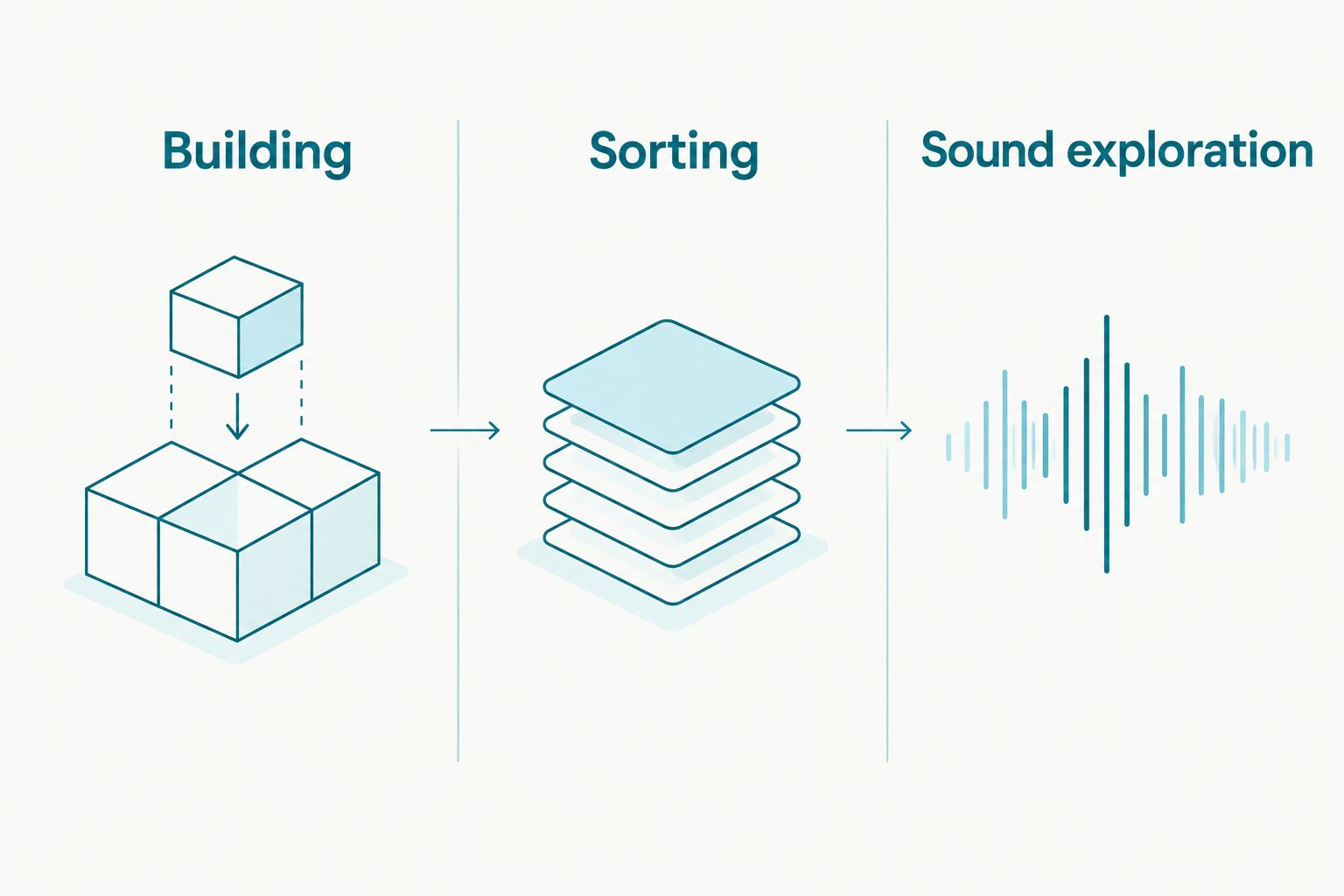
The table also shows why no single purchase makes a rotation. Blocks give a child room to build freely but take space to put away. A sorting activity has a clearer starting point but less scope for building a new world. Sound blocks offer another experience, while a quieter choice belongs beside them when the moment calls for it.
Set up your play space
4. Put a small selection from Out within reach. As a starting arrangement, try 4 to 6 distinct activities, then adjust to the space and to what your child can use comfortably. This is a setup choice, not a developmental target. A single set with many pieces still counts as one activity.
5. Give each activity a return place. A tray, basket or clearly separated area lets your child see what belongs together. Keep game pieces with their game. Leave enough clear space for your child to lift one activity out without pulling the others down.
6. Store Later out of sight of the display. Keeping the waiting group separate makes the available choices easy to recognise. Write down what went into storage if the container hides its contents; the list saves you from repeatedly unpacking it to remember what is there.
Expected result: Your child can see the current choices, take an appropriate activity and find where it goes afterwards. You can see at a glance which toys are in use and which are ready to come back.
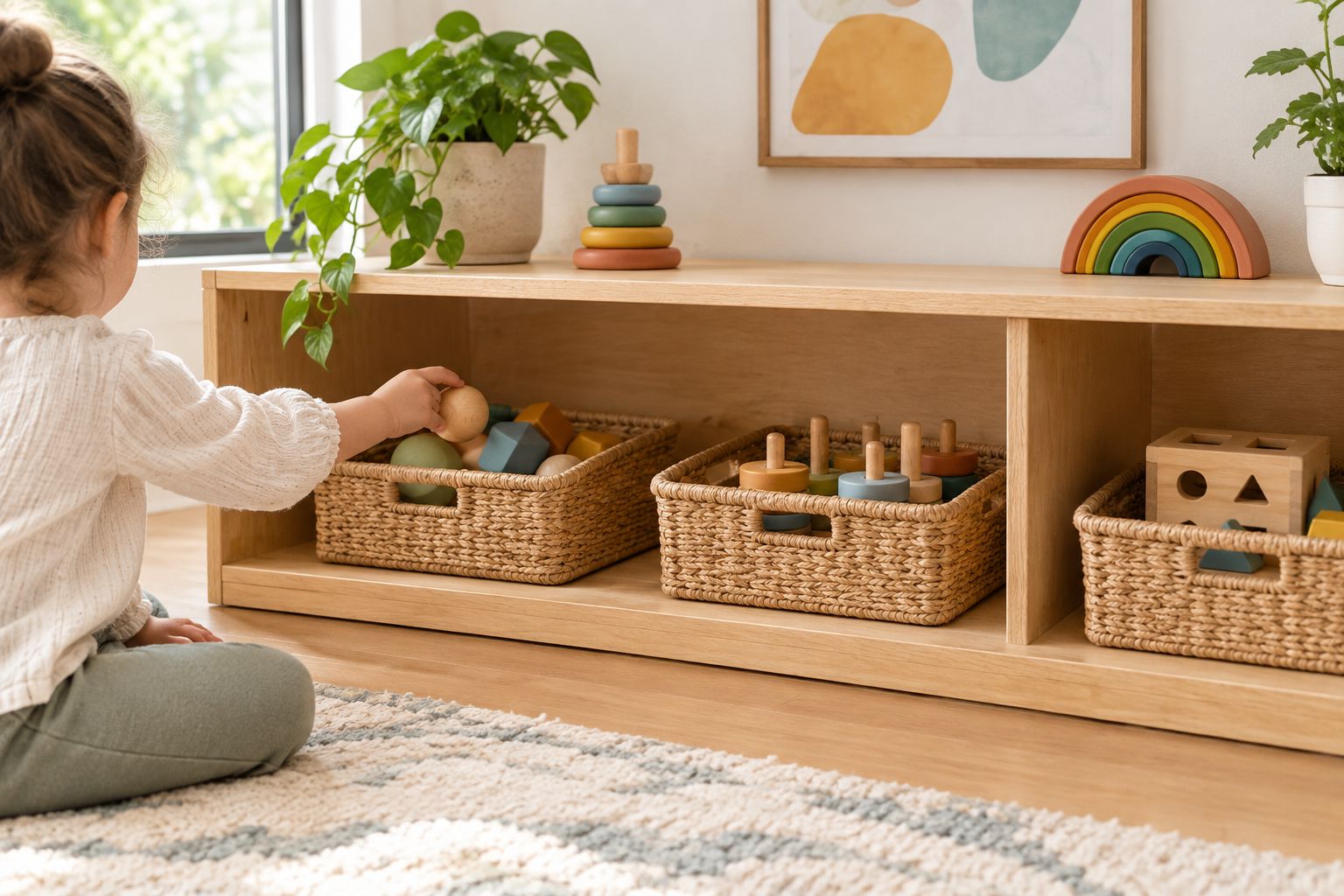
A beautiful display is not the measure of success. If your child needs help opening a container or cannot tell which pieces go together, change the arrangement. In a small room, a corner with clearly separated activities does the same job as a full shelf. The 2026 setup should fit the home you have, not a photograph of someone else's.
Run your first rotation
7. Watch what your child actually chooses. Notice which activity they start without prompting, revisit during play and leave untouched. Interest is a better reason to swap a toy than the date on a calendar. Keep a familiar favourite available if it is still being used.
8. Swap one activity at a time. Return a less-used activity to Later, then bring out a suitable alternative. Keep its pieces together and check its condition as you move it. A small change lets you see whether the new choice fits, without turning playtime into a shelf-wide reset.
9. Reset the space after play. Return each activity to its place with your child when that suits the moment. If an activity repeatedly ends up scattered, give it a better container or move it to a play area with more room. The system should make tidying clearer, not turn it into another game your child has to get right.
Expected result: The selection changes when your child's use gives you a reason to change it. You can keep building available while swapping sound play for sorting, or do the reverse. There is no rule that says a well-loved activity has to disappear because a week has passed.
When should you rotate?
You can check the display after 7 days if a reminder helps you remember to look. That is a prompt to observe, not an instruction to replace everything every 7 days. If the choices are still inviting play, leave them alone. If one has been ignored and another suitable activity is waiting, make the swap.
For a 2026 rotation, the useful question is simple: Does this selection still offer your child something they want to explore? You do not need a spreadsheet to answer it. A brief note beside Out and Later is enough to stop the same overlooked toy cycling back onto the shelf without a reason.
Rotate toys for siblings sharing a play space
When children of different ages use the same room, organise the rotation around safe access rather than trying to make every toy work for everyone. Put activities suited to the younger child in the shared, reachable area. Keep activities with unsuitable small parts in a separate place used with the older child under appropriate supervision.
1. Sort by who can access each activity safely. Check the individual toy's guidance; do not rely on the older child's ability to put it away.
2. Keep shared favourites available. Building or pretend play can remain in the common area when the particular materials are suitable for everyone who can reach them.
3. Rotate older-child activities separately. Bring one out for the older child in an appropriate space, then check that all its pieces are accounted for before returning to shared play.
Expected result: You still have changing choices, but the shared area does not expose a younger child to an older sibling's unsuitable pieces. For ideas centred on playing together, explore wooden toys for siblings of different ages in the related guides below.
Fix the problems that interrupt a rotation
- Your child asks for a toy in Later. Bring it back if it is suitable. The container is storage, not a rule against following your child's interest. Swap out another activity if the display feels crowded.
- Pieces go missing between swaps. Stop treating a partly packed game as ready to rotate. Move it to Check, look for the pieces and keep the activity together before offering it again.
- Everything comes off the shelf at once. Reduce the visible selection or separate the activities more clearly. Watch whether your child can lift and replace one without disturbing the others.
- A child ignores every new choice. Return to a familiar favourite and observe how they use it. Changing toys more often is not the fix when the current activity already holds their interest.
- An older child's pieces reach a younger child's play area. Move those activities to a separate location and check the shared floor after play. Age guidance matters more than keeping a rotation schedule.
The 2026 system is working when it is easy to change and easy to pause. If your child wants the same blocks each day, keeping them out is a considered choice, not a failed rotation.
Customise your workflow
Start with the categories that match your home. For a child drawn to constructing, keep a building activity in Out and rotate the surrounding choices. For a child who likes to sort, leave a suitable sorting activity accessible while changing the pretend-play or sound option. You can also keep a quiet-play selection separate from more active play without buying a dedicated set of toys.
If storage space is the sticking point, use containers you already own and keep the waiting group contained. If choosing developmentally suitable activities is harder, check age guidance first, then decide which kind of play is missing. Habauk offers wooden toys and children's games organised by age and category, which gives you a way to browse for a particular gap rather than adding more of the same.
A rotation can include non-wooden toys too. Montessori-inspired describes the way you arrange accessible choices and respond to your child; it is not a requirement that every activity share one material. Habauk wooden toys can fill a building or sorting place in that mix, while the rest of your child's familiar playthings continue to earn their space.


FAQ
How do I start a wooden toy rotation system Montessori-inspired at home?
Separate suitable toys into an accessible selection and a stored selection, then offer a few different kinds of play. Keep each activity's pieces together and swap a choice when your child's interest gives you a reason.
How many wooden toys should I put out at once?
Try 4 to 6 distinct activities as a starting arrangement, then change the number to fit your child and space. A multi-piece building set counts as one activity.
How often should I rotate toys?
Rotate a toy when it is no longer drawing interest and a suitable alternative is ready. A 7-day check can remind you to observe, but it does not mean every toy needs replacing.
Do Montessori-inspired toy rotations have to use only wooden toys?
No. Montessori-inspired arrangement is about accessible choices and attention to the child, not a rule that every toy must be wooden. Check each activity for age suitability regardless of its material.
Should I remove my child's favourite toy during a rotation?
No. Keep a favourite available while it is being used. Rotate a less-used choice around it instead of removing it to meet a schedule.
Can siblings of different ages share one toy rotation?
Yes, if the shared area contains only activities suitable for every child who can reach it. Keep older-child activities with unsuitable small parts separate and account for their pieces after play.
What should I do with a wooden game that has missing pieces?
Set the game aside for inspection rather than putting it into the ready-to-play rotation. Check its pieces and condition before returning it to your child's choices.
One last thing
Do not rotate the toy your child is still exploring. The most useful change in 2026 can be leaving that activity exactly where it is and clearing a place beside it for something different. That keeps the child's choice at the centre of the system—and keeps your next tidy-up manageable.