


Wooden Push Walker for Babies: What to Buy in 2026
A wooden push walker for babies learning to stand is a weighted, wheeled frame the baby grips and pushes forward, built to support the cruising stage between pulling up on furniture and taking first independent steps. This age group needs more weight low in the frame and slower wheels than a typical plastic toy walker, so the base stays put when a wobbly stander leans on it instead of shooting off across the room.
- A wooden push walker for babies works best once a baby can pull to stand unaided, usually from around 9 months.
- Frame weight and a wide wheelbase matter more than features - a walker that tips or rolls away undermines the whole exercise.
- Pull-along toys and sturdy stacking toys build the same grip and balance skills before a walker is even necessary.
- Most babies move from cruising to independent steps within a few months, so treat a walker as a short-stage tool, not a long-term toy.
Why wooden push walkers matter for babies learning to stand
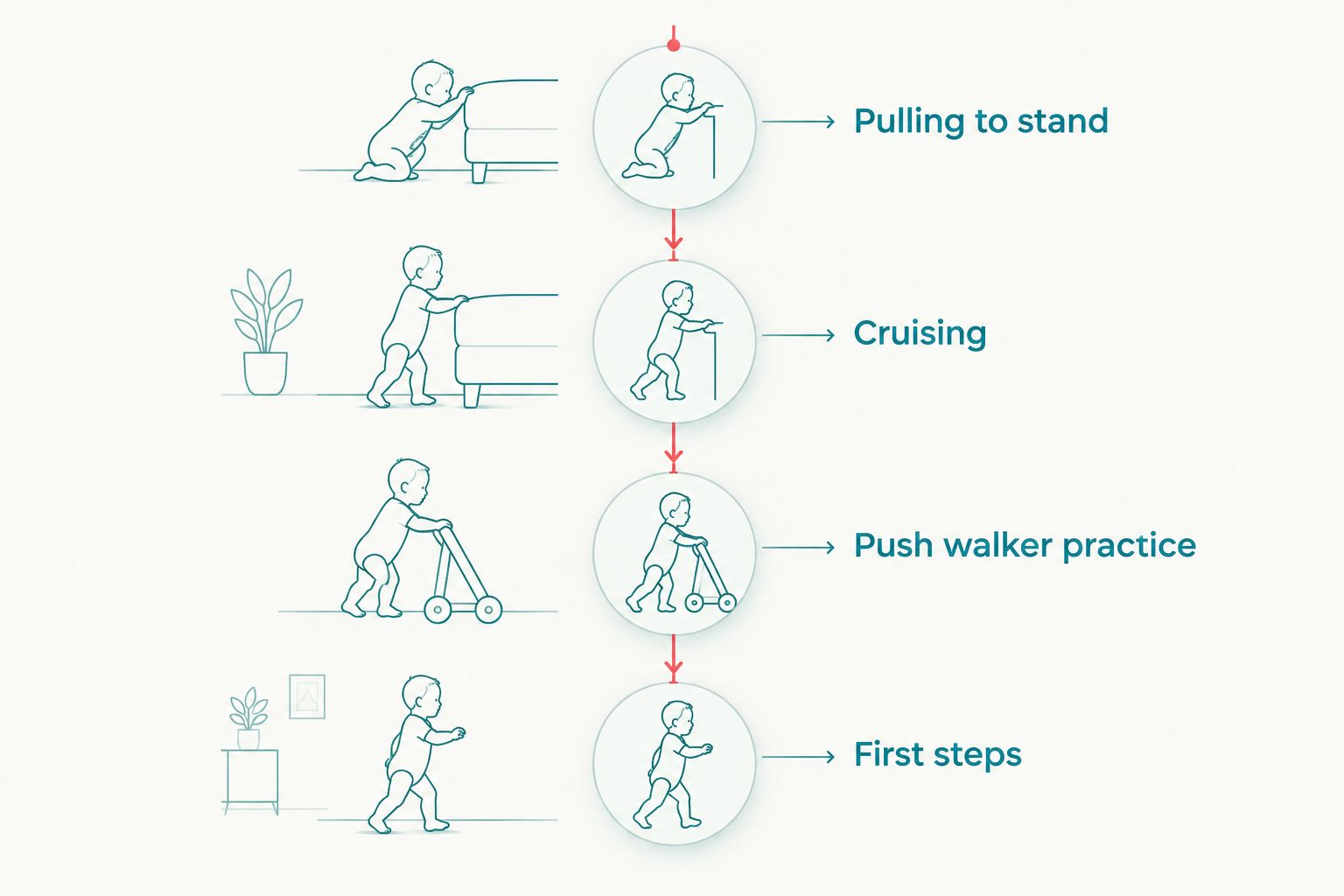
A baby who's pulling to stand and cruising along the sofa is already doing most of the work a push walker asks for: gripping, weight-shifting, and holding a wobbly stance. The walker's job is narrow - give that baby a moving support that won't tip when leaned on and won't roll away faster than a first push can follow.
That's a different job from a plastic activity walker with a seat, which asks a baby to sit and scoot rather than stand and step. If your baby is still working on balance from a seated position, the wooden toys for babies learning to sit up stage comes first - a push walker isn't the right tool yet if pulling to stand hasn't started.
A wooden push walker earns its place in 2026 only once a baby is already cruising - buying one earlier just gives a baby something to fall against.
How to choose a wooden push walker for babies learning to stand
Confirm your baby is ready for a push walker
A push walker only helps once the underlying skills are already there. Look for these signs before buying:
- Pulls to stand at furniture unaided and holds the position
- Cruises sideways gripping a sofa or coffee table edge
- Holds a wobbly stance for a few seconds before dropping to sit
- Shows frustration at wanting to move while upright
- Has been sitting unsupported for several weeks already
Check the frame's weight and wheelbase before you buy
Weight distribution decides whether a walker helps or hinders. Test for:
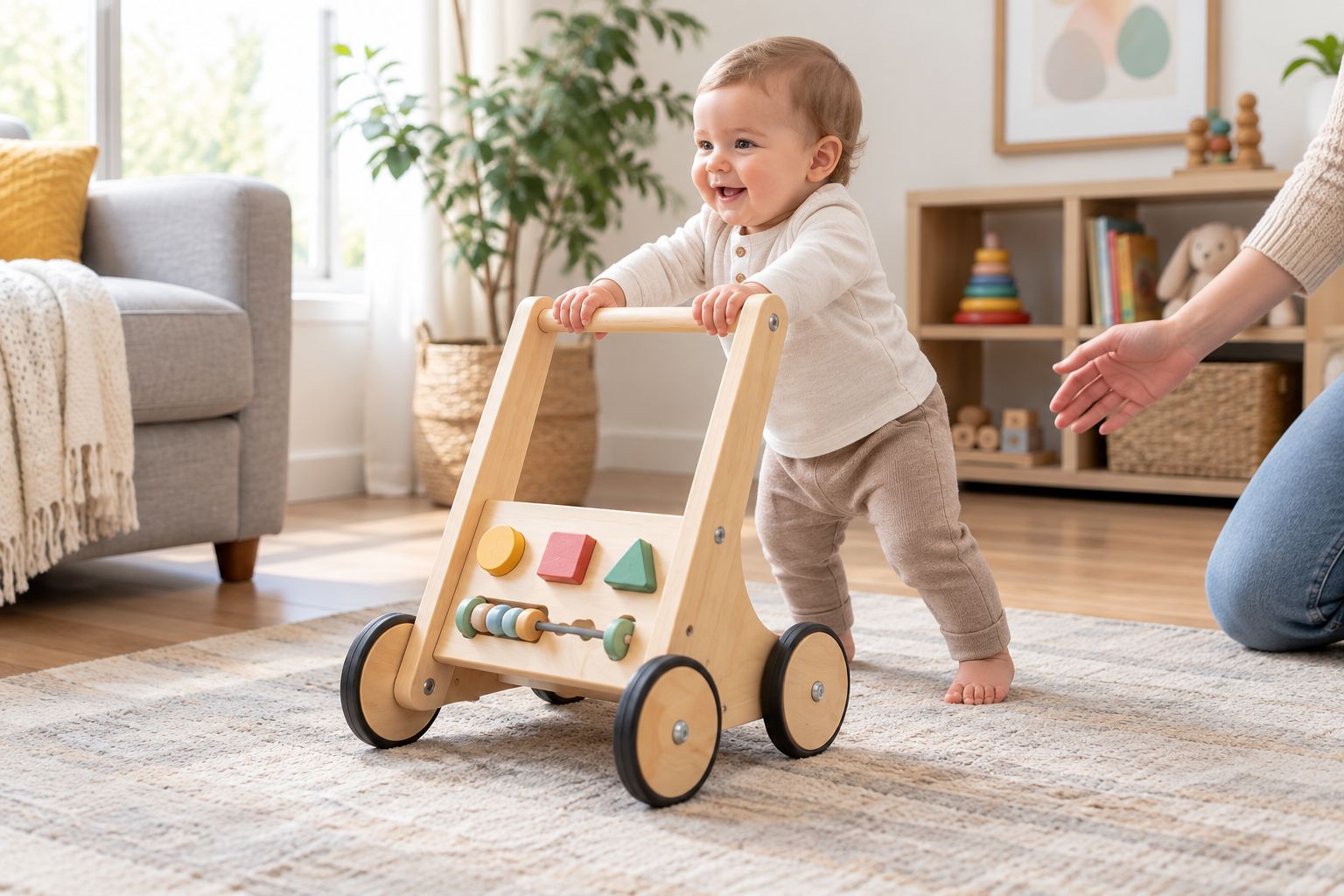
- A wheelbase wider than the handle bar, front to back and side to side
- Solid wood construction rather than a hollow shell
- A low centre of gravity - weight sits low, not stacked up top
- Wheels that grip both carpet and hard flooring without skidding
- A frame that stays upright when nudged from the side, not just from the front
Slow the wheels down for the first weeks
Speed is the single biggest safety variable in this category. Prioritise:
- Adjustable resistance or a brake wheel if the model offers it
- Carpet practice before moving to hardwood or tile
- A test run on your own floor at home, not a showroom surface
- Avoiding anything marketed around fast rolling for this age group
Build the grip and balance skills a walker relies on
A push walker works better - and gets used longer - when the groundwork is already in place. This is where the rest of a wooden toy shelf earns its keep, and it's the one step where a walker isn't the only answer:
- Practise pulling to stand at a low, stable shelf before introducing the walker
- Add stacking play - wooden stacking toys for 1 year olds strengthen the same reach-and-balance control a walker demands
- Introduce a pull-along toy first, since it asks for the same forward grip and step pattern without any weight to lean on
- Keep tummy time and floor crawling going even after standing starts - it's still building core strength
Habauk's range of wooden toys covers this exact run-up: grasping toys for grip, stacking sets for balance, and pull-along toys for the step pattern itself, all before a family needs to shop for a push walker.
Clear a safe lane for practice
Most push walker incidents happen around the room, not the walker itself. Before the first session:
- Remove rugs with curled edges and low furniture with sharp corners
- Block stairs at the top and bottom
- Keep the walker's path away from steps, thresholds, and drops between rooms
- Stay within arm's reach every session - a wooden push walker is not a babysitter
Know when to retire the walker
The walker's job ends fast once the skill lands. Signs it's time to put it away:
- Independent steps happen reliably across a room
- Your baby starts climbing onto the frame instead of pushing it
- Interest drops off on its own after a few months of steady cruising
Wooden push walker options compared
| Option | Best for | Key limitation |
|---|---|---|
| Traditional wooden push walker (fixed wheels) | Babies just starting to cruise on carpet | Rolls at one speed regardless of floor type |
| Adjustable-resistance wooden walker | Homes with mixed carpet and hard flooring | Adds a moving part that needs occasional checking |
| Wooden walker with an activity panel | Babies who stall out and need a reason to keep pushing | Panel adds top weight, so overall frame weight matters more |
| Wagon-style pull-and-push walker | Toddlers already past first steps who want to cart things around | Too tall and fast for a first-time stander |
| Plastic sit-in activity walker | Babies who aren't yet pulling to stand | Encourages sitting and scooting, not the standing-and-stepping pattern a wooden push walker builds |
Buy a fixed-wheel or adjustable-resistance wooden walker for a baby who's already cruising in 2026. Skip the sit-in plastic activity walker and the wagon-style toy until your baby is already taking steps on their own.
“A wooden push walker only helps once a baby is already cruising - buy it too early and it just gives them something to fall against.”
Common mistakes parents make with wooden push walkers
- Buying before pulling-to-stand starts. A baby who can't yet hold a standing position at furniture won't get anything from a walker except a frame to grab and slide off.
- Choosing wheels that are too fast for hard flooring. A walker that rolls quickly on tile or laminate outruns a first-time stander's balance.
- Assuming a heavy frame means no supervision needed. Weight prevents tipping, not falls - stay within reach regardless of how solid the walker looks.
- Skipping the floor-clearing step until after an accident. Rugs, thresholds, and low tables cause more incidents than the walker itself.
- Treating the walker as the only practice a baby gets. Floor time, stacking play, and pull-along toys build the same skills without a wheeled frame at all.
FAQ
What age is right for a wooden push walker for babies?
Most babies are ready once they can pull to stand and cruise along furniture, typically from around 9 months. Buying earlier, before standing starts, gives a baby a frame to lean on rather than a tool that helps them.
Is a wooden push walker better than a plastic seated baby walker?
For babies who are already cruising, yes - a wooden push walker asks for standing and stepping, while a seated plastic walker encourages sitting and scooting instead. The two support different stages of movement, not the same skill.
How long do babies use a push walker before walking independently?
It varies by baby, but most move from cruising to independent steps somewhere in the 12 to 18 month range. A push walker is typically a short-stage tool that gets used for a few months at most.
Are wooden push walkers safer than plastic ones for this stage?
A heavier wooden frame with a wide base is generally more resistant to tipping than a lightweight plastic one, but weight doesn't replace supervision. Floor clearing and adult presence matter more than the material.
Can a push walker delay a baby's walking?
A push walker used briefly during the cruising stage isn't a substitute for floor practice, crawling, and pulling to stand. If it becomes the main activity instead of floor time, it can crowd out the practice a baby needs to build strength.
What floor surface works best for a wooden push walker?
Carpet is the easiest surface to start on because it slows the wheels naturally. Move to hardwood or tile only once your baby handles the carpet pace confidently.
Do babies need a push walker at all?
No - many babies go from cruising along furniture straight to independent steps without one. A clear stretch of floor and supervised practice does the same job for free.
What's the difference between a push walker and a pull-along toy?
A push walker supports a standing baby's weight while they push it forward. A pull-along toy is lighter and doesn't bear weight - it teaches the same forward-grip motion while the baby is still seated or crawling.
One last thing
Cruising along furniture, not the walker itself, is the stronger signal that independent walking is close. If your baby cruises confidently for a couple of weeks straight, it's worth clearing a lane of floor and skipping the walker altogether in 2026 - plenty of babies go from cruising straight to first steps without ever pushing a frame.