


Is HABA First Orchard suitable for a 2 year old?
Yes—HABA First Orchard is a suitable first board game for a 2-year-old when you play together and follow the age guidance and warnings on the box. Its toddler-focused design combines cooperative play with chunky wooden pieces that are easy to grasp; the main caveat is that you should expect to guide the game rather than hand it over for independent play.
- Is HABA First Orchard suitable for a 2 year old? Yes, for supported, shared toddler play.
- HABA First Orchard introduces cooperative gameplay with chunky, easy-to-grasp wooden pieces.
- Choose First Orchard for a gentle introduction to board games, not an independent-play activity.
- Check the box’s age guidance and warnings before introducing the game to your child.
Why this matters
A first board game asks something different of your toddler than a basket of blocks. Alongside handling the pieces, your child is meeting the idea of taking turns and following a shared activity. You can introduce those ideas without expecting polished game-playing manners.
For your 2026 toy shortlist, My Very First Games – First Orchard makes sense when you want something to enjoy side by side. The useful question is not whether your toddler can play perfectly, but whether the activity gives you an enjoyable way to begin.
Habauk’s HABA First Orchard is best for parents seeking a cooperative first board game to play with their toddler. Keep the expectation small: explore together, demonstrate what happens, and welcome your child’s attempts.
Is HABA First Orchard suitable for a 2 year old?
Yes. First Orchard’s stated purpose is to introduce toddlers to cooperative gameplay, and its chunky wooden pieces are described as easy to grasp. Those features support its role as an introduction to games rather than a test of skills your child must already have.
The distinction matters: suitability does not mean your toddler will follow every instruction immediately. Your role is to make the activity understandable and keep it friendly.
| What you are looking for | What First Orchard offers | What to consider |
|---|---|---|
| A first shared board game | An introduction to cooperative gameplay | Plan to join in and explain |
| Pieces for little hands | Chunky wooden pieces described as easy to grasp | Easy handling does not replace supervision |
| A playful activity together | A shared game rather than a head-to-head contest | Your child still needs help following the activity |
| An independent toy | Pieces to explore within an adult-guided session | Do not choose it primarily for unattended play |
Choose First Orchard for shared play, not as proof that your child is ready for every board game. A toddler who enjoys handling the pieces but needs help with the sequence is still getting acquainted with the activity.
Before buying a birthday gift in 2026, check the exact product name. My Very First Games – First Orchard and Orchard Cooperative Board Game are separate products; do not transfer instructions, player counts or age guidance from one to the other.
What makes First Orchard a good starting point?
Cooperative play gives you a shared purpose
First Orchard introduces cooperative gameplay. That gives you a useful way to present the game as something you are doing together, rather than something your child must win against you.
Keep your language focused on the shared activity. Explain what you are doing, show the action, and invite your toddler to help. Cooperation still involves learning how a game works; it simply changes the relationship between the people playing.
The limitation is that a cooperative game is still a structured activity. If your child wants only to handle and rearrange the pieces, begin there instead of repeatedly correcting them.
Chunky wooden pieces make handling part of the appeal
The product description specifically identifies chunky wooden pieces that are easy to grasp. For a first game, that is a practical feature: your child can take part through handling, not only through listening.
Let your toddler become familiar with the pieces before asking them to follow the whole activity. Name what you are holding and demonstrate gently. Avoid turning each piece into a question they must answer correctly.
Wooden construction is not a blanket safety guarantee. Follow the packaging instructions, inspect the pieces, and keep the game appropriate to the child using it.
You can introduce the activity gradually
You do not need to make the first opening of the box a complete game. Start by exploring the contents together, then demonstrate how the game works using the supplied instructions.
This is a suggested introduction, not an alternative official ruleset. When you move into gameplay, use the instructions provided with your copy rather than guessing from another orchard-themed game.
For family play in 2026, the aim is a welcoming first experience. Finishing every session matters less than keeping the invitation to play enjoyable.
How should you introduce First Orchard to your toddler?
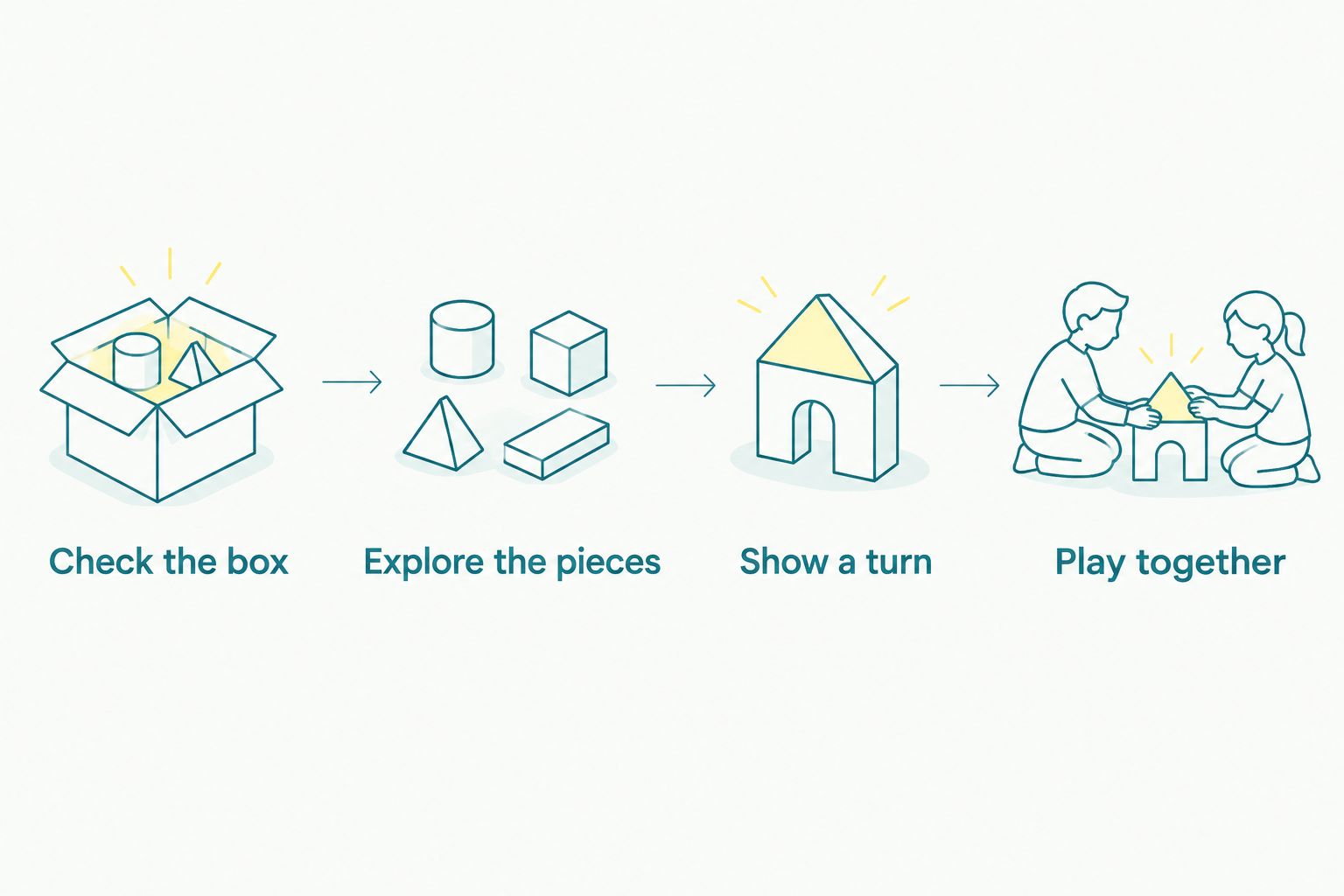
Use a gradual introduction that separates getting familiar with the pieces from following the game. Stay alongside your child throughout, and let their response guide whether you continue.
- Check the box. Read the age guidance, warnings and instructions before setting out the contents. Make sure you understand the game before explaining it.
- Explore the pieces. Let your child look at and handle the pieces under supervision. Describe what you notice without asking for a performance.
- Show a turn. Demonstrate the next action from the supplied instructions. Keep your explanation connected to what your hands are doing.
- Play together. Invite your child to take part and help when needed. Stop when the activity is no longer enjoyable.
A calm introduction gives you something useful to observe: which parts your child enjoys and where your help is needed. You are choosing how to present the game, not measuring your toddler against a deadline.
What if your child only wants to move the pieces around?
Treat that as an opportunity to explore together rather than a failed game. Describe an action, demonstrate how you would use a piece, and see whether your child joins you.
Keep a clear distinction between exploration and playing by the rules. Both can belong in your time together, but you do not need to call free exploration a completed round.
What if your child walks away?
Pack the game away without making finishing a condition of success. Offer it again on another occasion when you can sit together without rushing.
Do not buy a more complicated game simply because the first attempt was brief. First check whether your child enjoyed any part of the experience and whether a different moment would suit you both better.
Why suitability varies between children
The product’s toddler-focused design is the starting point, not a promise that every session will look the same. Use these factors to decide how to introduce it:
- Interest in shared games. First Orchard is a cooperative activity. Choose a moment when your child welcomes you joining their play.
- Comfort handling the pieces. The chunky wooden pieces are designed to be easy to grasp. Watch how your child uses them and offer help rather than insisting.
- Familiarity with game routines. A first board game introduces a different kind of activity. Demonstrate the sequence before expecting your toddler to remember it.
- Adult involvement. Plan to explain and participate. This recommendation is for shared play, not unattended use.
- The exact product and its guidance. Read the instructions and warnings for First Orchard itself. A similar name does not make another game interchangeable.
For a second-birthday present in 2026, these checks are more useful than choosing by theme alone. A cheerful orchard is appealing, but the important match is between the activity and the way your family wants to play.
First Orchard or Hanna Honeybee: which should you choose?
First Orchard is the closer match if you are specifically looking for chunky wooden pieces and an introduction to cooperative gameplay. Another cooperative option is My Very First Games – Hanna Honeybee, whose description lists 1–4 players and a playing time of 5–10 minutes.
Those figures belong to Hanna Honeybee. Do not use them as First Orchard specifications, and check the age guidance for either game before choosing.
| Game | Best for | Supported strengths | Limitation to consider |
|---|---|---|---|
| My Very First Games - First Orchard | A cooperative introduction with chunky wooden pieces | Toddler-focused gameplay; pieces described as easy to grasp | Choose for adult-supported play rather than independence |
| My Very First Games - Hanna Honeybee | A cooperative option with a listed short playing time | Listed for 1–4 players and 5–10 minutes | The listed duration does not tell you whether your child will enjoy the theme or activity |
For this particular question, First Orchard is the direct choice. Hanna Honeybee is an option to consider when you want another cooperative theme, not evidence that you need several games to get started.
Habauk lists both HABA games. Choose the activity you want to share, then read that product’s guidance rather than treating the range as interchangeable.


Does my 2-year-old need to know colours before playing?
A 2-year-old does not need to demonstrate colour vocabulary before you introduce the pieces. You can name colours as you explore together and help with the actions described in the instructions.
Avoid making every turn a quiz. The point of introducing a first game is to share the activity, not require your child to pass a colour-naming test before joining in.
Can my 2-year-old play First Orchard alone?
For a 2-year-old, choose First Orchard as a game you will play together. Adult support lets you explain the activity, help with handling and follow the safety guidance.
Do not confuse exploring pieces with independently managing a board game. If independent play is your main buying priority, reconsider whether a shared first game matches that brief.
Is First Orchard a good second-birthday gift?
For a 2-year-old, First Orchard is a thoughtful option when the family wants to introduce cooperative board games. Include the expectation that an adult will join in, and check the current packaging guidance before gifting.
For your 2026 gift list, choose it because it offers something to do together. You do not need to promise educational results or immediate rule-following to make that a worthwhile present.
FAQ
Is HABA First Orchard suitable for a 2 year old?
Yes—HABA First Orchard is a suitable first board game for a 2-year-old with adult support and attention to the box’s age guidance and warnings. Its description identifies toddler-focused cooperative gameplay and chunky wooden pieces that are easy to grasp.
What makes First Orchard a good first board game?
First Orchard introduces toddlers to cooperative gameplay using chunky wooden pieces. Choose it for a shared introduction to games rather than expecting independent rule-following.
Does my toddler need to name colours before trying First Orchard?
Your toddler does not need to pass a colour-naming test before exploring First Orchard with you. Name colours naturally, demonstrate actions and use the supplied instructions when introducing gameplay.
What should I do if my child will not follow the rules?
Begin with supervised exploration and demonstrate the game gradually. Stop if the activity becomes frustrating, and offer it again another time without making finishing compulsory.
Is First Orchard the same as Orchard Cooperative Board Game?
No—My Very First Games - First Orchard and Orchard Cooperative Board Game are separate products. Check the exact title and use the age guidance and instructions belonging to your copy.
Can I leave my toddler to play First Orchard independently?
Treat First Orchard as supervised, shared play for your toddler. Join the activity, guide the game and follow the warnings supplied with the product.
How long does Hanna Honeybee take compared with First Orchard?
My Very First Games - Hanna Honeybee lists a playing time of 5–10 minutes. That figure belongs to Hanna Honeybee and should not be treated as First Orchard’s playing time.
One last thing
Your toddler does not have to finish a game to have enjoyed meeting it. Notice whether they welcome another turn, reach for a piece or invite you back into the activity; use that response to shape the next session.
When choosing HABA games from Habauk in 2026, start with the experience you want to share. For First Orchard, that means a gentle invitation to play together—not a race to master the rules.