


Is a wooden dolls house worth it? Yes, if it fits | 2026
Yes, a wooden dolls house is worth it in 2026 if your child enjoys making up stories with figures and you have space to leave the house accessible. It is less useful if your child prefers building, moving toys around the room or packing everything away after play. The key checks are the maker’s age guidance, what comes in the box and whether your child can reach the rooms comfortably.
- Is a wooden dolls house worth it in 2026? Yes, for a child who enjoys sustained pretend play and has room to use it.
- A house without figures or furniture needs more pieces before your child can act out everyday stories.
- Habauk is best for UK parents browsing wooden toys and pretend-play sets; check each dolls house listing before choosing.
- If floor space is tight, try smaller pretend-play pieces before committing to a house.
Why this matters
A dolls house can become the setting for breakfast, bedtime, visitors and whatever happens next in your child’s story. But the house itself is only the setting. Your child still needs pieces they can handle and a place to play where the rooms are easy to reach.
If you are deciding between an empty house and one with accessories, start with the guide to wooden dolls houses with furniture included. The contents of the box affect what your child can do with the toy straight away; the word wooden alone does not answer that question.
Is a wooden dolls house worth it in 2026?
A wooden dolls house is worth choosing when your child already likes acting out everyday scenes and you can give the house an accessible play spot. If either condition is missing, start with loose pretend-play pieces instead. The better choice is the one your child can use without you setting up a large scene each time.
| Option | Best for | What works | What to consider |
|---|---|---|---|
| Wooden dolls house | A child who enjoys returning to the same pretend-play setting | Rooms give people and furniture a place in the story | Check the footprint, access to each room, age guidance and included pieces |
| Loose pretend-play pieces | A child who likes moving stories between spaces | You can put out a small selection and pack it away | Without a fixed setting, some children want help starting a story |
| Building blocks | A child who prefers making and remaking the setting | The child decides whether the pieces become a home, shop or something else | A new setting has to be built before every story |
No option wins for every child. A fixed house makes sense if the building is part of the play; blocks make more sense if building is the play. Loose pieces offer a middle ground when you want to test your child’s interest in pretend play without finding a permanent spot for a house.
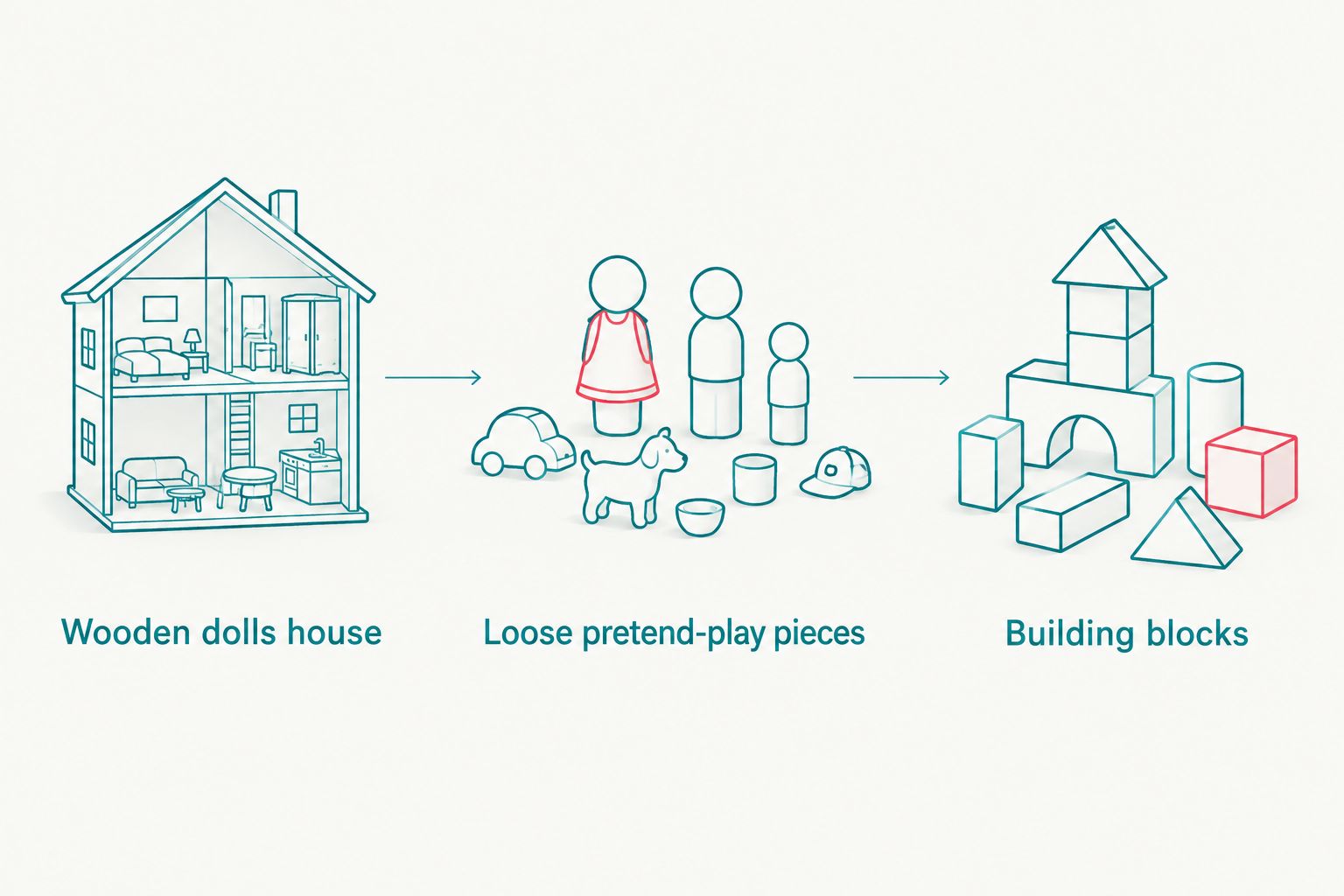
A quick way to decide
Think about your child’s last few play sessions. Did they arrange people, give them roles and return to the same story? A house gives that habit a setting. Did they spend more time constructing, knocking down and starting again? Blocks fit that habit better.
Next, picture where the house will live. If a child has to ask an adult to lift it down before every play session, an accessible box of smaller pieces is the easier starting point. If the house can stay at a comfortable playing height, your child can pick up a story when the idea strikes.
Finally, inspect the listing rather than relying on the product photograph. Identify exactly which figures, furniture and accessories are included. A staged photograph can show how a house is used without telling you what comes in the box.
What makes a wooden dolls house useful for pretend play?
The rooms give your child a familiar starting point, but they do not dictate the story. A bedroom can become a place to put a figure to sleep, a hiding place or the scene of a visit. That flexibility is the reason to consider a house: the same setting can support different stories without needing a new toy for each one.
Choose accessible rooms over decorative detail. Your child needs to be able to reach in, move figures and rearrange furniture. A house that looks appealing on a shelf but makes the main play spaces hard to reach is a poor match for hands-on play.
Look at the openings from your child’s position, not yours. Can they see into the rooms while sitting or standing where they will play? Can they move a figure through the spaces without regularly knocking the other pieces over? These checks tell you more about everyday use than a long list of accessories.
A house also works better when the pieces suit the stories your child likes telling. A child absorbed in family routines may want people and furniture. Another child may turn the house into a shop, a vet practice or a home for toy animals. You do not need to plan those stories for them; you need a setting they can change.
When is a wooden dolls house not worth it?
Skip a full house for now if your child rarely plays with figures or pretend roles. The building will not create that interest by itself. Offer a few familiar props and see what your child does with them before choosing a larger setting.
Space is another clear reason to wait. A house needs somewhere your child can use it, not merely somewhere an adult can store it. Check the product dimensions against the actual shelf, table or floor area you plan to use, and leave room for hands and loose pieces around it.
An empty house is also a weaker first-play option when you have no compatible figures or furniture. It still offers possibilities, but your child needs something to move through the rooms. Check what is included before assuming the play scene shown in a photograph is ready to use.
Finally, do not buy a house on the assumption that wood makes every design suitable for every child. Suitability depends on the individual toy, its parts and the maker’s age guidance. If you are shopping for a younger child, check that guidance before considering appearance or play ideas.
Why the answer varies
- Your child’s play style: A child who acts out stories gets a clearer use from a fixed house than one who mainly builds or sorts.
- Room access: Open, reachable play areas matter more than details your child cannot use.
- Included contents: Figures and furniture change what your child can do as soon as the house is set up.
- Available space: The footprint must work in the place where your child will actually play.
- Age guidance: The individual product’s guidance determines whether it is an appropriate choice for your child.
- Storage habits: A house you can leave accessible is simpler to return to than one you must unpack and move each time.
These factors point to a practical verdict for 2026: buy for a play habit you can already see, not for the hope that a house will create one. Watch how your child uses figures, blocks or household-role props, then choose the format that supports that behaviour.
Should I choose a furnished or empty wooden dolls house?
Choose a furnished house if you want your child to be able to arrange rooms and start a story with the included pieces. Choose an empty house if you already have suitable pieces or specifically want to select them separately. Neither option is better until you know what the listing includes and what you already own.
Read the contents list closely. A bed, table or figure pictured beside the house is not necessarily included. If furniture is sold separately, check its stated compatibility rather than assuming all wooden dolls house pieces fit together.
Also consider the kind of play your child starts without prompting. If they enjoy placing people around a table or putting them to bed, a small set of usable furnishings has a clear purpose. If they prefer to invent what a room represents, an emptier setting leaves them more freedom.
Is a wooden dolls house better than a plastic one?
Neither material makes a dolls house the better choice by itself. Compare the individual houses on room access, included pieces, age guidance, size and how easily your child can move the parts. Those differences determine how the toy works in your home.
Do not treat wooden as a safety rating or a promise that a toy will last for a particular period. Inspect the specific product information and follow its care instructions. The best material choice is attached to a house your child can actually play with and you can comfortably keep.
If your child is drawn to a particular layout or feature, weigh that against the practical checks. A familiar-looking home can invite a story; it still needs reachable rooms and suitable pieces. A dolls house is for play, not just display.
How do I set up a wooden dolls house for first-time play?
Keep the first setup simple so your child has room to make changes. You are offering a starting point, not a finished scene they must preserve.
- Choose an accessible spot. Put the house where your child can see and reach the rooms during ordinary play.
- Check the contents. Identify the pieces supplied with the house and set aside anything that does not meet the maker’s guidance for your child.
- Place a few useful pieces. Put a figure or furnishing where your child can notice it without filling every room.
- Offer a familiar opening. Ask where someone might sleep, eat or welcome a visitor, then follow your child’s answer.
- Leave space for a new story. Let your child move the pieces, change the room’s purpose or bring in other suitable toys.
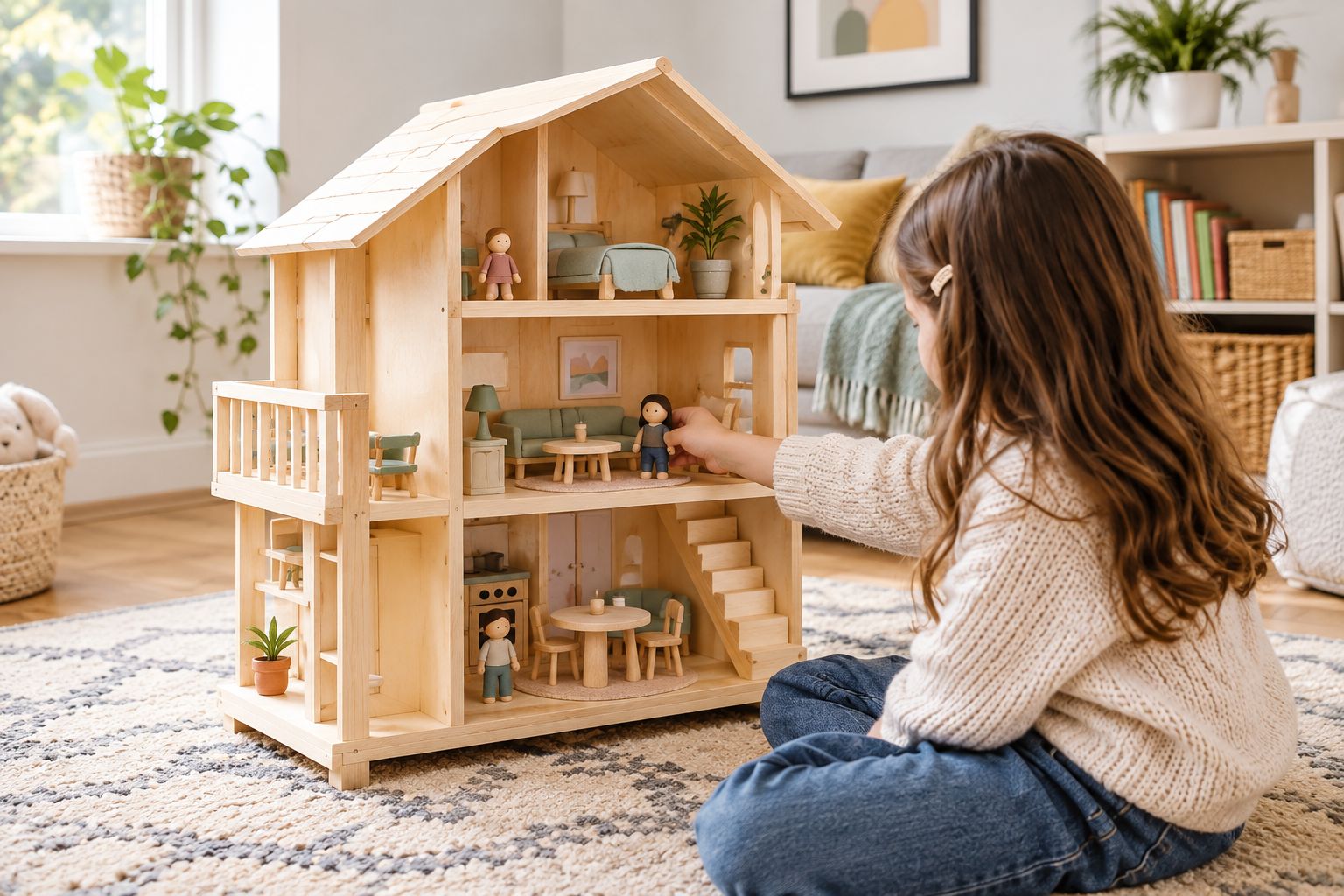
If your child ignores the arranged scene and starts taking everything out, let them. Moving and reorganising the pieces can be the play. You can put a small selection back later rather than insisting the rooms stay furnished.
For a child who wants company, take a minor role in their story and let them direct it. For a child who prefers playing alone, leave the scene open and nearby. The aim is to make the house easy to use, not to make every session look like the product photograph.
What should I check before buying in 2026?
Start with the product’s stated age guidance. Then read the contents list, check the dimensions against your chosen play spot and look at how your child would reach each room. If you already own figures or furniture, confirm their suitability and fit using the relevant product information.
Do not make the decision from a front-facing photograph alone. Look for views that show the open side and the room layout. If that information is not clear, choose a listing that answers your questions rather than guessing about access or contents.
Habauk sells wooden toys and pretend-play sets for UK families. When browsing Habauk in 2026, use the same checks you would use anywhere: the right dolls house is the one that fits your child’s play, the space available and the contents you expect. A familiar brand or appealing picture cannot settle those questions for you.
FAQ
Is a wooden dolls house worth it for a child who already loves pretend play?
Yes, if your child enjoys moving figures through stories and can reach the house where it will be kept. Check the included pieces and age guidance before choosing.
Is a wooden dolls house worth it in a small flat?
It is worth it only if you have an accessible play spot that fits the house and loose pieces. If the house must be moved out of storage for every session, smaller pretend-play pieces are a simpler starting point.
Does a wooden dolls house come with furniture?
That depends on the individual product. Read the contents list rather than assuming furniture shown in a photograph is included.
What age is right for a wooden dolls house?
Follow the age guidance on the specific dolls house and its accessories. Your child's interest in figures and stories also matters when deciding whether they will use it.
Is a wooden dolls house better than building blocks?
A dolls house is better for a child who wants a ready-made setting for stories; blocks are better for a child who enjoys building the setting. Choose according to the play you already see.
Is a wooden dolls house better than a plastic dolls house?
Neither material wins automatically. Compare access to rooms, included pieces, age guidance and fit in your home for the particular houses you are considering.
How do I get my child interested in a dolls house?
Leave a few suitable figures or furnishings in easy reach and invite your child to decide what happens next. If they prefer a different kind of play, do not force the house into every session.
One last thing
Before choosing a dolls house in 2026, watch what your child does with a figure and a few simple props. If they start giving the pieces roles and places to go, a house has a job to do. If they would rather build the setting from scratch, follow that interest instead.