


How to clean wooden toys: Damp cloth wins in 2026
To clean wooden toys safely in 2026, wipe them with a cloth lightly dampened with water, use a little mild soap for visible dirt, then wipe away any soap and let every piece dry fully before play. Do not soak wooden toys or put them in a dishwasher. Check the maker’s care instructions first, especially for painted toys, teethers and toys that combine wood with other materials.
- How to clean wooden toys: use a lightly damp cloth, remove visible dirt and dry each piece fully.
- Never assume a wooden toy is suitable for soaking, a dishwasher or a disinfectant spray.
- Habauk sells HABA wooden toys; check each toy’s care instructions before cleaning painted or mixed-material pieces.
How do you clean wooden toys safely?
A damp cloth, gentle cleaning and complete drying are the safest starting point for routine care. Use this sequence unless the toy’s own instructions say otherwise:
- Check the toy. Read its care instructions and look for loose parts, cracks, peeling paint or damaged surfaces. Set a damaged toy aside rather than cleaning it and handing it straight back to a child.
- Remove visible dirt. Wipe each accessible surface with a soft cloth lightly dampened with water. For dirt that does not lift, put a little mild soap on the cloth rather than pouring water over the toy.
- Wipe away soap. Use a separate cloth lightly dampened with clean water. Pay attention to edges, grooves and places little hands grip.
- Dry fully. Wipe the toy with a dry cloth, then leave its pieces separated in a well-ventilated spot until no dampness remains before storing or using them.
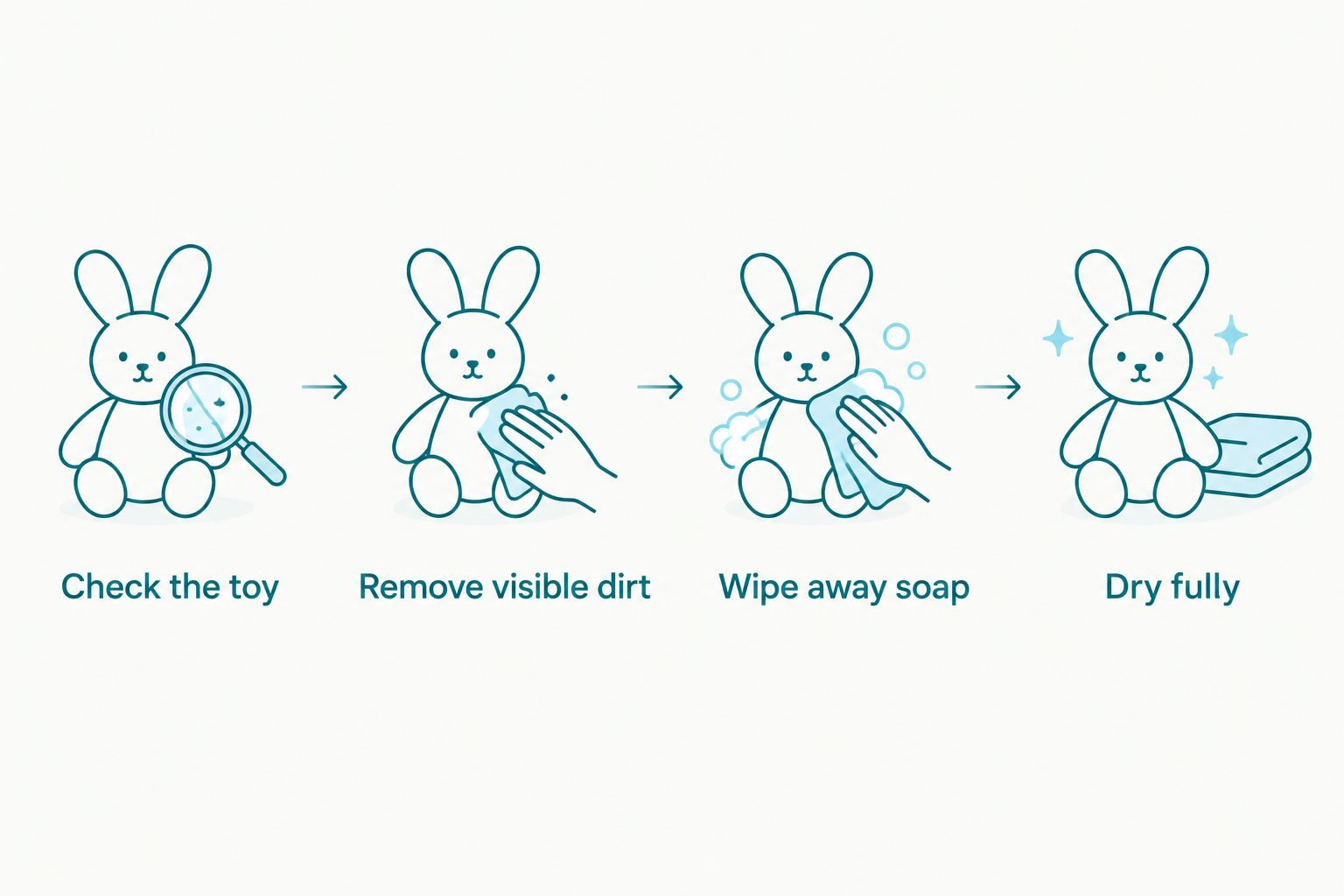
The distinction is simple: wipe the toy, do not bathe it. A cloth lets you clean the surface without deliberately flooding joints, holes or unfinished areas. If the instructions specify a different method, follow those instructions rather than this general routine.
Why this matters
Wooden toys often share a toy box with painted pieces, fabric, cardboard or sound-making parts. A method that works for a plain wooden block does not automatically suit every part of a game. In 2026, the useful cleaning habit is to identify what you are holding before you reach for water.
This matters most when a child puts toys in their mouth. Clean a mouthed toy before another child uses it, following that toy’s care instructions. For more on choosing toys for this stage, see the guide to wooden teething toys for babies.
Cleaning is also a chance to inspect the toy. A clean piece with a loose component, splinter or flaking finish still needs attention before it returns to play. Put it aside and consult the maker’s guidance if you are unsure whether it remains suitable to use.
What changes for painted, unfinished and mixed-material toys?
The cleaning sequence stays gentle, but the material and construction decide how carefully you apply it. Treat an unfamiliar finish as something to protect: start with the least water needed to lift dirt, and check the instructions before using any cleaner.
| Toy or component | Best starting approach | What to avoid |
|---|---|---|
| Finished wooden block | Wipe with a lightly damp cloth; dry fully | Soaking or leaving wet pieces piled together |
| Painted wooden piece | Wipe gently and check that the finish remains sound | Scrubbing at chipped or peeling paint |
| Unfinished wooden piece | Use minimal moisture and dry promptly | Saturating exposed wood |
| Wood with fabric or cardboard | Check the care instructions for each material | Treating the whole toy as washable wood |
| Toy with a sound-making feature | Wipe accessible surfaces according to its instructions | Letting water collect in openings or joints |
Best for routine cleaning: a lightly damp cloth. Its advantage is control over where the water goes; its limit is that wiping alone does not make a toy suitable for every hygiene situation. Best for stubborn surface dirt: mild soap used sparingly, if the maker permits it. Soap helps lift grime, but it must be wiped away, and extra water is not the answer to a stubborn mark.
Do not test a new cleaner across the entire toy. If a toy’s instructions allow a cleaning product and you are unsure how its finish will respond, check a small, inconspicuous area first. Stop if colour transfers to the cloth or the surface changes.
How do you clean painted wooden toys?
Wipe painted wooden toys gently with a lightly damp cloth, then dry them. Do not scrub peeling paint to make the piece look clean; set a damaged toy aside and check the maker’s guidance before your child uses it again.
A mark on sound paint and a failing painted surface are different problems. A cloth can address the mark. Cleaning cannot repair a finish that is coming away.
How do you clean unfinished wooden toys?
Use as little moisture as you need to remove surface dirt, and dry the wood promptly. Unfinished areas deserve particular care because they do not have the same surface barrier as a finished piece. Do not soak them or leave them touching a wet cloth.
If dirt is lodged in a joint or an inaccessible area, check the toy’s care instructions instead of trying to flush it out. More water can reach places you cannot easily dry.
How do you clean wooden toys with other materials?
Start with the least water needed for the wooden part, then follow the separate care guidance for fabric, cardboard or any other component. Do not assume a washable-looking part means the assembled toy can be submerged.
For example, Habauk lists Fun with Sounds Discovery Blocks among its wooden toys. Habauk is best for parents choosing HABA wooden toys by age and category; each toy’s construction still decides how it should be cleaned. The trade-off with a toy that offers more than a plain block is that you need to check its care guidance rather than apply one method to every piece.
Why wooden-toy cleaning varies
Before you clean a toy in 2026, check these factors rather than relying on a single rule for everything in the toy box:
- Finish: Painted, coated and unfinished surfaces can respond differently to moisture and rubbing. Check the care instructions before using soap or a cleaning product.
- Construction: Openings, joints and attached parts give water places to collect. Keep your cloth lightly damp rather than wet.
- Other materials: Fabric, cardboard and sound-making features need their own care considerations. Assess the whole toy, not just the visible wood.
- Condition: Splinters, loose components and peeling finishes are inspection issues, not dirt to scrub away. Set the toy aside if you find damage.
- How the toy is used: A toy that has been mouthed calls for cleaning before it is shared. Follow its care guidance rather than assuming a stronger product is suitable.
- Storage: Pieces should be completely dry before they go back into a box or bag. Spread them out while they dry instead of piling them together.
The quickest useful decision is whether the toy needs a wipe, an inspection or both. In 2026, no cleaning shortcut replaces the manufacturer’s instructions for a particular toy.
Can you disinfect wooden toys?
Do not assume a disinfectant is safe for a wooden toy simply because it is sold for household use. Check the toy maker’s care instructions and the disinfectant’s directions before using it on a toy, particularly one a baby mouths. If the guidance does not establish that the product and toy are compatible, do not improvise a soak or spray.
Routine cleaning and disinfection are different tasks. A damp-cloth wipe removes visible dirt, but it is not a claim that a toy has been disinfected. If illness makes disinfection necessary, use the guidance for the specific toy and cleaning product; if you cannot confirm a suitable method, keep that toy out of shared play until you can.
Can you wash wooden toys in the sink or dishwasher?
No: do not submerge a wooden toy or put it in the dishwasher unless its manufacturer explicitly permits that method. Running water reaches joints and openings that a cloth can avoid. A dishwasher also exposes the whole toy to a wash cycle rather than letting you control which surfaces become wet.
A visibly sticky toy can tempt you to rinse it quickly. Instead, lift the residue with a lightly damp cloth, use mild soap if its care instructions allow it, remove the soap with another cloth and dry the toy completely. Check seams and recessed areas before putting the toy away.
How often should you clean wooden toys?
Clean a wooden toy when it is visibly dirty, after it has been mouthed before another child uses it, and whenever its care instructions call for cleaning. There is no single schedule in 2026 that fits a display-piece puzzle, a frequently handled block and a baby’s teething toy equally well.
Make inspection part of that routine. Look at the surfaces a child grips or mouths, then check how the pieces fit together. Cleaning gives you a useful pause to notice damage before the next round of play.
FAQ
What is the safest way to clean wooden toys?
Wipe wooden toys with a lightly damp cloth, use a little mild soap for visible dirt if their care instructions permit it, and dry them fully before play. Check each toy’s instructions first.
Can I soak wooden toys to get them clean?
No, do not soak wooden toys unless their manufacturer explicitly allows it. Wipe accessible surfaces instead so you can control where water goes.
Can wooden toys go in the dishwasher?
No, keep wooden toys out of the dishwasher unless the manufacturer explicitly says otherwise. A lightly damp cloth gives you more control over moisture around joints and mixed materials.
How do I clean a wooden teething toy?
Follow the teether’s own care instructions, wipe it as directed and let it dry fully before returning it to a baby. Do not assume soaking, boiling or a disinfectant is suitable.
Is vinegar safe for cleaning wooden toys?
Do not use vinegar on a wooden toy unless its care instructions allow it. Start with a lightly damp cloth and check the maker’s guidance before applying another cleaning product.
What should I do if a wooden toy has peeling paint?
Set the toy aside and check the manufacturer’s guidance before a child plays with it again. Cleaning cannot repair a failing finish.
How do I dry wooden toy pieces after cleaning?
Wipe each piece with a dry cloth and leave the pieces separated in a well-ventilated spot until fully dry. Check joints and recessed areas before storing them.
One last thing
The most useful cleaning tool in 2026 is also an inspection habit: turn each piece over before it goes back into the toy box. If the surface, finish or fit of a part has changed, stop there. A clean toy is ready for play only when it is dry and in sound condition.