


Wooden Toys for Tactile Exploration: 2026 Guide
Tactile-seeking babies and toddlers need wooden toys built around texture, not just colour or shape, with the aim of building grip strength, fine motor control and sensory awareness through hands-on play. Their play differs from general toy shopping because texture, not novelty, drives attention span - a single ridged or dimpled surface often holds a toddler's focus longer than a toy with more features but flat, uniform surfaces.
- Wooden toys for tactile exploration build grip strength and sensory awareness through varied surface textures, not extra features.
- Habauk's Fun with Sounds Discovery Blocks pair texture with sound for toddlers from around 12 months. Best for multi-sensory play.
- The Cuddly Rainbow Round teether suits babies from 6 months who are learning to grip and mouth safely.
- Rotate 3-4 textured toys every two to three weeks in 2026 to keep exploration engaging rather than overwhelming.
Why tactile play matters for sensory-seeking toddlers
Grasping, mouthing and manipulating different textures in the first two years is a well-documented part of early fine motor development - it's how babies learn pressure, resistance and shape before they can name any of it. A toddler who only ever handles smooth plastic surfaces gets less varied feedback than one who moves between ridged wood, dimpled silicone-free grips and rounded edges.
For children with heightened or reduced sensory sensitivity, texture variety matters even more. Habauk's guide to wooden toys for children with sensory processing needs covers how to match texture intensity to a child's specific responses, which is worth reading alongside this guide if sensory sensitivity is a factor at home.
Wooden toys for tactile exploration also age well. A single ridged teether or textured stacking set can move from mouthing at 6 months to sorting and stacking at 18 months, which makes texture a smarter first investment than a toy tied to one narrow age window.
Start with plain grasping and mouthing toys (0-6 months)
Before reaching for anything branded, most babies get useful tactile input from simple household objects and a couple of purpose-built grasping toys.
- Offer a wooden ring or teether with rounded, unfinished edges
- Let babies mouth a clean wooden spoon under supervision
- Introduce a soft textured fabric square alongside the wood for contrast
- Avoid toys with a single flat surface and no edge variation
- Check that any finish is food-safe and free of sharp seams
Add ridged and dimpled teethers as grip strengthens (6-12 months)
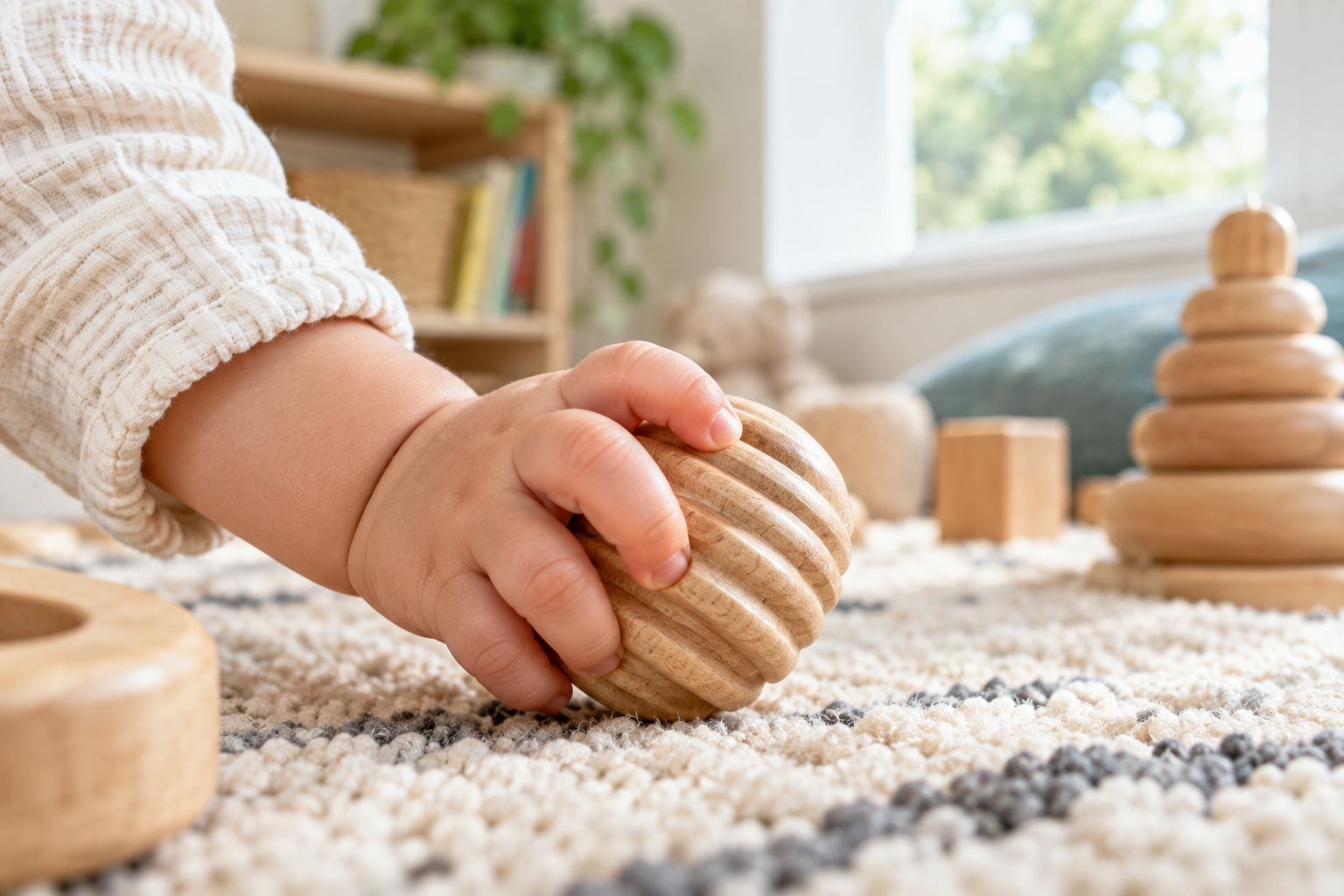
Once a baby starts deliberately gripping rather than reflexively grasping, ridged and dimpled surfaces give more useful sensory feedback than smooth wood alone. The Cuddly Rainbow Round teether is built for this stage, with varied surface texture across one small object rather than a set of identical pieces.
- Choose teethers with at least two distinct textures on one piece
- Look for a shape small hands can rotate independently
- Pair teething toys with short supervised floor sessions, not just cot time
- Rotate between two or three teethers rather than leaving one in constant use
Introduce sound-paired texture blocks (12-18 months)
At this stage, toddlers benefit from texture paired with a second sense - sound is the easiest to layer in without overloading a toy with mechanisms. Fun with Sounds Discovery Blocks combine acoustic feedback with textured wooden surfaces, which gives a toddler two reasons to keep exploring the same object.
- Pick blocks that rattle, click or chime differently from each other
- Let the toddler shake, drop and roll blocks rather than demonstrating the "right" way
- Watch which sound-texture combination gets repeated - that's the one to keep in rotation
- Avoid sets where every block sounds identical
Vary surface texture across a small toy set, not within one toy
A common misstep is buying one toy with five textures crammed onto it. Toddlers get more from three or four separate toys, each with a clear, distinct texture, than one overloaded piece.
- Mix smooth unfinished wood with a ridged or dimpled piece
- Add one fabric or mesh-based item for softness contrast
- Include something with a rounded, weighted grip for older toddlers
- Keep unpainted wood in the mix alongside painted pieces for texture contrast
A toy that offers only one texture teaches only one thing - that's the case for spreading tactile input across a small set rather than one "do everything" toy.
“A toy that offers only one texture teaches only one thing.”
Rotate textures every 2-3 weeks instead of buying more
Toddlers habituate to texture fast. Novelty, not quantity, keeps tactile play useful, and a rotation system gets more mileage out of fewer toys.
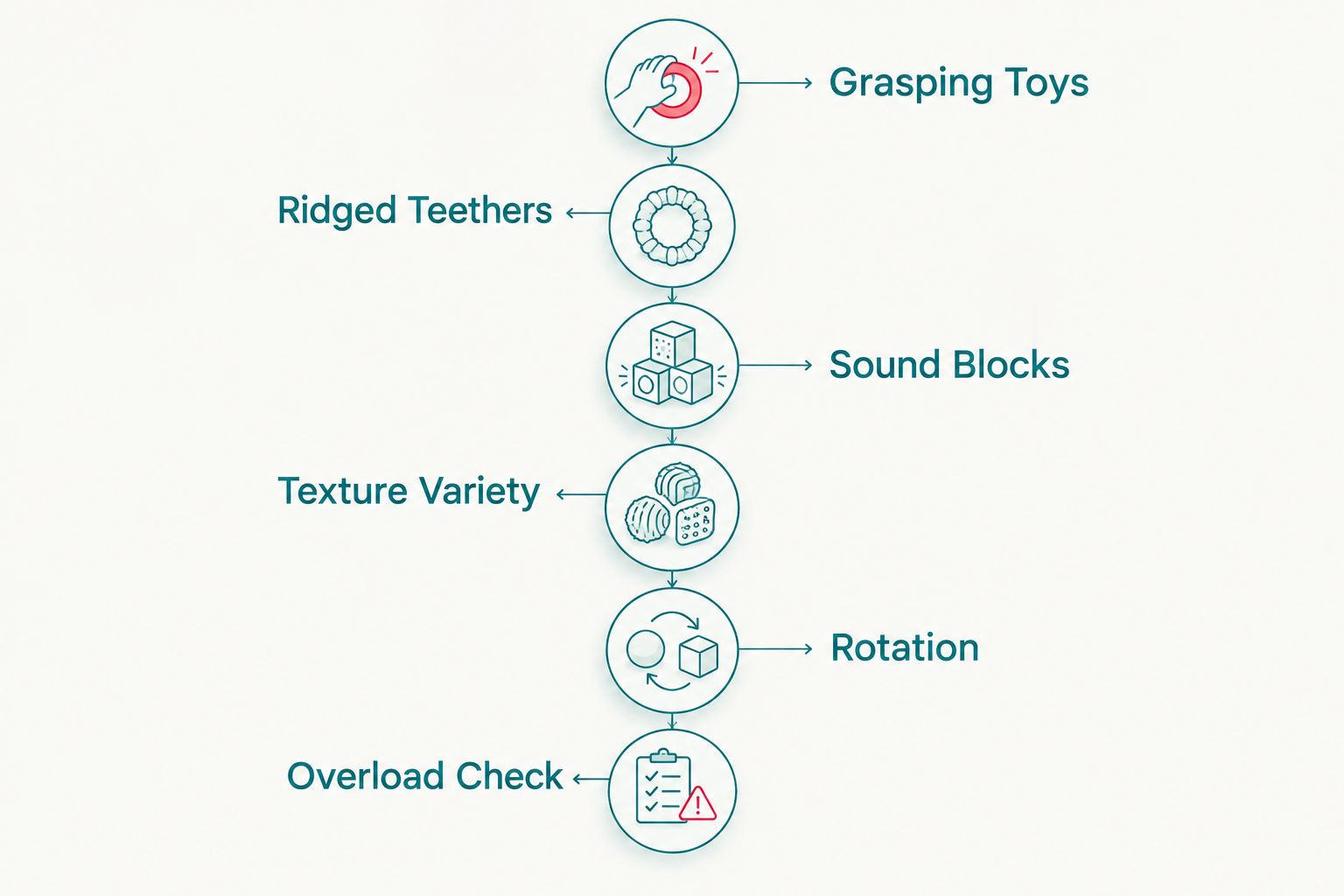
- Store half the collection out of sight and swap it in every two to three weeks
- Group toys by texture type rather than by theme when rotating
- Reintroduce a "retired" toy after a month - most toddlers respond to it again
- Use a low, open basket so the toddler can self-select from what's in rotation
Watch for signs of overload or under-stimulation and adjust
Not every toddler responds to texture the same way, and the right adjustment depends on which direction they're leaning.
- Turning away or fussing at a new texture may mean it's too intense - drop back to smoother surfaces
- Constant mouthing past 18 months can signal a need for more, not less, tactile input
- A toddler ignoring a toy after one session usually needs texture contrast, not a replacement toy
- Short attention on textured toys compared to screens or noise-heavy toys is common and not a red flag on its own
Comparing tactile toy options for toddlers
| Option | Best for | Key limitation |
|---|---|---|
| Grasping & teething toys | Babies 0-12 months learning to grip | Outgrown once mouthing stage passes |
| Sound-paired discovery blocks | Toddlers 12-18 months wanting multi-sensory feedback | Needs supervision around small parts |
| Stacking & sorting sets | Toddlers 18 months-3 years refining grip and sequencing | Less useful for pre-grasping babies |
| Building block sets | Toddlers 2 years and up combining texture with construction | Requires floor space to lay pieces out |
| Busy boards | Toddlers wanting varied fasteners and surfaces in one spot | Fixed layout, can't rotate individual textures |


Common mistakes with tactile wooden toys
- Buying one toy with too many textures crammed in instead of a small set with one clear texture each
- Skipping supervision because "it's wood, so it's safe" - small parts and teething stages still need eyes on
- Never rotating stock, so toddlers habituate to the same three textures for months
- Matching texture to age on the box, not to the child - some toddlers need gentler textures for longer, some need more intensity sooner
- Treating sound as a gimmick rather than a second sensory channel that extends how long a toy holds attention
FAQ
What age should babies start playing with tactile wooden toys?
Babies can start with plain wooden grasping and teething toys from around 6 months, once they can hold and mouth objects with intent. Ridged or dimpled textures work best from 6-12 months as grip strengthens.
Is wood better than plastic for texture-based sensory play in 2026?
Wood typically offers more natural surface variation - grain, weight and edge feel - than moulded plastic, which tends toward uniform smooth surfaces. Both can be safe; wood usually wins on texture variety alone.
How do I know if a wooden toy is safe for a teething baby?
Check for a food-safe finish, no sharp seams, and a size too large to be a choking hazard. Products designed for the 6+ months age range, like the Cuddly Rainbow Round teether, are built with this in mind.
What's the difference between sensory toys and busy boards?
Busy boards combine several fixed textures, fasteners and mechanisms on one panel, while sensory toys like teethers or discovery blocks focus on one or two textures per piece. Busy boards work well as a fixed play station; individual sensory toys rotate more easily.
Can tactile wooden toys help children with sensory processing needs?
Texture variety can help children who seek or avoid certain sensory input, though the right intensity and pace depends on the individual child. Matching texture to a child's specific responses matters more than any single product.
How often should I rotate texture toys for a toddler?
Every two to three weeks keeps most toddlers engaged, based on how quickly children typically habituate to a fixed set of textures. Storing half the collection out of sight and swapping it in works better than buying constantly.
Are painted wooden toys still good for tactile exploration?
Yes - painted and unfinished wood feel different under the fingers, so mixing both in a small toy set adds texture contrast rather than reducing it. Check that any paint used is food-safe for toys still being mouthed.
One last thing
The toy that gets ignored after one session is usually flagged wrongly as "not sensory enough." More often it's the opposite problem in 2026's crowded toy market - too many textures on one object, giving the toddler nowhere to focus. Cut a toy set back to three or four distinct, separate textures before adding anything new, and watch which one gets picked up twice in the same week - that's the texture worth building around.