


Wooden Colour Sorting Toys for Toddlers: 2026 Verdict
Toddler wooden colour sorting toys are wooden play sets designed to help two- and three-year-olds match, sort and stack pieces by colour, building early recognition skills through hands they can hold in their hands rather than a screen. Toddlers this age move fast and mouth things they shouldn't, so the toy has to survive drops and still teach something on the fiftieth play session, not just the first.
- Wooden colour sorting toys suit toddlers roughly 18 months to 3 years who can grip pieces bigger than 3.5cm.
- Start with one-to-one colour matching before moving to a sorting or stacking toy with multiple categories.
- Habauk's Underwater World Wooden Shape Sorter and Rainbow Risers Wooden Stacking Cylinder Game both build colour recognition as the core skill in 2026 ranges.
- Skip sets with loose parts under 3.5cm if a toddler still puts toys in their mouth.
- Rotate two or three colour sorting toys rather than leaving one out permanently to keep attention from dropping off.
Why this matters for toddlers
Colour recognition and matching are early classification skills - the same mental muscle a toddler will later use to sort laundry by owner or sort animals by type in a picture book. A wooden shape sorter for toddlers that leads with colour, rather than shape alone, gives a toddler a second way into the puzzle when the shape itself is too abstract.
Toddlers in this age bracket also have short attention windows - most sessions with a new toy run a few minutes before they move on, then come back to it later in the day. A colour sorting toy that offers more than one way to play (match, then stack, then build) earns more of those short sessions across a week than a toy with a single fixed outcome.
Match colours before shapes
Toddlers usually master matching a red block to a red slot months before they reliably separate objects by shape alone. Start there, not with a multi-attribute sorter that asks them to judge colour and shape at once.
- Pick a first toy with 3-4 colours maximum, not the full rainbow
- Use a toy where each colour has exactly one home, so there's no ambiguous "right answer"
- Narrate the colour out loud as your toddler places the piece ("that's the blue one")
- Let them get it wrong before you correct - the attempt is the practice
Check the age range before you buy
A sorting toy pitched at a 3-year-old often has smaller pieces and more categories than an 18-month-old can manage, and the reverse wastes a 3-year-old's patience on something too easy.
- Read the manufacturer's stated age range on the packaging, not just the toy's appearance
- For under-2s, favour pieces you can't fit through a toilet paper tube
- For 2.5-3 year olds, look for sets that add a second skill (stacking, pattern-matching) once colour sorting is mastered
- If a toddler solves a sorter in under a minute with no interest in repeating it, the toy has been outgrown
Pick a sorting mechanic that fits their stage
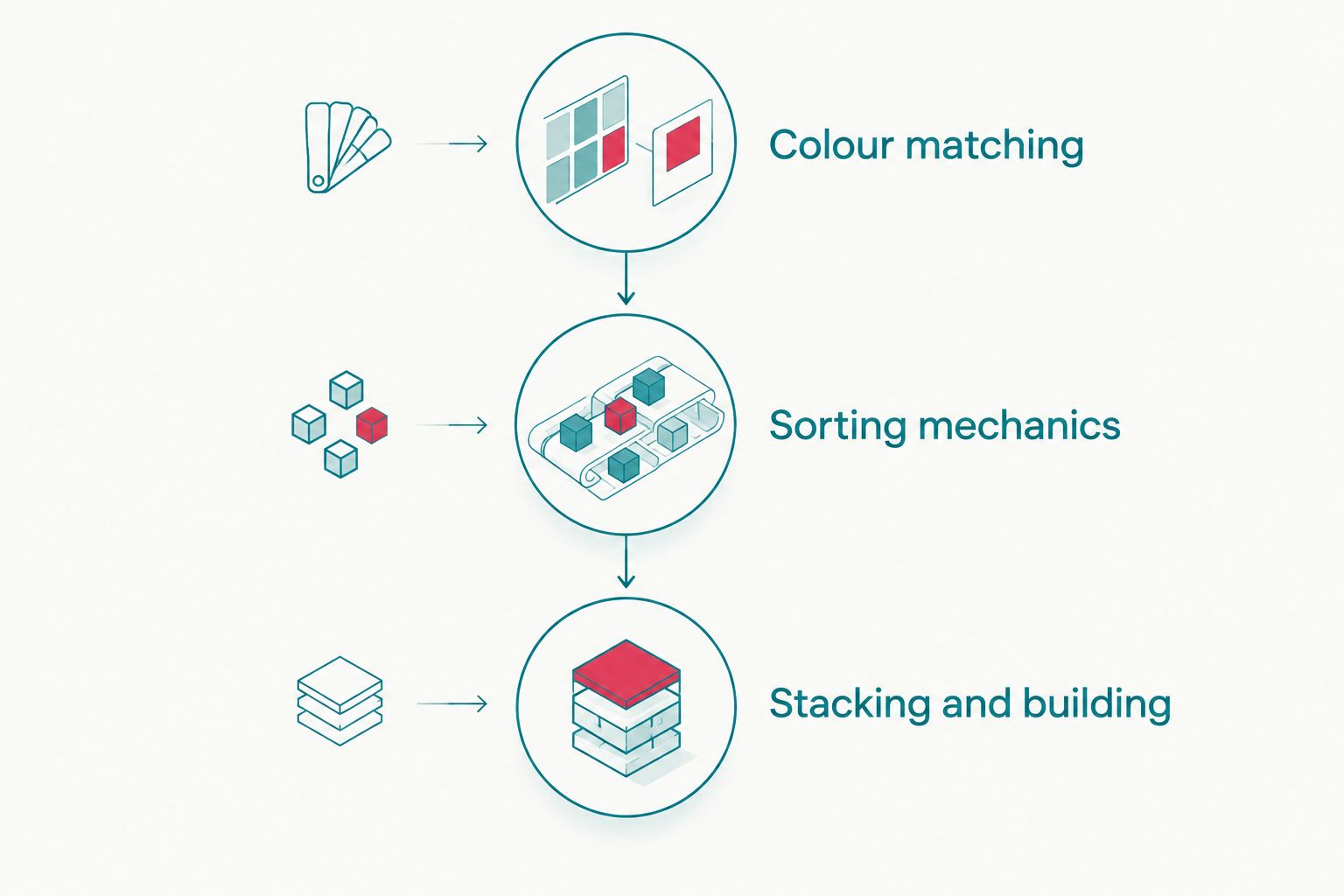
Not every colour toy sorts the same way, and the mechanic matters more than the colour count. A shape sorter with one slot per colour removes any guesswork; a stacking toy leaves the order open-ended.
- Slot sorters - one correct hole per piece, best for toddlers new to matching
- Stacking or nesting toys - order is flexible, better once matching is solid
- Building block sets - colour becomes one of several variables (size, shape) as skills grow
- Pattern or arranging games - introduce a card or template to copy, suited to toddlers nearing 3
The Rainbow Fabric Ball works well as a softer, lower-stakes intro to colour naming for toddlers who aren't ready to sit still at a sorting tray yet - it's colour play without the fine motor demand of fitting pieces into slots.
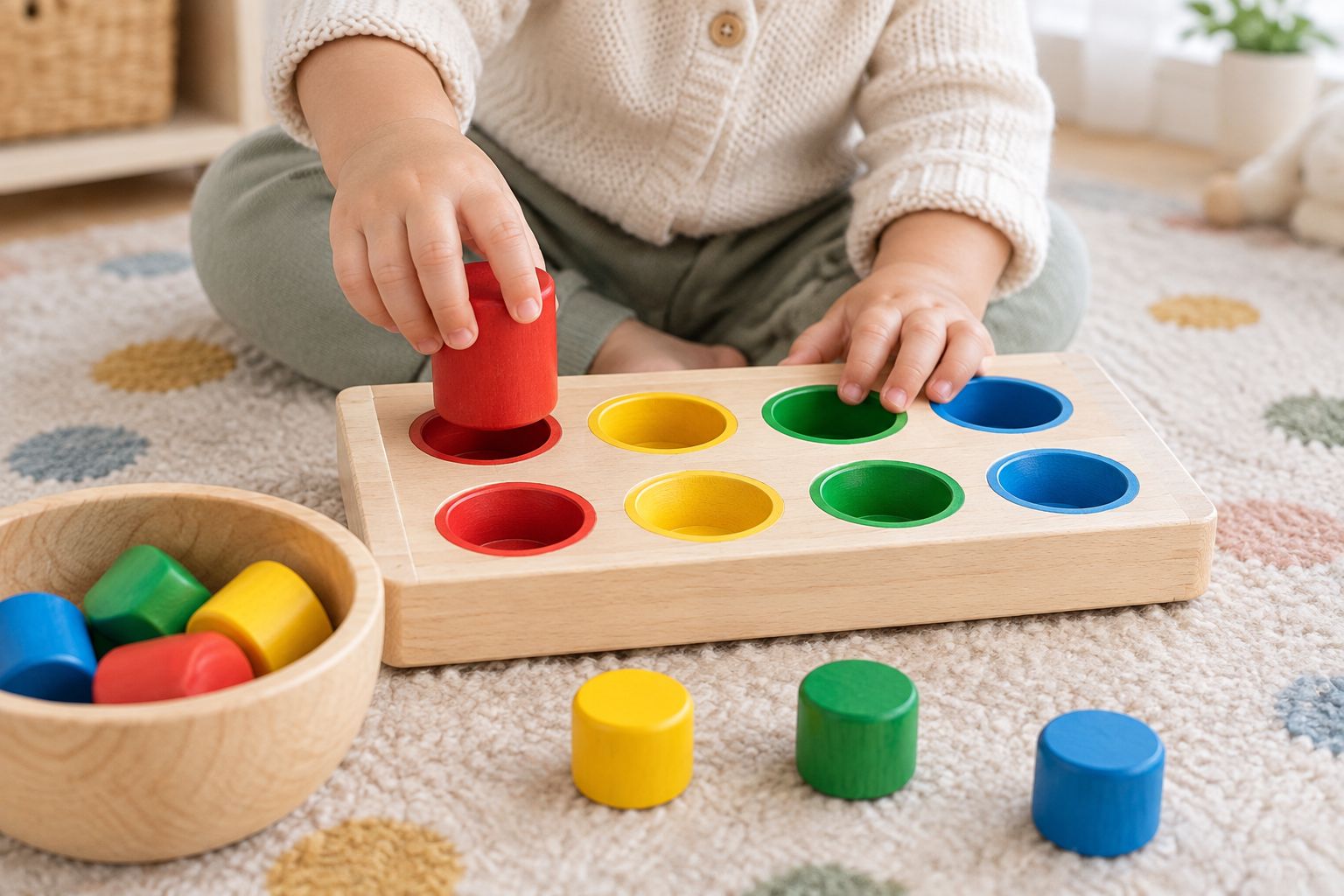
Test grip and piece size before you buy
A toddler's hands are still building the pincer grip through this stage, and a piece that's too small or too smooth slips out of a two-year-old's fingers before it reaches the slot.
- Pieces should measure at least 3.5cm in the smallest dimension
- Rounded edges over sharp corners - fewer frustrated drops
- A slight texture or grain helps small hands hold on
- Test whether the toy tips over easily when a toddler leans on it while sorting
Build in a stacking or building step
Once colour matching is automatic, the same colours can teach a second skill: stacking for balance, or combining into a small build. This is where a set earns a second and third year of play instead of one.
- Move from flat sorting trays to stacked rings or cylinders once matching is instant
- Introduce a simple building block set once a toddler stacks three or more pieces without toppling them
- Keep colour as the organising rule even as the task gets harder ("stack the blues, then the reds")
- Watch for a toddler starting to sort by two attributes at once (colour and size) - that's the next stage, not a step backwards
Rotate sets to keep interest
A colour sorting toy left out permanently loses its pull within a couple of weeks. Toys that disappear for a month and reappear get played with as if new.
- Keep 2-3 sorting toys in rotation, not the full collection
- Swap a set out once your toddler stops initiating play with it unprompted
- Bring a retired set back after a few weeks - most toddlers re-engage with it at a slightly higher skill level
- Pair a sorting toy with a matching book or activity to extend the theme without adding another toy
Watch for signs they're ready for the next stage
A toddler who's outgrown colour-only sorting will start grouping by size or shape unprompted, or get bored with a sorter that only asks for colour.
- Sorting a set in under a minute with no repeat play
- Starting to name colours before placing the piece, rather than after
- Combining two sorting toys into one game unprompted
- Losing interest in a slot sorter but staying engaged with open-ended stacking
Comparing colour sorting options for toddlers
| Option | Best for | Key strength | Key limitation |
|---|---|---|---|
| Slot shape sorters | Toddlers new to colour matching | One correct answer per piece, low frustration | Play often stops once every piece is placed |
| Stacking or cylinder games | Toddlers who already match colours reliably | Open-ended order keeps play going longer | Needs floor or table space to lay pieces out |
| Coloured building block sets | Toddlers moving from sorting into building | Doubles as construction play as skills grow | Loose pieces need supervision around younger siblings |
| Arranging or pattern games | Toddlers nearing 3, ready to copy a pattern | Adds a template step alongside free sorting | Pattern cards add an extra instruction to follow |
Verdict: for a first wooden colour sorting toy, a slot-based shape sorter with 4-5 colours wins on simplicity - move to stacking or building sets once matching stops being a challenge.


Common mistakes with toddler colour sorting toys
- Buying the full rainbow first. A sorting toy with 8+ colours overwhelms a toddler who hasn't mastered 3-4 yet - start smaller.
- Skipping straight to complex sorting. Jumping to sets that require sorting by colour AND shape before either skill is solid leads to frustration, not learning.
- Ignoring the mouthing stage. Choosing a set with small loose pieces for a toddler who still puts everything in their mouth is a safety miss, not a skill miss.
- Expecting solo play too soon. Toddlers under 2.5 usually need an adult narrating and modelling the match before they'll repeat it alone.
- Never rotating stock. Leaving every wooden toy out permanently in 2026 flattens novelty faster than buying more toys will fix it.
FAQ
What age are wooden colour sorting toys for?
Most wooden colour sorting toys suit toddlers from around 18 months to 3 years, though the exact range depends on piece size and the number of colours. Check the age guidance printed on the box rather than guessing from looks alone.
Is a shape sorter or a stacking toy better for colour sorting?
A slot-based shape sorter is better for a toddler just starting out because each piece has one correct home. A stacking toy suits a toddler who already matches colours reliably and wants an open-ended challenge.
How many colours should a toddler's first sorting toy have?
Start with 3-4 colours rather than a full rainbow set. Fewer options means fewer wrong guesses and faster mastery, which keeps a toddler motivated to keep going.
Are wooden colour sorting toys safe for toddlers who still mouth toys?
They can be, as long as pieces measure at least 3.5cm in the smallest dimension and edges are rounded. Sets with small loose pieces are a poor fit until mouthing stops.
Do colour sorting toys help with early maths skills?
Sorting by colour is an early classification skill, the same reasoning a toddler later uses to group objects by category or count sets of matching items. It's a building block toward maths, not maths itself.
What's the difference between colour sorting and shape sorting?
Colour sorting asks a toddler to match by one visual attribute; shape sorting adds a second, more abstract judgement about form and orientation. Most toddlers master colour matching first.
How long will a toddler play with a colour sorting toy before losing interest?
Interest usually drops once a toddler can solve the sorter instantly with no repeat play, often within a few weeks of daily use. Rotating the toy out and back in later restores interest at a higher skill level.
Can twins or siblings share one colour sorting toy?
One set works for siblings close in age if there are enough pieces for both to play without waiting, but toddlers at different stages usually need different mechanics - a slot sorter for one, a stacking set for the other.
One last thing
The toy that gets played with in 2026 isn't the one with the most colours - it's the one that still offers a new way to play after the sorting part is solved. A colour sorting toy that doubles as a stacking or building toy earns months more play than a single-purpose sorter, even at the same price point.