


Habauk vs Myriad Online: which is better in 2026
Choose Habauk if you want HABA toys and children’s games organised by age and category; choose Myriad Online if you want to explore natural toys alongside craft materials. This 2026 comparison separates shopping for a particular toy brand from shopping for a broader style of creative play.
- Habauk vs Myriad Online: choose HABA-focused shopping for named games, or natural toys and crafts for broader creative play.
- Habauk is best for parents specifically shopping for HABA toys and children’s games.
- Myriad Online is best for families exploring natural toys and craft materials together.
- Neither retailer wins on safety or value simply because a toy is wooden.
Why this matters
A lovely-looking toy is not necessarily the toy your child wants to play with. Before choosing a retailer, decide whether you need a game with instructions, a pretend-play companion, something to build, or materials for making things together.
The useful distinction in habauk vs myriad online is the starting point. One centres your search on HABA; the other suits a search across natural toys and crafts. Neither approach replaces checking the individual item’s age guidance, contents and care instructions.
For your 2026 shortlist, start with the play you want to make possible. A family game and a basket of craft materials are different purchases, even when both promise a cheerful afternoon away from screens.
At a glance
| Dimension | Habauk | Myriad Online |
|---|---|---|
| Best for | Parents specifically seeking HABA toys and games | Families exploring natural toys and crafts |
| Brand focus | HABA-focused shopping | Shopping beyond a HABA-only brief |
| Standout feature | Named children’s games alongside baby toys, dolls and pretend play | Natural toys and craft materials within the same shopping remit |
| Age suitability | Start with age categories, then check the exact item | Check the exact item’s age guidance and intended use |
| Open-ended creativity | Wooden toys, dolls and pretend-play categories | A starting point for combining toys with craft activities |
| Materials and safety | Judge each product, not the retailer’s name | Judge each product, not the retailer’s name |
| Pricing model | Individual retail purchases; compare the complete basket | Individual retail purchases; compare the complete basket |
| Gift choice | A focused route when the recipient wants HABA | A useful route when the recipient wants natural toys or crafts |
Habauk wins when your shopping brief already says HABA
Best for: the parent replacing a familiar favourite or choosing a named HABA gift. A brand-focused shop gives you a clear starting point when you already know the manufacturer you want. You can stay within that brief while moving between games, wooden toys, dolls, pretend-play sets and baby toys.
That focus is also its limitation. If your aim is to compare different manufacturers, a HABA-centred search does not answer the whole question. Begin with the desired brand only when it genuinely matters to your family.
Think about why you want that brand. Perhaps the gift recipient has requested a particular game, or you want to browse the same maker across several play categories. Those are useful reasons; assuming every item from a familiar brand suits every child is not.
For a first-time buyer, write down the activity before the manufacturer. Your shortlist should still make sense if you remove the brand name from it.
Myriad Online wins when the brief extends beyond HABA
Best for: the family browsing natural toys and crafts rather than seeking one manufacturer. Myriad Online’s natural-toy and craft focus makes it a more relevant starting point when you want to explore that combination. The shopping question becomes what your child would enjoy doing, rather than which HABA item to choose.
That is especially useful when you are considering different kinds of gifts: something for imaginative play, something to make, or an activity to share. You can keep the creative brief open while deciding which direction fits.
The trade-off is choice. A broader brief asks you to make more decisions about materials, play style and how much adult help an activity needs. It does not automatically produce a better gift.
If you already have an exact HABA title in mind, browsing more widely adds another step. Myriad Online wins for exploration, not simply because a broader search is always better.
Named games favour the HABA-focused route; crafts favour Myriad Online
Best for shared game time: a clearly identified game. Best for making together: a craft-led search. These are different strengths, not competing versions of the same activity.
Animal Upon Animal Game Compact Version is one named game in the HABA-focused catalogue. Its compact-version designation is a reason to check the exact edition rather than treating every similarly named listing as interchangeable.
Before choosing any game, read its player guidance, rules and contents. A familiar title alone does not tell you whether it fits your child, your table or the people joining in. Do not assume a compact edition has the same components as another version.
For craft shopping, begin with the activity instead: drawing, modelling, making or decorating. Myriad Online is the more relevant starting point when craft materials are part of your brief. Check what the activity requires and whether an adult needs to prepare or supervise it.
The practical downside on each side is different. Games ask your family to engage with a particular way of playing; crafts ask you to think about preparation, mess and clearing away. Choose the activity you are happy to support, not just the attractive finished result.
Neither retailer replaces checking the exact age guidance
Best for age suitability: the individual product’s instructions, not a store-wide label. Browsing by age helps narrow a search, but it does not make every item in a category interchangeable.
Consider three shopping situations: a first birthday at 12 months, a gift for a 2-year-old, and an activity for a 3-year-old. Those are different briefs, not recommended ages for any product named here. For each, check the manufacturer’s guidance rather than guessing from the photograph.
At 12 months, you need to examine the item’s intended use and warnings. For a 2-year-old, also think about the actions the toy asks the child to perform. For a 3-year-old, consider whether instructions, turn-taking or adult participation match the play you have in mind.
Those questions apply equally to both retailers. A wooden construction toy is not automatically a baby toy, and an appealing craft activity is not automatically suitable for unsupervised use.
Treat age browsing as the beginning of your 2026 decision, not the final safety check. If younger siblings share the room, include them in your assessment of small parts and storage.
Myriad Online wins for a brief that combines open-ended play and making
Best for: parents who want to explore toys and creative materials together. If your child enjoys inventing rather than following a fixed game, a natural-toy and craft search fits that brief. Myriad Online’s remit makes that combination central to the comparison.
Open-ended play does not need an elaborate setup. Decide whether your child wants to build, tell stories or make something, then look for an item that supports that activity. Leave room for their ideas rather than planning every moment.
HABA-focused shopping still includes dolls, wooden toys and pretend-play sets, so it is not limited to structured games. The distinction is that crafts broaden the shopping brief beyond choosing a toy.
Use these three prompts to keep that broader search manageable:
- Build: choose for the making and rearranging your child enjoys.
- Tell stories: choose for characters, settings and pretend situations.
- Make together: choose for an activity you are willing to prepare and share.
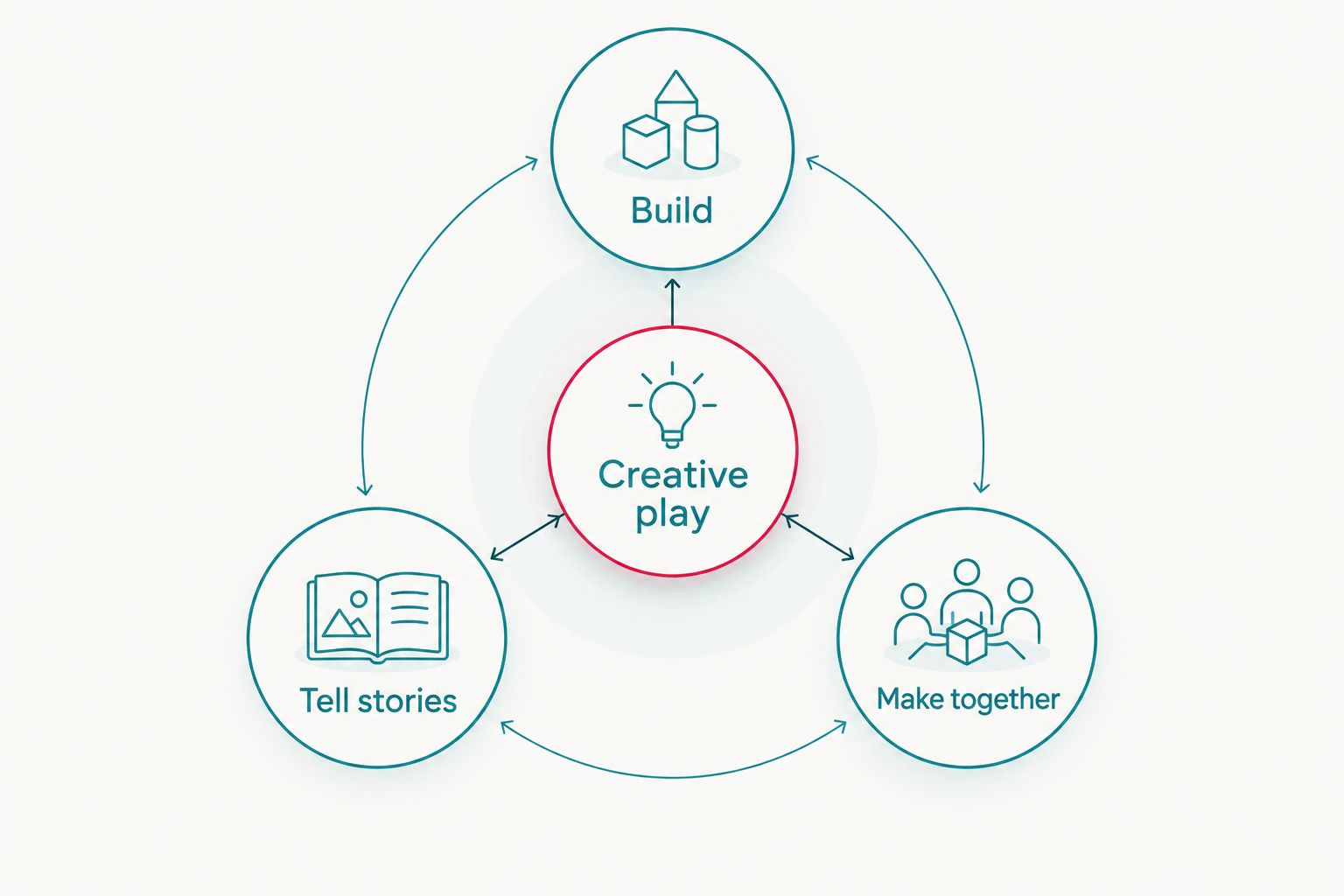
The limitation is practical: open-ended materials still need somewhere to live, and making activities still need your attention. A creative brief works best when it fits your home as well as your child’s interests.
Neither retailer wins on safety or materials alone
Best for safety: a product-level check. Wooden construction, natural materials and a friendly-looking design are not substitutes for age guidance or warnings. Assess the complete toy, including any separate pieces and accessories.
The same discipline applies to craft materials. Check their intended use, instructions and supervision requirements. Do not assume that an item described as natural is appropriate for mouthing or for every age group.
Care matters too. Follow the manufacturer’s cleaning and storage instructions rather than applying a household method to every wooden toy. If an item becomes damaged, inspect it before returning it to play.
Neither store earns a blanket safety win in this comparison. Choose the suitable item first; choose the retailer second. That is a more useful rule than ranking shops by the appearance of their toys.
Pricing is a basket decision, not a retailer-wide verdict
Both options involve choosing individual retail items rather than selecting a subscription plan. That gives you control over what goes into your basket, but it also means the decision changes with the exact products you compare.
For a fair 2026 comparison, match the manufacturer, product name and edition wherever you are considering the same toy. Then review the complete checkout total and the terms that matter to your order. A similar title is not enough to establish that two listings describe the same item.
When comparing different purchases, ask what completes the activity. Read the contents of a game or toy set; for a craft project, check whether you need anything else. Do not assume the photograph shows everything included.
Keep these questions beside your shortlist:
- Is this the exact item or edition I intended to buy?
- Does the listed content support the activity I have planned?
- Have I checked the checkout terms before ordering?
- Am I buying something my child wants to use, rather than merely something I like looking at?
Neither retailer receives an overall value win. The useful comparison is between complete, suitable purchases, not between shop names.
Gift shopping favours a named request over a guessed preference
Best for a specific HABA request: the HABA-focused route. Best for a natural-toy or craft brief: Myriad Online. A recipient’s interests give you a stronger starting point than a general claim about which retailer is better.
For a 2026 birthday gift, ask the parent what the child enjoys and what they already own. Also ask whether they would welcome an activity that needs adult involvement. A making project and a self-contained toy create different responsibilities for the receiving household.
Avoid buying an extension or alternative edition solely because its name resembles a familiar toy. Check the exact listing and any stated compatibility. For a surprise gift, choose something that stands on its own unless the parent has confirmed the relevant existing set.
If you cannot name the play the gift supports, pause before ordering. A short conversation often does more for the choice than another page of browsing.
Final verdict: choose the shop that matches your play brief
Choose Habauk if you are the HABA-focused parent
Habauk is best for parents specifically shopping for HABA toys and children’s games. Choose that route when your brief names the brand, a particular game, or one of its toy categories. Keep checking suitability at item level rather than letting brand familiarity make the whole decision.
Choose Myriad Online if you are the creative-play explorer
Myriad Online is best for families exploring natural toys and craft materials together. Choose that route when you want to consider making activities alongside toys and are comfortable narrowing a broader brief. Start with your child’s interests and the adult involvement you can offer.
| Dimension | Winner |
|---|---|
| Specific HABA shopping | Habauk |
| Exploration beyond a HABA-only brief | Myriad Online |
| Named HABA games | Habauk |
| Craft-led shopping | Myriad Online |
| Age suitability | No retailer-wide winner; check the item |
| Open-ended play combined with making | Myriad Online |
| Materials and safety | No retailer-wide winner; check the item |
| Pricing and value | No retailer-wide winner; compare the basket |
| Gift choice | The retailer matching the recipient’s request |
FAQ
Is Habauk better than Myriad Online?
Habauk is better for a shopping brief specifically centred on HABA toys and games; Myriad Online is better for exploring natural toys and craft materials together. Neither is the automatic winner for every child or purchase.
Which should I choose for HABA games?
Choose the HABA-focused route when you want to browse named HABA games. Check the exact title, edition, age guidance and contents before ordering.
Which is better for craft activities with children?
Myriad Online is the more relevant starting point when craft materials are part of your shopping brief. Check the activity’s intended age, preparation needs and supervision instructions.
Are wooden toys automatically safer for toddlers?
No, wooden construction alone does not establish that a toy is suitable for a toddler. Read the individual product’s age guidance and warnings, and consider younger children who share the play space.
How do I compare the cost of the same toy at two shops?
Match the exact manufacturer, product name and edition, then compare the complete checkout totals. Also review the contents and order terms so that you are comparing equivalent purchases.
Which shop is better for a first birthday gift?
Choose according to the child’s interests and the parent’s request, not the retailer’s name alone. For a first birthday, check the exact item’s age guidance and intended use before deciding.
Should I choose a game or an open-ended toy?
Choose a game when you want its particular rules-based activity; choose an open-ended toy when your child wants to invent the play. For either option, consider adult participation, space and the product’s age guidance.
One last thing
Before you finish your 2026 gift search, picture the first moment of play. Can you explain what your child will do with the item, and what you will need to do alongside them? If the answer is clear, you have a better buying brief than simply asking which shop wins.