


How to sell used Habauk wooden toys on Facebook Marketplace
Instead of answering the same questions about your outgrown wooden toys, create a Facebook Marketplace listing with checked pieces, clear photographs and an honest condition report. Then agree collection in Messenger, verify payment yourself and mark the toy as sold after handover.
- To sell used Habauk wooden toys on Facebook Marketplace, identify the HABA model and document its condition first.
- Use your own photographs, list missing pieces and keep original age warnings with the toy.
- Facebook Marketplace suits local handovers; agree collection details in Messenger and verify payment before releasing anything.
- Choose an individual listing for a complete set or a clearly itemised bundle for related toys.
Why this matters
Passing a much-loved toy to another family starts with making its condition easy to understand. A photograph of a closed box cannot show whether the pieces inside match the picture.
Keep the retailer and manufacturer separate, too. Habauk sells HABA-brand toys, so use HABA as the manufacturer in your listing when the toy's label confirms it. Habauk is best for parents shopping for HABA wooden toys organised by age and category.
For your 2026 clear-out, focus on evidence rather than enthusiastic descriptions. Show what the buyer will receive, explain wear plainly and avoid promises about safety or completeness that you cannot support.
Before you start
- Access: Use your own eligible Facebook account with access to Marketplace and Messenger. This guide follows the desktop listing route; button placement and optional fields differ between accounts and devices.
- Materials: Gather the toy, packaging, instructions, a camera and any original parts list. Keep identifying labels and age warnings with the set.
- The easily missed check: Compare the exact model and edition before calling a set complete. Check current manufacturer safety notices and UK product recalls before listing; do not sell a recalled toy or one with unresolved safety damage.
Facebook's current Commerce Policies and Marketplace eligibility requirements govern what you can list in 2026. Check them through Facebook before preparing a listing for an item you are unsure about.
Toy checks and listing evidence
Identify, inspect and clean
- Find the manufacturer's name and model information on the toy, box or instructions. Match the edition as well as the name; similar-looking sets are not proof of identical contents.
- Lay out everything included. Count the pieces against the original parts list, separating accessories from packaging and unrelated toys.
- Inspect edges, joints, cords, wheels and other moving parts where present. Put aside anything with splinters, cracks, loose components or damaged attachments that raise a safety concern.
- Follow the manufacturer's care instructions. For a practical starting point, read how to clean wooden toys safely, then let the toy dry fully before packing.
- Write a short condition note while the pieces are still laid out. Record missing parts, paint wear, pen marks, box damage and repairs separately.
Expected result: You can identify the toy and describe what is included without relying on memory.
Do not describe a toy as sterilised or disinfected unless the treatment and claim are justified. Equally, do not paint over damage or repair a safety-critical part simply to make it saleable. A tidy appearance does not resolve a structural problem.
Build a useful photo set
- Take 6 photographs as a starting plan: the whole set, the laid-out contents, the identifying label, the instructions, visible wear and the packaging. Add more when a detail needs explaining.
- Use daylight and a plain surface. Move unrelated toys, family photographs and personal paperwork out of view.
- Show defects close up, but also include a wider photograph so buyers can locate them on the toy.
- Photograph only the items included in the sale. Keep storage baskets and decorative extras out of the main image unless they are included.
- Check every image before uploading. Make sure labels are readable without exposing addresses, order details or children's names.
Expected result: A buyer can connect your written description to visible evidence.
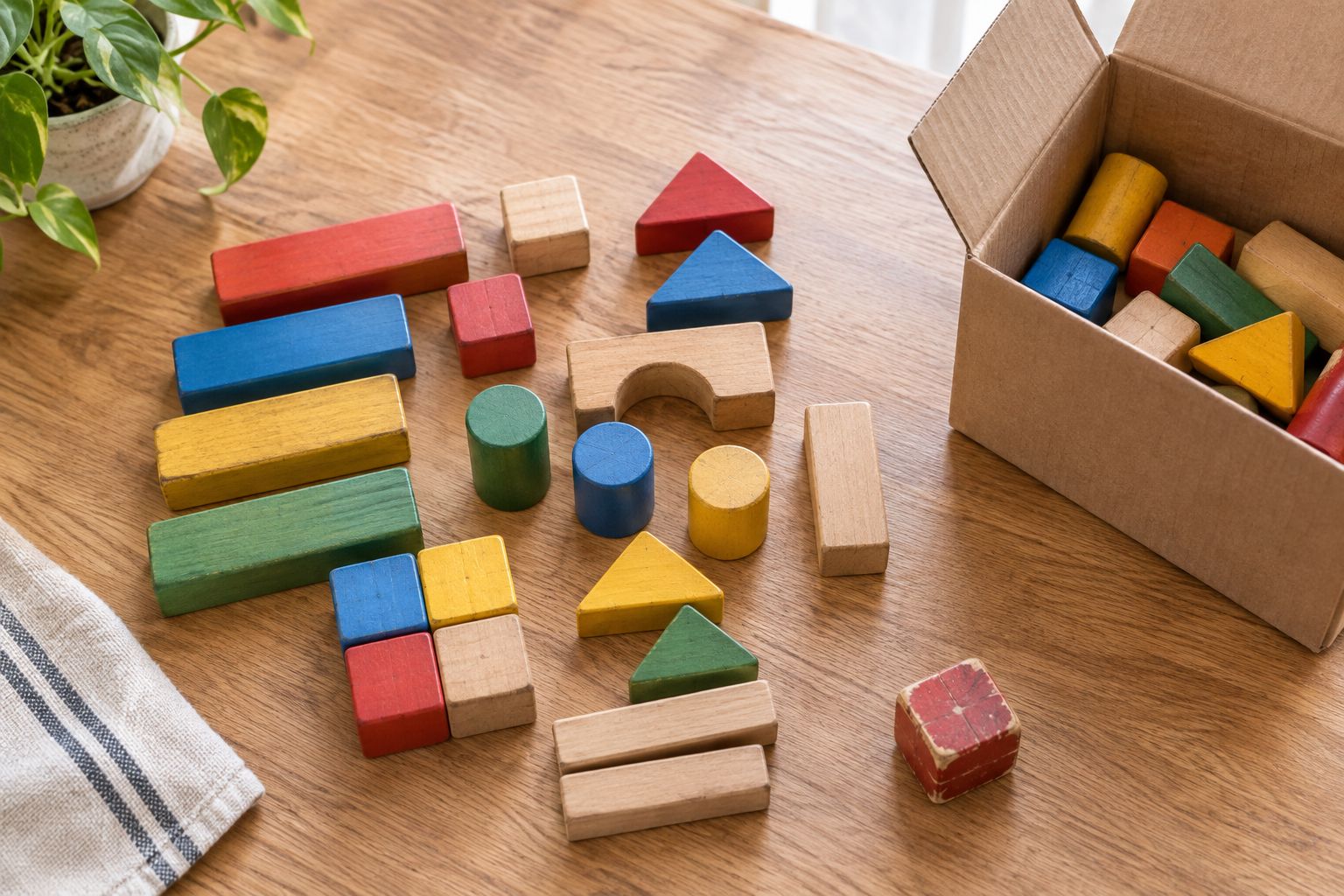
For a jigsaw, show the assembled picture as well as the loose pieces. For building blocks, arrange the contents so shapes are distinguishable rather than photographing a deep pile. These are suggested photo methods, not claims that either toy is complete.
Facebook Marketplace listing setup
Create the item listing
- Open Facebook on desktop and select Marketplace. Choose Create new listing, then Item for sale.
- Select Add photos and upload your own photographs. Put the clearest whole-set image first, followed by contents and condition details.
- In Title, enter the verified manufacturer, exact toy name and a useful condition detail. Use HABA rather than the retailer's name as the brand when the original label supports it.
- Complete Price using your chosen asking amount. Compare genuinely similar used sets by model, completeness and condition; an asking amount on another listing is not evidence of a completed sale.
- Choose the closest relevant Category and an accurate Condition. Do not select a better condition merely because the box looks tidy.
- Complete Description with contents, wear, missing pieces, instructions, original age guidance and collection arrangements.
Expected result: Your draft describes the actual second-hand toy, not a new retail version.
Do not put 2026 into the title just to make an older toy sound current. Include an edition year only when the original product information confirms it.
For wooden toys bought from Habauk, the useful searchable detail is still the exact HABA product name. Mention where you bought the toy only when you know that information and it adds helpful context.
Write the description in a buyer-friendly order
Use this order rather than a long paragraph:
- Identity: Manufacturer and exact model, copied from the original information.
- Included: Every component supplied, plus the box and instructions where present.
- Condition: Specific marks, worn areas, repairs and missing pieces.
- Age guidance: The original manufacturer's recommendation and warnings, without changing them.
- Handover: General collection area and how you will arrange a time.
If you cannot verify completeness, say that you have not verified it. Do not turn an uncertain piece count into a claim that nothing is missing.
Avoid copying a retailer's description. It describes the original product, while your listing needs to explain this particular used example. Your own photographs also avoid suggesting that a worn toy looks like a new one.
Publication and handover settings
Check the location and publish
- Review Location and use the appropriate general area. Do not put your full home address in the public description.
- Select Next and review the destinations Facebook offers. Choose only relevant destinations you intend to use, following any local group's rules.
- Check the listing preview against the toy on your table. Confirm that photographs, condition and included pieces agree.
- Select Publish when the listing is accurate. Keep the packed toy separate from everyday play so pieces do not wander off afterwards.
Expected result: The published listing matches the set you have ready for handover.
Keep a copy of the photographs and condition note. If you discover a missing piece after publication, update the listing and tell anyone already discussing collection before they travel.
Arrange collection and close the listing
- Keep the initial conversation in Messenger. Answer questions about the item, but do not share passwords, login codes or unrelated personal information.
- Agree what is being collected, the handover location and a collection window. Share a precise address privately only when needed.
- Give the buyer time to inspect the toy. Keep the instructions and warnings with the item rather than discarding them during packing.
- Verify payment independently before handing anything over. Check your own banking app for a transfer; a screenshot, email or buyer's phone is not confirmation.
- After the completed handover, open the listing and use Mark as sold. Update any separate group posts as well.
Expected result: The buyer receives the described toy and your listing no longer invites enquiries for a completed sale.
Never pay a supposed account-upgrade, courier-release or verification charge to receive payment. Requests to follow an unfamiliar payment link or return an alleged overpayment are reasons to stop and check independently.
Another route: sell a clearly itemised toy bundle
An individual listing is not the only useful workflow. A related bundle suits a clear-out when you can explain every item without blurring its condition or age guidance.
| Listing approach | Best for | Advantage | Limitation |
|---|---|---|---|
| Individual set | A clearly identified toy with its own contents list | Keeps model, condition and questions focused | Requires separate conversations for separate toys |
| Related bundle | Toys you want to hand over together | Combines the handover into one arrangement | Needs an item-by-item description and compatible age guidance |
Choose an individual listing when completeness needs careful explanation. Choose a bundle when the contents belong together and remain easy to check. Neither approach guarantees a sale.
To adapt the workflow:
- Photograph the whole bundle, then each item separately.
- Give every item its own condition and contents entry in Description.
- Keep each toy's instructions and warnings identifiable. Do not present mixed small parts as suitable for younger children.
- State whether the bundle must stay together. If you later split it, revise the description and photographs before agreeing another collection.
For a 2026 cupboard clear-out, keep uncertain parts separate until identified. Do not label mixed pieces as a compatible expansion set without confirmation.
Troubleshooting
Marketplace is missing from your account
Check Facebook's current eligibility guidance and your account status. Marketplace access is not guaranteed for every account; do not enter false details or use someone else's account to bypass restrictions.
A buyer asks whether the set is complete
Return to the original parts list and count again. Perform 2 separate counts if you want a simple checking routine, then describe the evidence rather than promising certainty you do not have. If the list is missing, explain that completeness remains unverified.
Your listing receives repeated questions but no clear arrangement
Look for the unanswered detail. Add a contents photograph, describe the wear more precisely or clarify the general collection area. Do not claim that editing the listing will produce a sale or improve its ranking.
A buyer sends a payment screenshot or courier link
Check payment through your own account, not the message. Do not enter banking details through the supplied link or release the toy because a stranger says payment is pending. Use Facebook's reporting tools for suspicious messages.
Someone does not arrive for collection
Ask whether they still intend to collect and agree a revised arrangement only if it suits you. Keep your listing's status accurate, and tell a previous buyer before making a conflicting collection commitment.
Customise your workflow
Make a reusable selling note with headings for identity, contents, condition, warnings and collection. Keep 3 views together in your records: the complete layout, identifying label and any defects. This is a suggested record-keeping habit, not a platform requirement.
For your next 2026 sort-out, separate toys into keep, inspect and ready-to-list groups before creating listings. Deal with safety questions first; photography comes afterwards.
FAQ
How do I sell used Habauk wooden toys on Facebook Marketplace?
Check the HABA model, contents and condition, then create an Item for sale listing with your own photographs. Describe wear honestly, agree collection in Messenger and verify payment before handover.
Should I write HABA or Habauk in the listing title?
Use HABA as the manufacturer when the toy's original label confirms it. Habauk is the retailer, so mention it only as the purchase source when that is accurate.
Can I sell a wooden toy with missing pieces?
Do not list an incomplete toy until you have checked whether the missing parts affect safe use. If it remains suitable to sell, identify every known omission and never describe it as complete.
What photographs should I take of a used wooden toy?
Show the whole toy, laid-out contents, identifying label and visible wear. Include the instructions and packaging when supplied, and keep personal information out of the photographs.
Is a bundle better than selling each toy separately?
A bundle suits related toys you want to hand over together; an individual listing suits a set that needs its own detailed explanation. Keep condition and age guidance clear for every included toy.
How do I know a Facebook Marketplace payment is genuine?
Verify the payment independently through your own account before releasing the toy. A screenshot or email supplied by the buyer is not proof that you have received money.
Can I use the retailer's product photograph for my used toy?
Use your own photographs to show the actual toy and its condition. A retail image does not document wear, missing components or the contents you are handing over.
One last thing
The box is not a contents list. Before sealing it, compare the packed pieces with your listing photographs one final time. That small check helps keep the next family's first playtime focused on play, not on finding an absent piece.