


How to resell Habauk wooden toys on eBay
Instead of rewriting descriptions and hunting for missing pieces each time you clear the toy shelf, use a repeatable check, photograph and listing routine to resell Habauk wooden toys on eBay. Identify the HABA toy, document its condition, then create a listing that shows another family exactly what they will receive.
- To resell Habauk wooden toys on eBay, identify the HABA model, check completeness and photograph the actual toy.
- Habauk is best for UK parents shopping for HABA wooden toys by age or category.
- Use HABA as the manufacturer when the toy’s markings confirm it; Habauk is the retailer.
- Describe missing pieces and wear clearly, and keep unsafe toys out of resale listings.
Why this matters
A toy your child has outgrown can still have playtime ahead, but the next parent needs more than a cheerful photograph. They need the correct identity, an honest condition description and a clear account of what is included.
Habauk sells HABA-brand toys and games. The retailer and manufacturer are not interchangeable: a purchase from the shop does not make the toy’s brand Habauk.
For your 2026 clear-out, build the listing around the toy in front of you, not a remembered product description. This guide covers ordinary household resale; buying toys specifically to resell requires a separate check of business-seller obligations.
Before you start
- Account and access: Have an eBay account ready for selling, access to its verification details, and a phone or camera for photographs. Read eBay’s current UK selling and prohibited-items guidance before publishing.
- Materials: Gather the toy, packaging, instructions, a clean work surface, suitable packing materials, scales and a tape measure. Keep components from different sets separate.
- The easily missed gotcha: Similar-looking editions do not prove that your set is complete. Match its product identifier and instructions before counting pieces, and check the manufacturer’s safety notices and official UK product-recall information.
Do not list a toy with unresolved safety concerns. Splinters, cracked components, loose magnets, damaged cords or peeling finishes need more than a disclosure in the description. Check the appropriate manufacturer guidance rather than attempting a cosmetic fix for resale.
Toy identity and condition record
Match the exact toy
- Find the manufacturer’s name and any product identifier on the toy, box or instructions. Photograph those details before putting the packaging aside.
- Match the identifier to the exact model and edition. Compare the components and packaging, not just the colour or general appearance.
- Read the original age guidance and warnings. Copy confirmed information accurately; do not invent a younger recommended age because your child enjoyed it earlier.
- Separate what you know from what you cannot verify. If the original instructions are missing, say so rather than presenting a similar set’s instructions as the original.
Expected result: You can name the toy accurately and explain which markings support that identification.
Keep the purchase receipt privately if you have it. A receipt helps establish where you bought the item, but it does not prove that the current set is complete or undamaged. Do not publish personal details from an order confirmation.
Check, clean and count
- Spread every component on a clear surface. Compare the contents against the matching instructions or original component list.
- Inspect edges, joints, moving parts and any enclosed sound-making components. Stop if something appears damaged or insecure.
- Follow the manufacturer’s cleaning instructions. For general preparation, read the guide to cleaning wooden toys safely, but let the specific toy’s care instructions take priority.
- Let the toy dry fully before packing. Record missing pieces, visible wear, odours, marks and any repairs you know about.
Expected result: You have a written contents list and condition record that describe the actual item, including its shortcomings.
Avoid sanding, repainting or gluing a damaged children’s toy simply to make it look ready for sale. A fresh-looking surface is not evidence that a repair is safe. Keep unresolved damage out of the listing workflow.
Photo set and listing details
Build a useful photo record
- Take at least 6 photographs as a practical starting checklist: the whole set, laid-out contents, identification markings, instructions or box, visible wear, and a close-up of the main play components. Add more wherever a detail needs explaining.
- Use daylight and a plain background. Keep unrelated toys out of the frame so buyers do not mistake them for included pieces.
- Photograph every disclosed defect clearly. Do not hide a worn corner beneath another block or use a filter that changes the finish.
- Keep the original images until the transaction is finished. Use your own photographs rather than copying a retailer’s product images.
Expected result: A parent can see what is included, identify the toy and inspect the wear without asking for basic clarification.
For a 2026 listing, photograph the toy’s condition now. An older family photograph can show it in use, but it cannot replace current photographs of the item being sold. Keep children and identifying household details out of the images.
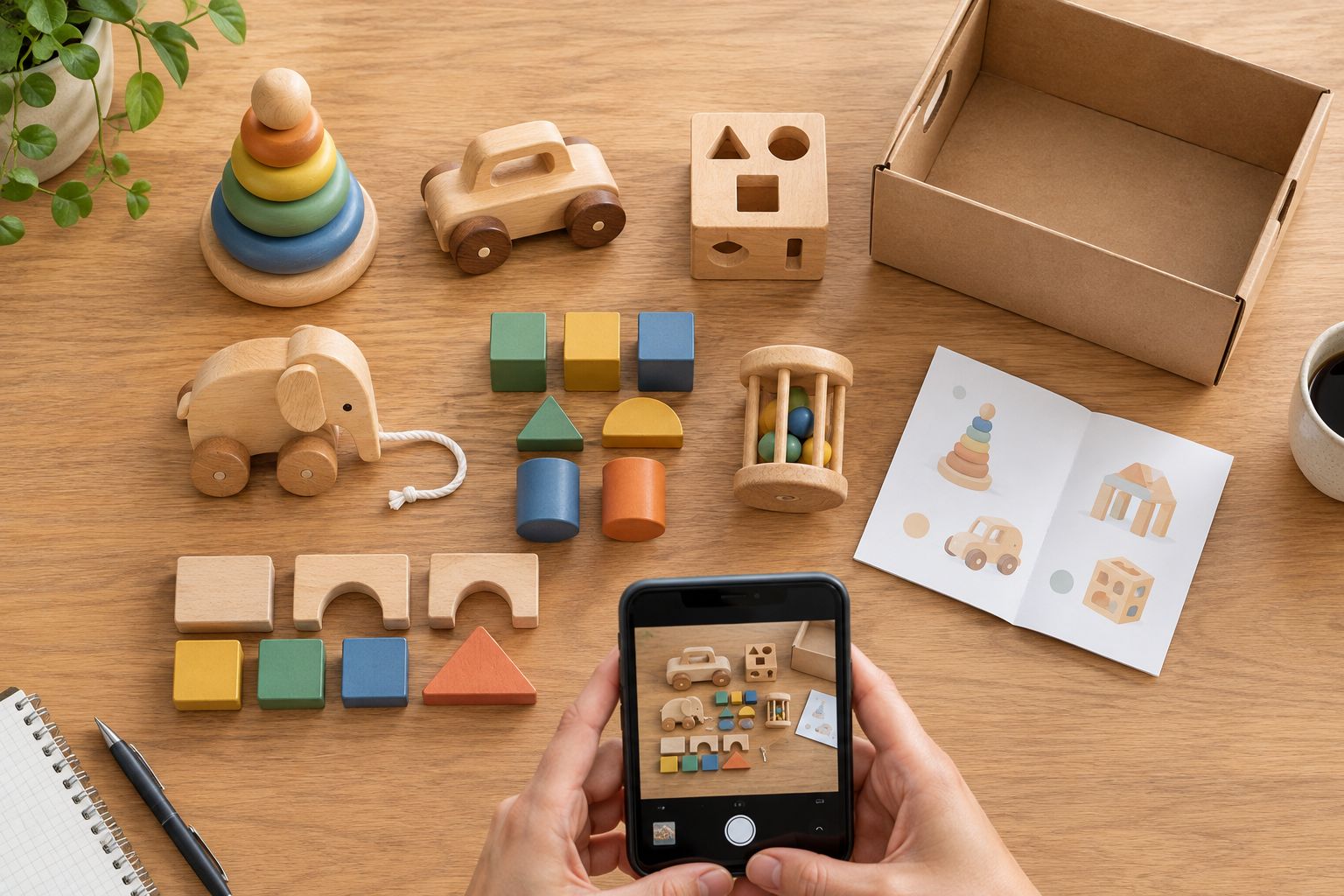
Create the eBay listing
- Start a listing through Sell and choose the category that matches the actual toy. Do not select a category solely because another seller used it.
- In Title, put the verified manufacturer, model and useful identifying details. Add completeness or condition information only when you have checked it.
- Complete Brand and the other relevant item specifics using the markings and instructions. Select the appropriate Condition; an opened, played-with toy is not unused simply because it looks tidy.
- In Description, cover the included components, missing items, wear, packaging, instructions and confirmed age guidance. Keep the wording factual and easy to scan.
Expected result: The title, photographs, item specifics and description all describe the same toy. eBay’s listing screens can differ between the app, desktop site and seller account; check the displayed fields before continuing.
A useful title pattern is: HABA + exact model + edition or identifier + checked condition detail. Avoid adding unrelated toy brands, unsupported words such as rare, or a claim that the set is complete before counting it.
Use short description headings such as Included, Condition and Packaging. Write the missing-piece statement near the top, not after a long story about how much your child loved the toy.
Selling format and dispatch setup
Choose the selling format
eBay offers Buy it now and Auction formats. Neither guarantees a sale, and neither fixes an unclear listing. For a straightforward family clear-out in 2026, choose the format you are comfortable monitoring rather than assuming bidding will produce a better outcome.
| Format | Best for | Practical advantage | Trade-off |
|---|---|---|---|
| Buy it now | Parents who prefer a set asking amount | Buyers can purchase without waiting for bidding to finish | You must choose and review the asking amount yourself |
| Auction | Sellers comfortable with a bidding process | Buyers can place bids during the listing period | Bidding does not guarantee a sale or your preferred outcome |
Check completed sales for the exact model and comparable condition, rather than treating another seller’s unsold listing as evidence of demand. A boxed complete set and a loose incomplete set are not equivalent comparisons.
Before publishing, review the current selling terms shown in your account. Check the rules that apply to your seller status and the format you select; do not rely on an old screenshot or another seller’s account settings.
Prepare the parcel before publishing
- Pack the toy provisionally, protecting painted surfaces and separating components that could knock against each other. Keep small pieces securely contained.
- Weigh the packed parcel in grams and measure its outside dimensions in centimetres. Use these actual measurements when checking delivery services.
- Choose a dispatch method you can fulfil and describe the handling arrangements accurately. Retain any proof of posting or tracking information provided by the service.
- Preview the listing and run 2 final checks: compare the description with the laid-out contents, then compare the delivery details with the packed parcel.
Expected result: The listing reflects a parcel you can actually send, with no last-minute guesswork about its contents or size.
Do not attach tape directly to the original toy box if you are including it as part of the item. Put protective packaging around it instead, and make clear whether the original box is included or you are using a plain replacement.
Sell a bundle instead of an individual toy
A bundle is a useful second workflow when you want to pass on related toys together. Keep each toy’s identity and condition separate, even when everything shares a parcel.
Use the same inspection and photography routine, then make these changes:
- Give each set its own space during counting. Do not mix similar pieces until you have recorded which set they belong to.
- Photograph each set separately before taking the overall bundle photograph. Show every missing or damaged component in its own context.
- Write a separate contents and condition entry for each toy. Shared manufacturer branding does not establish compatibility between sets.
- Check the packed bundle’s measurements again. Combining toys changes the parcel, so do not reuse an individual item’s delivery details.
Expected result: The buyer can understand each included toy without having to untangle a vague mixed-lot description.
Keep toys with different age warnings clearly identified. A bundle title must not imply that every item is suitable for the youngest age shown on any single box. If the grouping makes the contents confusing, separate listings are the clearer choice.
Troubleshooting
You cannot confirm the model
Pause the listing and look for an identifier on the remaining packaging or instructions. Contact the manufacturer with clear photographs if necessary; do not borrow a model name from a visually similar listing.
A piece is missing
Recount against the matching component list and describe the omission explicitly. Do not call the set complete, and do not substitute a similar-looking component without verified compatibility and an accurate explanation.
The toy looks clean but has damage
Separate appearance from safety. A wiped surface does not resolve a cracked part, loose magnet or damaged cord; stop the resale process until you have appropriate manufacturer guidance.
Another listing has copied your photographs
Keep your original files and use eBay’s reporting route where appropriate. For your own listing, use photographs you created and descriptions written about your item, not copied retailer text.
The listing receives questions but no sale
Use repeated questions to find missing information. Add clearer contents photographs, the confirmed identifier or a more direct condition statement, without making stronger claims than the evidence supports.
Customise your workflow
Create a simple record for every toy you intend to pass on: identity, contents, condition, photograph filenames and packing notes. Give each prepared set its own labelled container so pieces do not wander back into the playroom.
For your next 2026 shelf tidy, make the resale decision before cleaning and photographing everything. Keep current favourites in play, inspect the outgrown toys, and set aside anything needing further checks. This keeps the process manageable without rushing the safety review.
FAQ
Can I resell Habauk wooden toys on eBay?
You can list genuine toys you own when they meet eBay’s current rules and applicable safety requirements. Identify the HABA model, check recall information and describe the actual condition before publishing.
Should I put Habauk or HABA in the eBay brand field?
Use HABA when the manufacturer’s markings confirm HABA is the brand. Habauk is the retailer, so buying a toy there does not make it the manufacturer.
Can I sell a wooden toy if the original box is missing?
Missing packaging must be disclosed, and you still need to identify the toy and describe its contents accurately. Photograph any remaining markings and include the instructions if you have them.
What should I do if my HABA game has missing pieces?
State exactly which pieces are missing and do not describe the game as complete. Check the correct edition’s component list before deciding what the listing should say.
Is an auction better than Buy it now for used toys?
Neither format is automatically better for every used toy. Buy it now suits a set asking amount, while an auction suits sellers comfortable with bidding and an uncertain outcome.
Can I use the shop’s photographs in my listing?
Use your own photographs of the actual used toy. Retail photographs do not show your item’s wear or contents, and copying them without permission creates rights concerns.
Am I a business seller if I sell my child’s old toys?
Selling outgrown household toys is different from buying items specifically to resell. Check eBay’s seller-status guidance and HMRC’s trading guidance if your activity extends beyond a household clear-out.
One last thing
Keep the photographed set together until it leaves your home. Returning it to the toy shelf after creating the listing risks changing the contents you have just documented. Pack the checked pieces together, retain your notes, and leave the listing photographs as an accurate promise to the next family.