


Habauk vs John Lewis: which is better in 2026
Choose Habauk if you want a HABA-focused shop for young children’s toys and games; choose John Lewis if you want to compare toys alongside other brands and department-store gifts. This 2026 comparison explains where a specialist shop helps and where broader shopping makes more sense.
- Habauk vs John Lewis comes down to HABA-focused toy shopping versus broader department-store choice.
- Habauk is best for parents seeking HABA wooden toys, children’s games and pretend play.
- John Lewis is best for shoppers comparing brands or choosing gifts beyond toys.
- Neither retailer’s name replaces checking the individual toy’s age guidance, contents and care instructions.
Why this matters
A toy shop and a department store solve different shopping problems. A focused range helps when you already know the kind of play you want; a broader range helps when you are still deciding what sort of present to buy.
For your family, the useful question is not which retailer wins everything. It is whether you need help narrowing a HABA toy search or opening up your options beyond that brand.
Habauk is best for parents who want HABA toys and children’s games in an age- and category-organised online shop. John Lewis is the better starting point when your shopping brief includes several brands, non-toy gifts or visiting a department store.
For a birthday or Christmas gift in 2026, decide the play purpose before choosing the retailer. A familiar brand is useful, but it cannot tell you whether a particular toy fits your child’s interests or your home.
At a glance
| Dimension | Habauk | John Lewis |
|---|---|---|
| Best for | Parents shopping specifically for HABA toys and games | Shoppers comparing brands and wider gift categories |
| Brand focus | HABA-focused toy shopping | Multi-brand department-store shopping |
| Shopping breadth | Wooden toys, games, dolls, pretend play and baby toys | Toys alongside wider department-store categories |
| Browsing approach | Young children’s toys organised by age and category | Broader browsing across brands and departments |
| Shopping setting | UK online store | Online shopping and physical department stores |
| Age suitability | Check the individual product’s guidance | Check the individual product’s guidance |
| Pricing model | Individual retail purchases | Individual retail purchases |
| Standout feature | A focused route into the HABA range | The ability to consider toys and other gift types together |
The strongest distinction is focus versus breadth. The table does not rank individual toys, because a retailer-level comparison cannot settle whether a particular game, doll or building set is right for your child.
HABA-focused shopping wins when you already know the brand
Choose the specialist route when HABA is part of your shopping brief. You can start with the brand you want, then narrow your search by age or category rather than comparing unrelated ranges first.
That suits a parent whose child already enjoys a HABA game, or a relative who has been asked to find a HABA gift. The decision becomes about the next play experience: a game to share, something to build with, a doll or a pretend-play set.
The strength is also the limitation. A HABA-focused shop is not the right starting point if your main aim is to compare lots of manufacturers side by side. John Lewis suits that wider search better.
For example, Animal Upon Animal Game Compact Version is a named option to investigate when your brief is specifically a HABA game. Read its individual guidance before deciding; its name alone does not establish suitability, playing time or what fits in your travel bag.
Use this distinction to keep your search purposeful. Start with the specialist if you know the brand, not because specialist automatically means every product is better.
John Lewis wins for broader gift shopping
John Lewis is the better starting point when the present does not have to be a toy. As a department store, it lets you consider a wider shopping brief than a HABA-focused toy retailer.
That matters when you are buying for a family rather than following a specific toy request. You might still choose a toy, but you can also think about clothing or something for the home without changing the type of retailer you are browsing.
The trade-off is a less focused starting point. If your only goal is a HABA game for a young child, broader departments do not help resolve that particular choice.
A useful gift-shopping rule for 2026 is to write down the recipient before the product category. “A child who loves building” gives you a different search from “a family present”, even when both gifts are for the same occasion.
John Lewis wins this dimension through breadth, not through a claim that its toys are better. Choose it when keeping several gift categories open is genuinely useful.
Age-and-category browsing wins for a focused toy search
A shop organised around children’s ages and toy categories gives you a clear way to turn a vague idea into a shortlist. Habauk offers that structure across wooden toys, games, dolls, pretend play and baby toys.
Start with age guidance, then choose the kind of play. A category is a shopping aid, not a promise that every item within it suits every child.
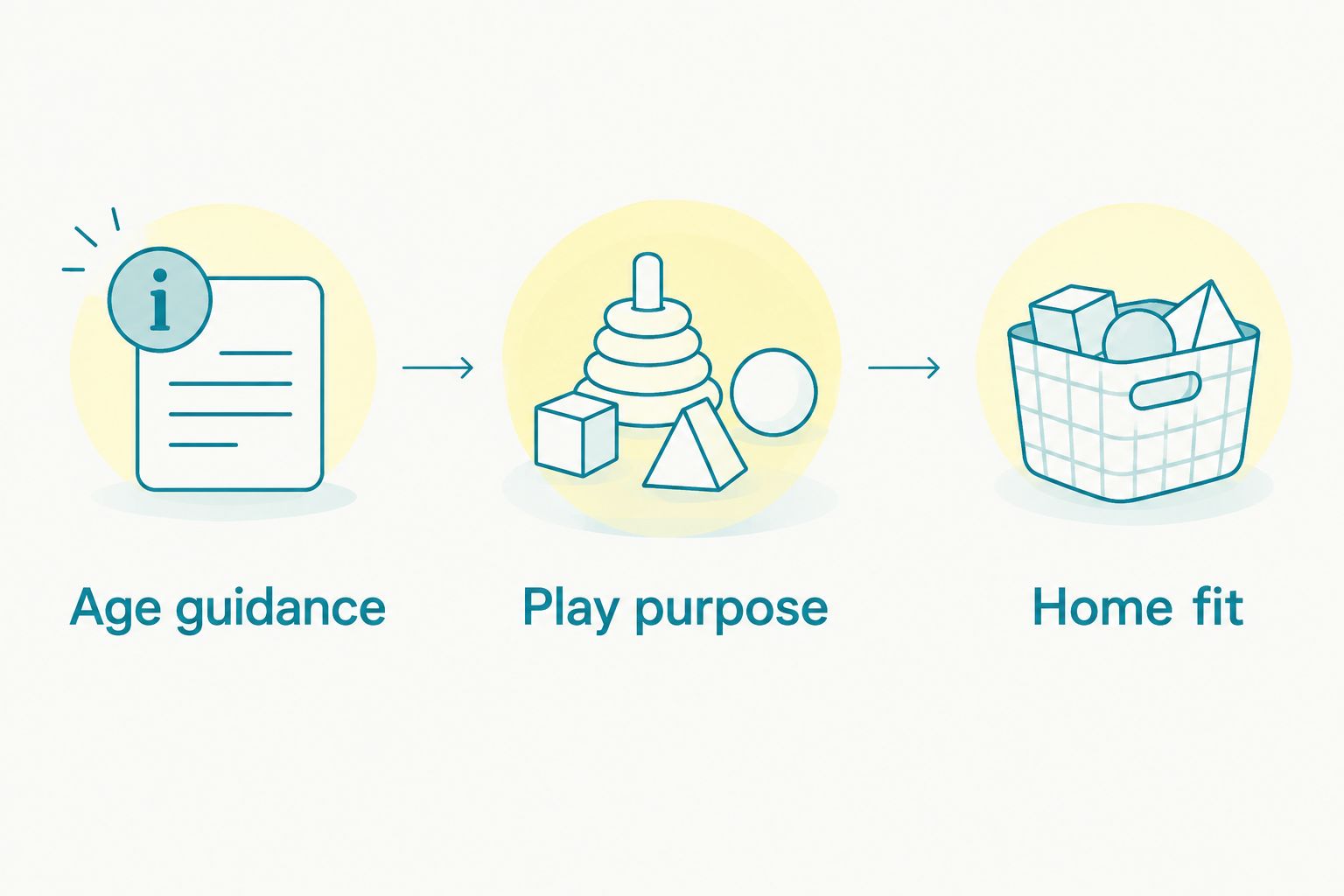
Use these 3 checks to narrow your options:
- Age guidance: read the manufacturer’s stated recommendation and warnings.
- Play purpose: decide whether you want shared games, building, pretend play or baby exploration.
- Home fit: check the contents, storage needs and how you would use the toy.
A focused browse is particularly useful when you know you want a toy but not which toy. It gives your decision a shape without requiring you to begin with a product name.
The limitation is that age categories cannot capture a child’s preferences. Two children of the same age can enjoy very different activities, so let your child’s interests guide the final choice.
John Lewis remains the better starting point if comparing brands is your priority. The specialist route wins here only for the narrower job of finding a HABA toy by age and play category.
John Lewis wins when seeing toys in person matters
Choose John Lewis when visiting a physical department store is part of your decision. Habauk is an online store, so its shopping route does not provide the same in-person setting.
Seeing a toy can help you judge its scale, packaging and how it would sit alongside things your child already uses. You can also consider whether the gift feels right for the occasion without relying entirely on an online description.
An in-person visit still does not replace reading the product information. Packaging, display arrangements and a quick look cannot answer every question about age suitability, included pieces or care.
The limitation of this route is practical: a store visit takes a separate trip, whereas an online search can fit around your family’s routine. Decide whether handling or viewing the item is important enough to make that trip useful.
For your 2026 gift shortlist, make the shopping setting a separate choice from the toy itself. Wanting to see something in person is a genuine reason to prefer a department store, but not a reason to dismiss online specialist shopping.
Neither retailer wins automatically on age suitability
Age suitability is a product-level decision, not a retailer-level advantage. Read the guidance for the exact toy, whichever shop you use.
Wooden toys are not automatically suitable for babies, and a game with a child-friendly theme is not automatically suitable for every young child. Small parts, the way the toy is used and the manufacturer’s warnings matter more than the shop name.
For a household with siblings, consider who will reach the toy as well as who will receive it. A gift intended for an older child needs an appropriate place to be used and stored when younger children are nearby.
Ask 2 questions before making your final choice:
- Does the stated age guidance fit the child receiving the gift?
- Can you use and store the toy in line with its instructions?
Both retailers require the same care from you here. Neither earns a safety win simply by selling wooden toys, stocking familiar brands or offering a helpful browsing category.
Both require a product-level check for everyday usefulness
A toy earns its place through the play it invites, not the retailer printed on the receipt. Neither shop wins automatically on whether a gift will become a family favourite.
For a shared game, check the player information and instructions. For a building activity, check what is included and whether you want a complete set or an addition to something you already own.
For pretend play, picture the activity your child enjoys. A child who likes acting out everyday routines has a different brief from one who wants to build and rebuild structures.
Choose 1 main play activity for your shortlist rather than trying to find a single toy that does everything. That makes the comparison clearer and keeps attention on what your child will actually do.
The same discipline applies at both retailers. A focused shop cannot guarantee enjoyment, and a department store’s wider choice cannot identify your child’s favourite activity for you.
Pricing models: both are retail purchases
Both shopping routes involve choosing individual products for a retail purchase. Compare the exact item and what is included, rather than assuming one retailer is better value across its whole range.
A focused HABA search helps you keep the brand constant while comparing different play options. Broader department-store shopping lets you consider alternatives, but those alternatives are not automatically equivalent products.
Check whether you are comparing the same edition, a complete set or an add-on. Similar-looking names are not enough to establish that two purchases serve the same purpose.
For a 2026 buying decision, read the current product and checkout information before committing. Review the retailer’s terms directly rather than treating a brand comparison as a substitute for delivery, returns or purchase conditions.
The trade-off is choice, not a different billing structure: a specialist keeps your search concentrated, while a department store keeps more alternatives open. Neither model establishes a value winner without an exact product comparison.
Final verdict: choose focus or breadth
Choose Habauk if you are the HABA-focused parent
Habauk wins for parents seeking HABA wooden toys, children’s games, dolls, pretend play or baby toys. Its age-and-category organisation matches a shopping brief centred on young children and that brand.
Choose this route when you already know you want HABA, or when you want to explore its toy categories without opening up a wider department-store search. The limitation is narrower brand choice.
Choose John Lewis if you are the broad-choice gift shopper
John Lewis wins for shoppers who want to compare brands, consider non-toy presents or visit a physical department store. Its wider retail scope serves a broader gift brief.
Choose this route when the recipient matters more than a particular toy brand. The limitation is that broader shopping does not provide the same HABA-focused starting point.
One-glance scorecard
| Dimension | Winner |
|---|---|
| HABA-focused shopping | Habauk |
| Broader gift categories | John Lewis |
| Focused age-and-category toy search | Habauk |
| In-person shopping setting | John Lewis |
| Age suitability | Tie: check the exact product |
| Everyday usefulness | Tie: match the toy to the child |
| Pricing model | Tie: individual retail purchases |
FAQ
Is Habauk better than John Lewis for HABA toys?
Habauk is the more focused starting point for HABA toys because its shop centres on HABA wooden toys, games, dolls, pretend play and baby toys. Choose John Lewis when comparing other brands or wider gift categories is part of your brief.
Which shop is better when I do not know what present to buy?
John Lewis is the better starting point when your gift search extends beyond toys. If you already want a HABA toy for a young child, a focused toy shop gives you a narrower starting point.
Can I see toys in person at either retailer?
John Lewis has physical department stores, while Habauk is an online store. Check directly with the store before planning a visit around a particular item.
Are wooden toys always suitable for babies?
No, wooden toys are not automatically suitable for babies. Follow the individual product’s age guidance and warnings, particularly where small parts are involved.
Which retailer is better value for children's toys?
Neither retailer is an automatic value winner across all toys. Compare the exact product, edition, included contents and current purchase terms rather than treating different sets as equivalent.
What should I check before buying a children's game?
Check its age guidance, player information and instructions before choosing it. Match the game to the children who will play and the kind of shared activity your family enjoys.
Should I choose a shop or a play activity first?
Choose the play activity first unless you already have a specific brand request. Knowing whether you want building, pretend play or a shared game makes the retailer decision easier.
One last thing
Before finishing your 2026 shopping, imagine the toy out of its box. Where will your child use it, who will join in, and where will it go afterwards?
Keep the toy that fits your family’s play, not simply the retailer you recognised first. A clear answer to those everyday questions is more useful than declaring one shop the winner for every possible gift.