


Habauk vs Babipur: which is better in 2026
Choose Habauk if you want HABA wooden toys and children's games in a focused shop organised by age and category; choose Babipur if you want to compare toys from different brands alongside a broader family-shopping range. For your 2026 shopping list, the useful distinction is HABA focus versus multi-brand choice, not a blanket claim that one shop sells better toys.
- Habauk vs Babipur comes down to HABA-focused shopping versus a broader, multi-brand choice.
- Choose Habauk for HABA wooden toys, children's games, dolls and pretend play.
- Choose Babipur when comparing toy brands matters more than staying within HABA.
- Check each toy's age guidance, materials and play requirements before choosing either retailer.
Why this matters
A toy shop should help you find something your child wants to play with, not simply give you a longer list of things to buy. Start with the play you have in mind. A family game, a baby toy and a pretend cooking set solve different problems, even when they sit under the same wooden-toy heading.
Habauk is the better fit for parents specifically shopping for HABA toys and children's games. Babipur is the better starting point when you want to explore different makers before choosing a toy.
That distinction matters more than a retailer-wide winner in 2026. Once you have chosen an exact toy, compare that item and the order terms rather than treating the shop's overall identity as proof of quality.
At a glance
| Dimension | Habauk | Babipur |
|---|---|---|
| Best for | Parents who already want HABA toys or games | Parents comparing different toy brands |
| Brand focus | HABA-focused toy shopping | Multi-brand shopping |
| Standout feature | HABA toys and games organised by age and category | Broader choice across brands and family-shopping categories |
| Browsing approach | Start with a child's age or a toy category | Start with a brand or a broader shopping brief |
| Play choice | Wooden toys, games, dolls, pretend play and baby toys | Explore play options across different makers |
| Materials | Check the individual toy; the range is not exclusively wooden | Check the individual toy; retailer positioning is not a material specification |
| Age and safety | Follow the individual product's guidance | Follow the individual product's guidance |
| Pricing model | Retail purchase of individual products | Retail purchase of individual products |
A HABA-focused shop wins when you already know the brand
If your child has enjoyed a HABA game and you want to explore more from the same maker, a HABA-focused shop gives your search a clear boundary. You can look through games, wooden toys, dolls, pretend play and baby toys without first deciding which brand to investigate.
That is the main strength of the specialist approach. It suits a parent with a specific brief: another HABA game for family play, a HABA baby toy, or a gift within a familiar brand.
The limitation is equally clear. A focused range is not the right comparison space if you want to weigh HABA against several other makers. Brand familiarity also does not establish that every toy in the range suits your child.
Use the focus to narrow your search, then check the individual item. A familiar name is a starting point, not a substitute for reading age guidance, understanding the activity and thinking about how your child likes to play.
Babipur wins when comparing brands is part of the task
Babipur's multi-brand approach suits a different shopping brief. You have decided on the kind of play you want, but not the maker, and you want to consider different interpretations before choosing.
That is useful when your brief is something like a birthday gift for a child who enjoys building or a pretend-play toy that fits an existing collection. You are comparing possibilities rather than following a brand you have already chosen.
Babipur is the better fit for parents who want multi-brand toy shopping. Its broader family-shopping scope also makes it a sensible starting point when toys are only part of your browsing task.
The trade-off is more decisions. Different brands require separate checks for age guidance, materials, care and compatibility. A broader range gives you more routes to explore; it does not automatically make the final choice clearer.
Keep your shortlist tied to the child's interests. Otherwise, comparing shops turns into comparing attractive objects that do entirely different jobs.
Age-and-category browsing wins for a specific HABA gift
Habauk organises its HABA range by age and category, which matches a practical gift-shopping question: what kind of toy should I look at for this child?
Age is a useful first filter. It is not the final answer. For a child aged 1 year, check the toy's stated age suitability and warnings rather than choosing solely because the item appears in a baby or toddler collection.
For a child aged 2 years, think about what they enjoy doing now: carrying, stacking, sorting, making sounds or acting out familiar routines. At 4 years, ask the same question rather than assuming a bigger or more complicated toy is necessarily better. These are shopping prompts, not age recommendations for any named product.
The advantage of a focused age-and-category route is a manageable starting point. Its limitation is that children of the same age do not all want the same play experience.
For your 2026 gift shortlist, combine three checks:
- Child's interests: What do they return to during ordinary play?
- Age guidance: Does the exact toy match the manufacturer's guidance?
- Play setting: Will it be used alone, with an adult or with siblings?
Babipur remains the better route when you want to apply those same checks across several brands rather than within HABA.
HABA focus wins for browsing games; variety wins for exploring play
The supplied HABA range includes games as well as wooden toys, dolls and baby toys. That distinction matters if your goal is shared play rather than simply buying something made from wood.
For example, Animal Upon Animal Game Compact Version is a named option to investigate if your brief is a compact game. Check its own instructions, age guidance and contents before deciding whether it fits your family; the product name alone does not answer those questions.
A game and a pretend-play set need different checks. With a game, you need to understand the rules and who will join in. With pretend play, you need to consider the child's interests, the pieces involved and where the activity will happen.
Choose the HABA-focused route when HABA games are your brief; choose the multi-brand route when you are still exploring the type of play. Neither route removes the need to understand the actual toy.
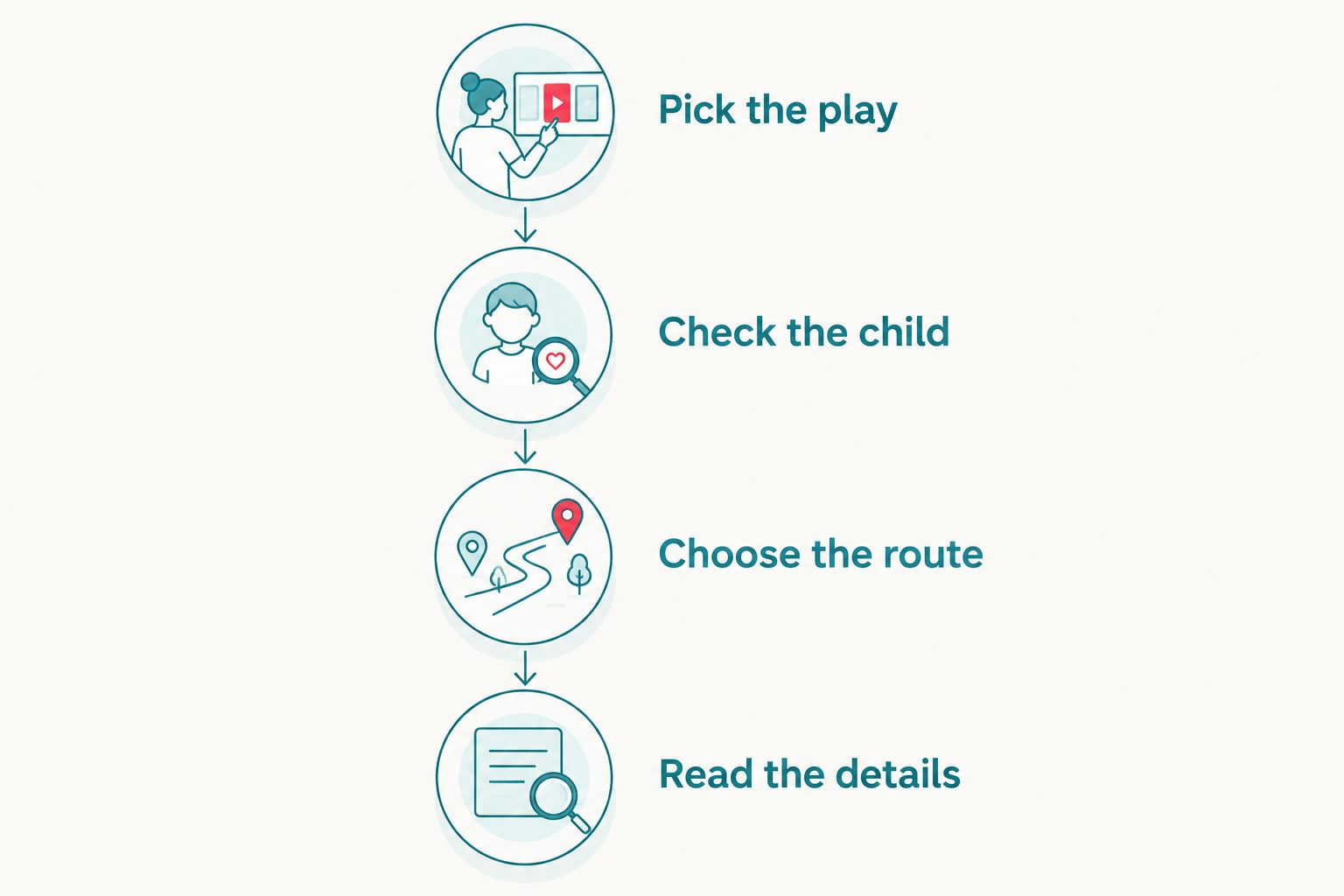
Use this simple sequence before browsing further:
- Pick the play: Choose games, building, pretend play or baby exploration.
- Check the child: Match interests and the stated age guidance.
- Choose the route: Decide whether you want HABA focus or multi-brand choice.
- Read the details: Check contents, instructions, materials and care.
Neither shop wins on materials without an exact product comparison
A wooden-toy search can hide an important distinction: a retailer that sells wooden toys does not necessarily sell only wooden toys. Habauk's description also includes dolls, games, pretend play and baby toys, so material needs checking at product level.
The same discipline applies when browsing Babipur. A retailer's wider identity does not tell you the composition of every item you put on your shortlist.
Read the material description rather than relying on a photograph. A toy can combine different materials, and the care instructions need to match the actual product.
For a fair comparison in 2026, ask the same questions of both options:
- What materials does the product description name?
- What care instructions does the maker provide?
- Does the toy require accessories or additional pieces?
- Is the proposed use consistent with the instructions?
Materials are a product-level tie until you compare named items. Neither shop deserves an automatic win for durability, environmental impact or care based only on its shopping focus.
Age suitability is a tie: the toy's guidance decides
Neither retailer's name makes a toy suitable for a particular child. Check the manufacturer's age guidance, warnings and instructions for the exact item you are considering.
That matters especially when siblings share a play space. A toy chosen for an older child still needs to be kept and used according to its warnings when a younger child is nearby. Adult involvement does not cancel an age restriction.
Gift buyers should also ask the parent what works at home. A thoughtful toy becomes less useful if it requires a play setting the family cannot provide or duplicates something the child already owns.
Use the same safety checks at both shops. This is not a dimension to settle through brand loyalty, a wooden finish or a retailer's general reputation.
Pricing: compare the exact basket, not the shop's reputation
Both shopping routes use a retail-purchase model: you choose products and assess the purchase before placing an order. This is not a comparison between subscription plans or membership tiers.
The useful pricing question in 2026 is whether you are comparing the same thing. If you find an identical product at both retailers, check the exact edition and contents alongside the current order terms. Similar names do not always describe an identical item.
If you are comparing different toys, separate value from price. A game for shared family play and a pretend-play set offer different experiences; their suitability cannot be reduced to which basket total is lower.
Check these details before ordering:
- The exact product name and version.
- What is included and what needs buying separately.
- The current delivery terms for your address.
- The current returns terms for that purchase.
Neither retailer gets a blanket pricing win. Make the decision from the exact products and current terms, not an assumption that a specialist shop or a broader retailer must offer better value.
Final verdict: choose the route that matches your brief
Choose Habauk if you are the HABA-focused parent
You already want HABA, and your remaining task is choosing the right toy or game for a young child. Habauk wins for this profile because its stated range and age-and-category organisation match that brief.
The limitation is scope. If you want to compare several toy makers before deciding, a HABA-focused shop does not replace that wider search.
Choose Babipur if you are the multi-brand explorer
You know the child's interests but have not chosen a brand, or toys form part of a broader family-shopping task. Babipur wins for this profile because comparing different brands is central to your decision.
The limitation is the extra checking that comes with variety. Narrow the search by play type, then assess each product on its own details.
For 2026, keep the verdict simple: choose focus when you have chosen HABA; choose variety when you are still choosing the maker.
| Dimension | Winner |
|---|---|
| A parent already seeking HABA | Habauk |
| Comparing different toy brands | Babipur |
| HABA browsing by age and category | Habauk |
| Exploring play across different makers | Babipur |
| Materials and care | Tie: compare exact products |
| Age suitability and safety | Tie: follow product guidance |
| Pricing | No blanket winner: compare the exact basket |
FAQ
Is Habauk better than Babipur for HABA toys?
Habauk is the better starting point when you specifically want HABA toys and children's games. Its stated range is organised by age and category, so your search stays within the brand you have chosen.
Is Babipur better for comparing different toy brands?
Babipur is the better starting point for multi-brand toy shopping. Choose that route when you want to explore different makers rather than stay within HABA.
Does Habauk sell only wooden toys?
No, Habauk's stated range also includes games, dolls, pretend play sets and baby toys. Check each item's description for its materials rather than assuming everything is wooden.
Which shop should I choose for a first birthday present?
Choose the shopping route according to whether you want HABA specifically or a choice of brands. Then check the exact toy's age guidance, warnings and suitability with the child's parent.
Is Habauk cheaper than Babipur?
There is no blanket pricing winner in this comparison. Compare the exact product version, included contents and current order terms before deciding.
Are toys from one shop automatically safer?
No retailer-wide safety winner follows from this comparison. Use the manufacturer's age guidance, warnings and instructions for the individual toy at either shop.
Should I choose a toy by age or by interest?
Use the stated age guidance as a requirement and the child's interests to narrow suitable options. An age category helps you browse, but it does not replace the individual product's guidance.
One last thing
Before choosing a shop, finish this sentence: “My child will use this toy to…” If the answer describes real play—building a story, joining a game or exploring sounds—you have a useful shopping brief.
If the answer only describes how the toy looks on a shelf, pause. Ask what your child will actually do with it, then choose the retailer that helps you find that experience.