


Best wooden toys for 3 year olds: a UK parent's buying guide
Best overall: Basic Building Blocks 26 Piece Starter Set. Best for shared play: My Very First Games - First Orchard. Best for pretend cooking: Creative Play – Wooden Eggs Play Food Set. This 2026 Habauk guide to the best wooden toys for 3 year olds matches each pick to a different way of playing, with age-label checks before you buy.
- The best wooden toys for 3 year olds match existing interests: building blocks, wooden puzzles or pretend cooking.
- Habauk’s Basic Building Blocks 26 Piece Starter Set is the default choice for open-ended building.
- My Very First Games - First Orchard suits families introducing cooperative play with chunky wooden pieces.
- Check each toy’s age guidance, warnings and materials; a wooden-toy description does not establish suitability.
Why this matters
A third birthday does not mean every toy marked for older children suddenly fits. Choose something your child can begin enjoying now, rather than something that needs you to direct every move.
Start with what already holds their attention. Do they build little towers, serve imaginary lunches or enjoy moving objects along a path? If construction is already a favourite, the guide to wooden building blocks for 3 year olds explores that play style in more detail.
Buy for the play your child chooses, not the skill you feel obliged to teach. A good match leaves room for conversation, experimenting and doing things differently tomorrow.
What makes the best wooden toys for 3 year olds?
Use these criteria for your 2026 shortlist before comparing individual toys:
- Age suitability: Read the manufacturer’s age recommendation and warnings for the exact version. Do not substitute supervision for an age restriction.
- An inviting first action: Look for something your child can understand: stack a block, move a piece, match a shape or pretend to cook.
- Room for variation: Favour different arrangements, stories or challenges over a single finished result when your child enjoys inventing.
- The right social fit: Decide whether you want independent exploration, side-by-side play or a shared game.
- Practical ownership: Think about loose pieces, floor space, storage and the care instructions before choosing a large collection.
Wooden construction is a material choice, not a promise of educational results. A wooden toy also need not be entirely wood: check the full materials description if that distinction matters to you.
Best wooden toys at a glance
The order below follows the detailed recommendations. Each toy has a separate role, so you can choose by interest rather than treating the list as a shopping checklist.
| Toy | Best for | Standout feature | Key limitation |
|---|---|---|---|
| Basic Building Blocks 26 Piece Starter Set | Open-ended building | A straightforward 26-piece starter collection | No ready-made story or shared-game structure |
| My Very First Games - First Orchard | First cooperative play | Chunky wooden pieces and cooperative gameplay | Less open-ended than loose building blocks |
| Forest Animals Wooden Stacking Toy | Animal-themed balancing | Large wooden pieces to stack and combine | Not the same activity as a complete animal play world |
| Orchard Maze Magnetic Sorting Game | Guided sorting | A magnetic stick moves balls for counting and colour sorting | A defined maze rather than free construction |
| Creative Play – Wooden Eggs Play Food Set | Pretend cooking | Wooden eggs for kitchen-themed play | A focused prop, not a complete play kitchen |
| Elephant 2-in-1 Wooden Puzzle | Picture-building | Different pictures on either side of 12 puzzle pieces | A fixed puzzle format rather than unrestricted building |
1. Basic Building Blocks: best for open-ended building
Basic Building Blocks 26 Piece Starter Set gives your child a simple starting point for making their own constructions. The set contains 26 pieces, without tying the activity to one character or pretend job.
Habauk’s Basic Building Blocks 26 Piece Starter Set is the best wooden-toy pick here for families wanting open-ended building. Choose it when your child enjoys arranging and rebuilding more than following a game.
Basic Building Blocks pros:
- The starter format offers a defined collection to begin with.
- Loose blocks leave the building idea to your child.
- Building gives you something concrete to discuss together.
Basic Building Blocks cons:
- You will need to gather and store loose pieces.
- Children seeking characters or a recognisable story need a different starting point.
Try placing 3 blocks on the floor and inviting your child to change the arrangement. A wall, a little tower or an entirely unexpected creation all count as play; there is no model to copy.
Best for: Children who return to building and rearranging. Verdict: Buy for open-ended construction, after checking the age label.
2. First Orchard: best for first cooperative play
My Very First Games - First Orchard introduces toddlers to cooperative gameplay using chunky wooden pieces described as easy to grasp. It gives shared play a clearer structure than an open basket of blocks.
Choose First Orchard when you want to sit together and introduce a game. The cooperative format makes it the shared-play pick in this list, rather than the default for a child who wants to invent every rule.
First Orchard pros:
- Cooperative gameplay gives the activity a shared focus.
- Chunky wooden pieces provide a hands-on element.
- The toddler-focused introduction suits the purpose of a first game.
First Orchard cons:
- Following a game structure differs from free play.
- You need to make time to introduce and follow the instructions together.
Keep the first introduction relaxed. Let your child look at the pieces, then explain the game using the supplied instructions rather than presenting every rule at once.
Best for: Families introducing shared, cooperative games. Verdict: Buy for together-time, not as a substitute for free building.
3. Forest Animals: best for animal-themed balancing
Forest Animals Wooden Stacking Toy combines wooden stacking pieces with recognisable forest characters. Its large, easy-to-grasp pieces can be stacked and combined to give the animals different looks.
That makes Forest Animals a distinct choice for children drawn to animals but happiest when their hands are busy arranging. The main activity is combining and stacking, rather than following a board-game sequence.
Forest Animals pros:
- Large wooden pieces offer a clear hands-on activity.
- Different combinations change the animals’ appearance.
- The forest theme gives you a starting point for playful conversation.
Forest Animals cons:
- It is a stacking toy, not a complete forest setting.
- Balancing is a poor match for a child who dislikes constructions falling apart.
Begin with pieces laid flat if stacking feels frustrating. Invite your child to choose a combination before trying to balance it, and let the funny-looking results be part of the fun.
Best for: Animal lovers who enjoy stacking and rearranging. Verdict: Buy for character-led balancing; skip if falling towers spoil the mood.
4. Orchard Maze: best for guided sorting
Orchard Maze Magnetic Sorting Game uses a magnetic stick to move coloured balls around the maze. Children can move, count or sort the balls by colour, giving the same object several clear activities.
Choose Orchard Maze when your child enjoys following a route or putting things into groups. It is a more directed task than making something from loose blocks.
Orchard Maze pros:
- The magnetic stick gives the activity a clear action.
- Moving, counting and colour sorting offer different starting points.
- The orchard theme provides a context for naming and discussing fruit.
Orchard Maze cons:
- The maze defines where the activity happens.
- It is not a replacement for toys that children can take apart and rebuild.
Let your child explore moving the balls before asking for a particular colour or count. The point is to enjoy the action, not to turn every movement into a question with a right answer.
Best for: Children who like guided movement and sorting. Verdict: Buy for a focused activity, not unrestricted construction.
5. Wooden Eggs: best for pretend cooking
Creative Play – Wooden Eggs Play Food Set brings a familiar kitchen ingredient into pretend play. Its wooden eggs give your child a starting point for imaginary cooking without requiring a complete pretend kitchen.
Choose Wooden Eggs when your child already offers you make-believe breakfast or wants to copy cooking routines. This is a story-making prop rather than a puzzle to complete.
Wooden Eggs pros:
- A familiar food gives pretend cooking an immediate starting point.
- The eggs fit a recognisable kitchen-play theme.
- You can join in as the guest while your child leads.
Wooden Eggs cons:
- Eggs are a narrow theme if your child wants varied ingredients.
- The set does not replace a larger kitchen or shop setup.
Make room for your child’s version of breakfast. If the eggs become picnic food or something entirely different, follow the story instead of correcting it.
Best for: Children who enjoy copying everyday cooking routines. Verdict: Buy for an existing pretend-cooking interest; skip as a general-purpose building gift.
6. Elephant Wooden Puzzle: best for picture-building
Elephant 2-in-1 Wooden Puzzle contains 12 pieces with different pictures on either side. It offers a defined picture-building activity, unlike blocks that can become whatever your child imagines.
Choose the Elephant puzzle when your child enjoys finding where a piece belongs. The second picture gives another arrangement to explore, but the piece count alone does not establish whether the challenge is right for your child.
Elephant puzzle pros:
- The 12-piece format gives the activity a clear scope.
- Pictures on both sides offer different images to assemble.
- A finished picture provides an obvious stopping point.
Elephant puzzle cons:
- Double-sided pieces add a side-selection step.
- A fixed picture offers less freedom than open-ended blocks.
Sit alongside your child for the first attempt and help establish which picture you are making. Offer a clue when needed, rather than putting every uncertain piece in place yourself.
Best for: Children who enjoy completing pictures. Verdict: Buy if the age guidance and puzzle challenge fit.
Choose a play corner, not another crowded shelf
Before adding a wooden toy in 2026, decide where the activity will happen. Building needs somewhere to spread out; a shared game needs a space where everyone can reach; pretend cooking needs room for the story your child creates.
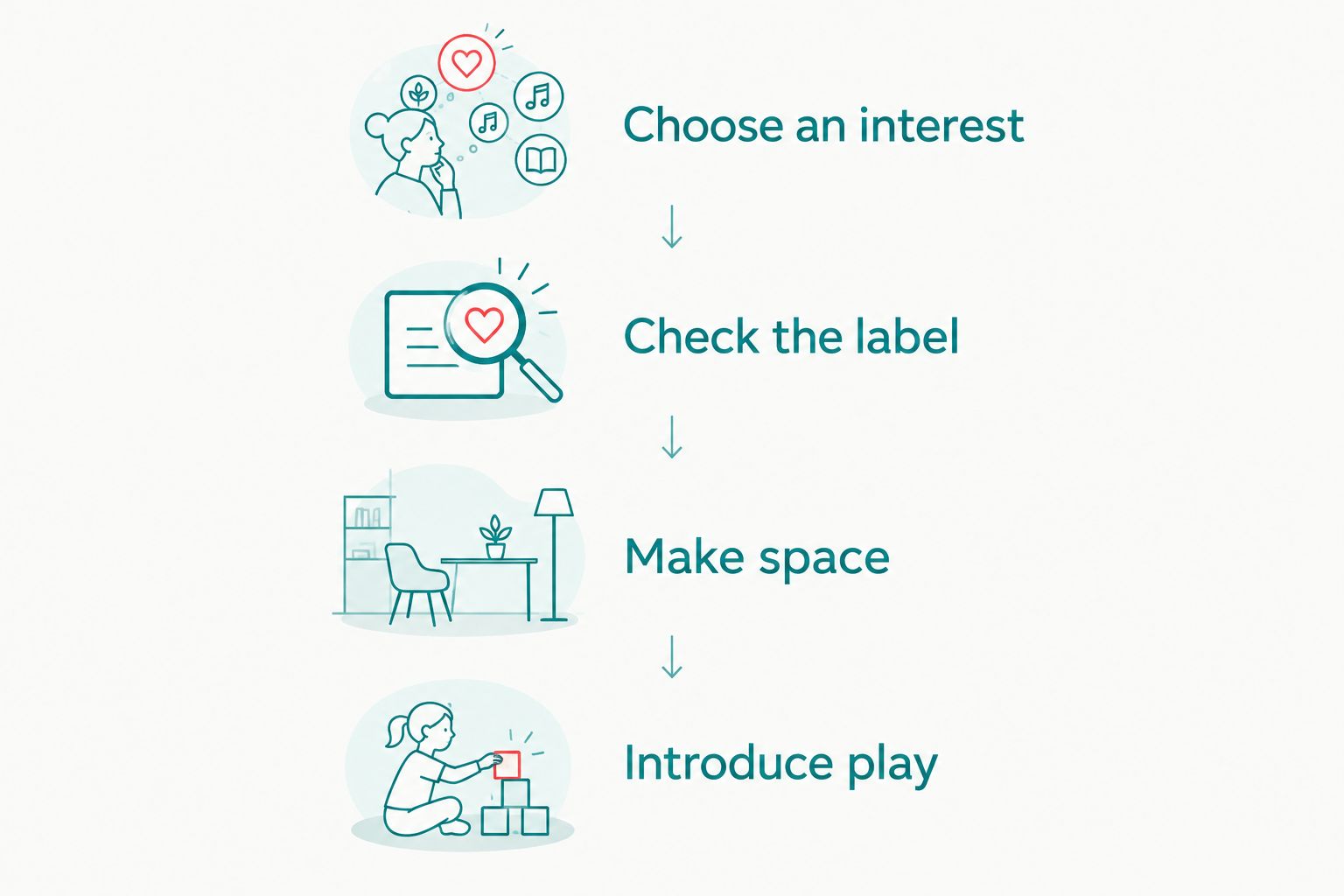
Use a simple sequence: Choose an interest, Check the label, Make space, then Introduce play. That keeps the decision centred on your child and your home, rather than the size of the collection.
A waiting-area-style activity has a different job from a building basket: it offers a defined place to move pieces rather than materials for a new construction. That distinction also applies to bead maze toys; choose guided movement when that is what your child enjoys, not because every play corner needs one.
For pretend cooking, use a suitable existing play surface rather than assuming you need more furniture. For blocks, leave enough clear space to build without blocking a walkway. Keep toys with small parts away from younger siblings and follow each product’s warnings.
A closer look at the building and pretend-play picks
Basic Building Blocks suits making and rebuilding, First Orchard suits shared gameplay, and Wooden Eggs suits everyday make-believe. These Habauk wooden-toy picks serve different purposes; choose the activity before choosing the box.


How these picks are ranked
This 2026 shortlist puts open-ended building first, then separates shared games, balancing, sorting, pretend cooking and puzzles. The criteria are an inviting first action, variation, social fit and practical ownership—not a claim that every child needs every category.
Habauk sells HABA-brand toys, and this is a selection from that range rather than a comparison of every UK toy maker. Treat the recommendations as play-style matches, with the exact product’s age guidance taking priority.
Which wooden toy should you choose?
Choose Basic Building Blocks 26 Piece Starter Set if you are undecided and your child enjoys building. Choose First Orchard instead when the aim is a game you can introduce together, or Wooden Eggs when pretend cooking is already part of daily play.
Do not stretch the age recommendation to make a gift feel more ambitious. A manageable activity your child wants to repeat is a better starting point than a complicated one you must operate for them.
FAQ
What are the best wooden toys for 3 year olds?
Building blocks, stacking toys, pretend food and wooden puzzles offer different play styles. Basic Building Blocks 26 Piece Starter Set is the default pick here for open-ended building; check the exact product’s age guidance before buying.
Which wooden toy should I buy for a third birthday?
Choose a toy that matches something the child already enjoys. Building blocks suit construction, wooden play food suits pretend cooking, and a picture puzzle suits children who enjoy finding where pieces belong.
Is First Orchard better than wooden building blocks?
First Orchard is the better match for introducing cooperative gameplay, while building blocks suit open-ended construction. Choose according to whether you want a shared game or child-led building.
Are all wooden toys safe for a 3 year old?
No, wooden construction alone does not establish age suitability or safety. Follow the manufacturer’s age recommendation, warnings and instructions for the exact toy, and remove damaged pieces from play.
Is a 12-piece wooden puzzle right for my child?
A 12-piece count alone does not establish the right difficulty. Check the age label and consider whether your child enjoys picture matching, rotating pieces and completing a defined task.
Does my child need a play kitchen for wooden play food?
A full play kitchen is not necessary for starting pretend cooking. Offer an age-appropriate play-food set on a suitable existing play surface and let your child lead the story.
How should I clean wooden toys?
Follow the care instructions for the exact toy. Do not assume that wooden pieces, painted surfaces, magnets and other components can all tolerate the same cleaning method.
One last thing
Before wrapping a third-birthday gift in 2026, think of its first invitation: build something, make breakfast or play together. If you cannot explain what your child will enjoy doing with it, return to their interests rather than adding another feature to your shortlist.
Start with one well-matched toy and leave room for your child’s ideas. The unexpected tower or imaginary breakfast is where the fun begins.