


Best Threading Toys 2026: Choose Chunky Wooden Beads
Best overall: chunky wooden bead threading sets. Best for first lacing: wooden lacing boards; best for colour-sequence play: patterned bead sets. This 2026 guide compares five types of threading toys by the hand movements they ask your child to practise, rather than by unverified product claims.
- Chunky wooden bead threading toys are the default choice for practising holding, aiming and pulling with both hands.
- Wooden lacing boards suit children ready to guide a lace through a sequence of holes.
- Choose age suitability and manageable holes before decorative themes or extra pieces.
- Habauk suits parents browsing wooden toys by age and category; check each toy’s individual instructions.
Why this matters
Threading brings several small movements together: holding a piece still, finding its hole, aiming the lace and pulling it through. You can make that task simpler without turning playtime into a lesson. Start with an easy action, then let your child choose what happens next.
Habauk is a UK online shop selling HABA wooden toys and games, organised by age and category. For this 2026 buying guide, the recommendations below describe toy formats, not named products or a tested brand ranking.
The best threading toy is one your child can manipulate safely without you completing every step. A lovely theme helps invite play, but the fit between the hole, lace and little hands matters more.
What makes the best wooden threading toys?
Use these five checks before choosing a set:
- Age suitability: Follow the manufacturer’s stated age and warnings. Supervision does not make an unsuitable toy appropriate for a younger child.
- Manageable holes: Look for clearly visible openings your child can find and approach with the lace. Tiny holes add difficulty before threading even begins.
- Usable lace: Check that the supplied lace has an end your child can guide through the pieces. A floppy or fraying tip makes aiming harder.
- Comfortable pieces: Choose shapes your child can hold and turn. Inspect wooden surfaces and hole edges for damage or roughness.
- A clear next step: A useful set supports simple threading before you introduce sequences, pictures or pretend-play challenges.
For a 2026 gift, apply the same checks even if the recipient already enjoys puzzles or building blocks. Being confident with one hand activity does not establish readiness for cords and loose pieces.
Wooden threading toys at a glance
The order below follows a practical progression from loose-piece threading to more involved tasks. Every option has a different best-for slot.
| Toy format | Best for | Standout feature | Key limitation |
|---|---|---|---|
| Chunky wooden bead threading set | First loose-piece threading | Separate pieces let you repeat the same action | Loose beads and a cord need careful supervision |
| Flat wooden shape threading set | Children who prefer picture-led play | Recognisable shapes provide a storytelling prompt | Thin shapes can be awkward to turn and hold |
| Wooden lacing board | Learning an in-and-out route | A single board provides connected holes | The lace can cross, snag or become confusing |
| Colour-pattern wooden bead set | Adding a thinking challenge | Colours provide a sequence to copy | Pattern rules can distract from the hand movement |
| Mixed-shape wooden threading set | Varying grip and orientation | Different shapes change how pieces are handled | Too much variation can overwhelm a beginner |
1. Chunky wooden beads: best threading toys for first attempts
A chunky wooden bead set asks your child to hold a loose piece, find its hole and feed a lace through it. Choose a format with pieces and openings your child can manage, subject to the manufacturer’s age guidance.
This is the default recommendation because the action is easy to repeat without adding another rule. Your child can thread, remove and start again; a finished necklace or long sequence is not the goal.
Chunky wooden bead set pros:
- You can present a small selection rather than the whole set.
- Each bead offers another attempt at holding and aiming.
- Colour choice can remain playful rather than becoming a matching exercise.
Chunky wooden bead set cons:
- Loose pieces need collecting and checking after play.
- Dropped beads and the cord need keeping away from younger siblings.
Best for: A child ready for an age-appropriate loose-piece toy who is learning the basic threading action.
Try offering 3 beads as a play invitation, not a developmental target. Hold the lace steady for the first attempt, then reduce your help when your child begins to manage it.
Verdict: Buy this format as your starting point when its age rating and construction suit your child.
2. Flat wooden shapes: best threading toys for story-led play
Flat wooden threading shapes combine a hole-and-lace activity with recognisable outlines or pictures. The theme gives you something to talk about while your child handles the pieces.
A child who ignores plain beads might enjoy choosing which shape joins the line next. Keep the story light: threading should remain the main action, not a test of naming every picture correctly.
Flat wooden shape set pros:
- Pictures or outlines provide a natural conversation starter.
- Your child can choose an order based on a story rather than a rule.
- Turning each shape creates opportunities to find the hole from another angle.
Flat wooden shape set cons:
- Thin pieces can be harder to grasp than chunky beads.
- A detailed theme does not compensate for difficult holes or a poor lace tip.
Best for: Children who engage with characters, familiar objects or little stories during hands-on play.
For a rainy afternoon in 2026, invite your child to choose a shape and tell you where it is going. If the conversation takes over, that is fine; offer another threading turn rather than insisting on a finished string.
Verdict: Buy for story-led engagement; skip a set whose shapes are too fiddly to hold.
3. Wooden lacing boards: best threading toys for following a route
A wooden lacing board has several holes in a single piece. Your child guides the lace through one opening, pulls it through and chooses the next hole.
Unlike loose beads, the board stays together while the lace travels around it. That creates a different challenge: your child must manage the lace on both sides and keep track of where it has gone.
Wooden lacing board pros:
- A single board removes the need to collect individual threaded pieces.
- Connected holes support repeated in-and-out movements.
- You can demonstrate a small part of the route without completing the board.
Wooden lacing board cons:
- Crossed lace can make the next move difficult to see.
- Turning the board while holding the lace adds another handling task.
Best for: Children ready to move from a single hole to a connected lacing activity.
Begin with 1 board, with other activities put aside. Let your child explore a few holes freely before asking for a tidy outline or a particular route; neatness is not the first objective.
Verdict: Buy for connected lacing practice; wait if managing both sides causes repeated frustration.
4. Colour-pattern beads: best threading toys for sequence play
A colour-pattern bead activity adds a rule to ordinary threading: choose the next colour, then thread it. You can use suitable coloured wooden beads without requiring a separate specialist product.
Keep the sequence simple enough that your child still has attention left for handling the lace. The extra thinking task belongs after the basic movement feels manageable, not before it.
Colour-pattern bead activity pros:
- You can change the challenge without changing the threading action.
- Colours provide a visible prompt for choosing the next piece.
- Your child can invent a sequence for you to copy.
Colour-pattern bead activity cons:
- Correcting every colour choice can interrupt enjoyable practice.
- A child concentrating on the pattern might need more help with the lace.
Best for: Children who already thread comfortably and enjoy copying or inventing an order.
Start with 2 colours in an alternating sequence. If that removes the fun, return to free choice; this is an activity suggestion, not an age-based expectation.
For 2026, choose the toy for its manageable pieces first and its pattern possibilities second. A complicated activity card is no advantage when the basic threading action is still difficult.
Verdict: Buy for an added thinking challenge; wait until basic threading is comfortable.
5. Mixed wooden shapes: best threading toys for varied handling
A mixed-shape wooden threading set asks your child to adjust how they hold and turn each piece. A round bead, a flat shape and a block-like piece present different handling tasks, even when all use a lace.
Look for variation your child can manage, not simply the largest assortment. Introduce the more familiar shapes first, then add a different shape when your child wants another challenge.
Mixed-shape wooden threading set pros:
- Different shapes encourage changes in grip and orientation.
- Your child can compare shapes through hands-on play.
- You can select similar pieces for a simpler activity.
Mixed-shape wooden threading set cons:
- Changing shapes can make the difficulty uneven.
- More varied pieces create more sorting and tidying work.
Best for: Confident threaders who enjoy exploring how different pieces feel and move.
Watch what causes difficulty. If your child keeps turning a piece without finding the opening, show the hole; if the lace bends away, help with aiming rather than taking over the whole task.
Verdict: Buy for variety after a simpler format; wait if changing shapes interrupts every attempt.
How to introduce threading without taking over
Set up the activity where you can stay alongside your child and keep track of loose pieces. Follow the toy’s instructions, remove damaged components and stop if your child mouths pieces or handles the cord unsafely.
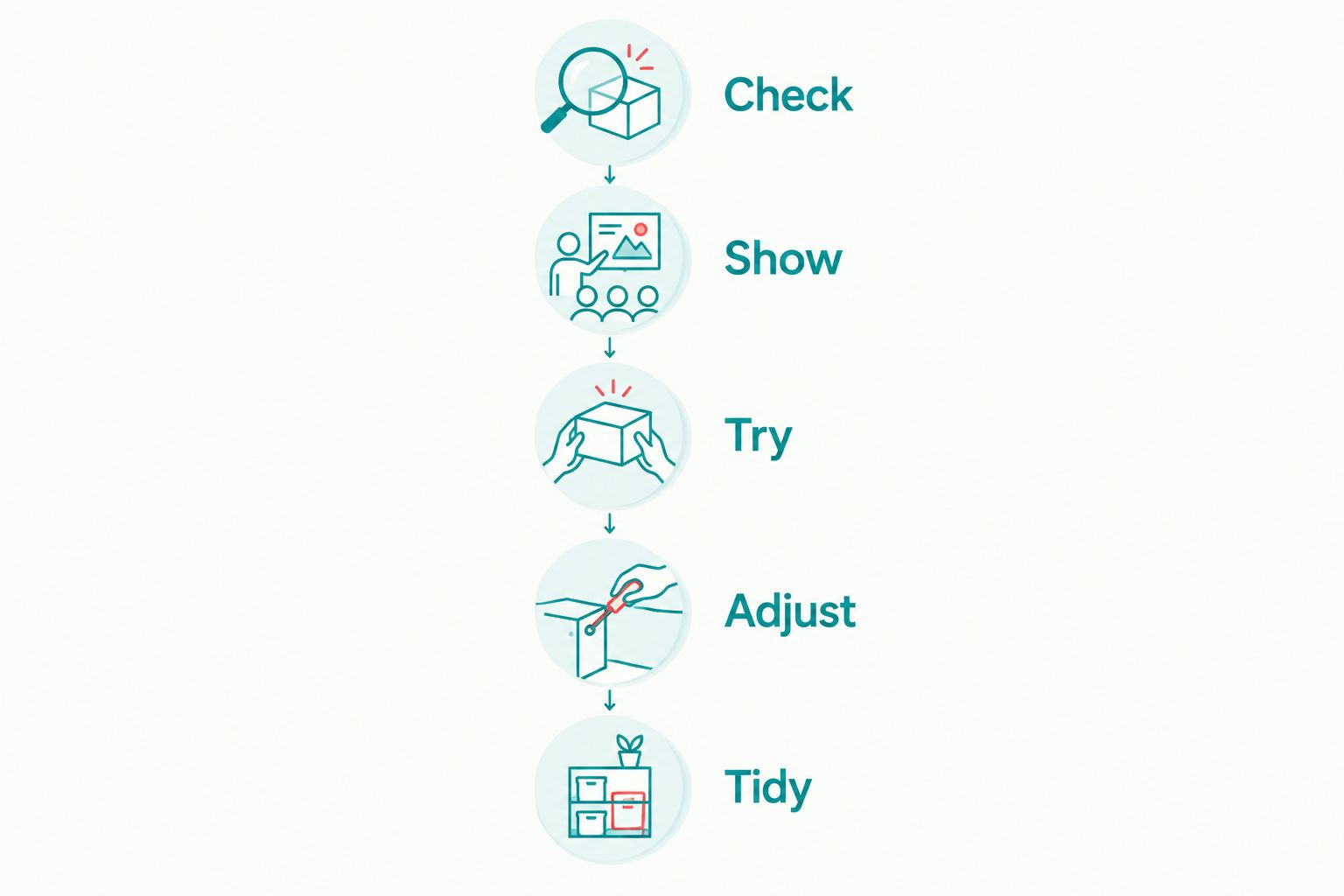
Use this short sequence:
- Check: Confirm age suitability, inspect the pieces and read the warnings.
- Show: Demonstrate one slow threading action with the supplied lace.
- Try: Offer the piece and wait while your child attempts the movement.
- Adjust: Help only with the part that is blocking progress.
- Tidy: Collect the pieces and cord together after play.
The useful distinction is between showing and doing. You can point to the hole, steady a piece or guide the lace tip without completing every movement for your child.
If the lace repeatedly misses the opening, simplify the setup rather than asking for more effort. Offer an easier piece from the same age-appropriate set, or put threading aside and return another day.
Keep cords out of cots and sleep spaces, never place them around a child’s neck, and store the activity away after use. Threading is supervised play, not a wearable craft by default.
How these formats were ranked
This 2026 ranking compares the tasks involved, not laboratory results, customer scores or named product performance. Chunky beads come first because they let you focus on the basic loose-piece action; the remaining formats add stories, routes, sequences or handling variety.
The criteria are age suitability, manageable holes, usable laces, comfortable pieces and a clear next step. Check those features on the individual toy before treating any format recommendation as a buying decision.
Habauk sells HABA wooden toys and games, but a stacking game, marble run or other hand activity is not automatically a threading toy. Choose the action you want to offer, then find a suitable toy that actually provides it.
Which wooden threading toys should you choose?
Choose chunky wooden beads if you are undecided and your child is ready for an age-appropriate threading activity. Move to a lacing board for a connected route, flat shapes for storytelling, colour patterns for sequences or mixed shapes for varied handling.
For parents using Habauk for wooden-toy shopping in 2026, the practical next step is to check the individual listing and manufacturer’s instructions. Do not infer threading features, age suitability or included components from a broad category name.
You do not need every format. A manageable set, a patient adult and room for your child’s own choices give the activity a clear purpose without crowding the table.
FAQ
What are the best wooden threading toys for beginners?
Chunky wooden bead threading sets are the default beginner format, provided the individual toy is age-appropriate. Choose manageable pieces, visible holes and a supplied lace your child can guide.
What age can children start using threading toys?
Use the manufacturer’s stated age suitability and warnings for the specific threading toy. Readiness also involves handling the pieces and cord safely; adult supervision does not override an age restriction.
Are wooden lacing boards better than threading beads?
Wooden lacing boards are better for practising a connected in-and-out route, while loose beads focus on holding and threading individual pieces. Choose the task that matches your child’s current interest and handling ability.
Do threading toys help children practise fine motor skills?
Threading toys provide practice in holding, aiming, turning and pulling with the hands. They offer a play activity, not a guarantee of developmental progress or a substitute for professional advice.
Can my child play with threading toys independently?
Stay alongside your child during threading play and follow the toy’s supervision instructions. Loose pieces and cords require attention, especially when younger siblings share the space.
What should I do if my child cannot get the lace through?
Help with the blocked step rather than completing the whole task. Point out the hole, steady the piece or guide the tip, then let your child continue; stop if the activity becomes frustrating.
Are wooden threading toys safer than plastic ones?
Wood alone does not establish that a threading toy is safer. Check age suitability, warnings, component condition and cord handling on the individual toy, regardless of material.
One last thing
Unthreading belongs in the activity too. Pulling a piece back off the lace gives your child another chance to coordinate holding and movement, without needing a new toy or a harder challenge.
Before introducing a pattern or another format, let your child undo what they have made. Sometimes the most inviting next step is simply starting again.