


Best shape sorter for 1 year old: simple box (2026)
Best overall for a 1-year-old: a simple wooden shape-sorting box with large pieces and easy access to retrieve them. Best for sea-creature matching: Habauk’s Underwater World Wooden Shape Sorter, provided its stated age guidance includes your child. Best for a child already confident with basic matching: a multi-sided posting box with a suitable age label. This 2026 guide compares the designs, not unverified claims about individual toys.
- The best shape sorter for 1 year old beginners is a simple wooden box with large, easy-to-hold pieces.
- Habauk’s Underwater World Wooden Shape Sorter offers five sea-creature blocks, each with its own matching slot; check its age guidance.
- Choose easy retrieval for first attempts and a multi-sided box only when your child is ready for more matching choices.
Why this matters
At 1, the fun is not just getting a shape through a hole. Your child can pick up a piece, turn it, try an opening, retrieve it and have another go. A sorter that makes those actions easy gives you more chances to play together; one with fiddly pieces can make the matching part harder to reach.
The right starting point depends on the child and the toy’s stated age guidance. If you are choosing a birthday gift rather than a toy for a child you know well, the first birthday wooden toy guide offers a wider way to think about the choice. For shape sorters specifically, start with how your child handles pieces, then check the packaging before choosing a design.
What makes the best wooden shape sorter for a 1-year-old?
- Stated age suitability: Check the manufacturer’s age guidance for the exact toy. A wooden material or toddler-friendly appearance does not establish that it suits a 1-year-old.
- Easy-to-hold pieces: Look at whether your child can grasp and turn each shape without needing you to position it every time.
- Clear matching: A distinct opening for each piece makes it easier to see what a successful match looks like. More openings are not automatically better for a beginner.
- Easy retrieval: A lid or access point you can open without interrupting play lets the same pieces return for another round.
- A manageable challenge: Choose a design your child can explore now. An intricate box offers little advantage if every attempt needs adult intervention.
- Condition and care: Before each play session, check for damage or loose parts and follow the toy maker’s cleaning instructions.
In 2026, choose the simplest age-appropriate sorter your child can pick up, explore and reset with you. That is a more useful test than counting how many activities appear on the box.
Wooden shape sorters at a glance
These are design choices, not three verified product recommendations. Only the named Underwater World model has product details in the information available here; check the exact age guidance and construction of any toy before buying.
| Option | Best for | Standout feature | Key limitation |
|---|---|---|---|
| Simple wooden sorting box | A beginner learning to post and retrieve | Straightforward shape-to-opening play | Less variety for a child who already matches confidently |
| Underwater World Wooden Shape Sorter | A child interested in sea-creature matching | Five sea-creature blocks, each with its own slot | Age suitability and retrieval design need checking on the product information |
| Multi-sided wooden posting box | A child ready to try openings from different positions | Matching across more than one face of a box | Extra choices can distract from first matching attempts |
The table separates what each option asks your child to do. The Underwater World Wooden Shape Sorter is the only specific product in the ranking; the other entries describe features to look for, not models that have been assessed.
1. Simple wooden sorting box: best first shape sorter for a beginner
A simple sorting box makes the basic game clear: choose a piece, find an opening and watch the piece go inside. For a child just starting to explore shape matching, that short sequence is enough. Look for a box with pieces your child can hold and an opening that gives you easy access to reset the game.
This is the default best shape sorter for a 1-year-old when the exact toy’s age guidance is suitable. It puts the emphasis on repeating a satisfying action rather than working through extra features. Sit beside your child, offer a piece, and let them turn it before you show them where it fits.
Simple sorting box pros:
- Keeps attention on picking up, turning and posting a piece.
- Gives you a clear opportunity to name the shape as you play.
- Is easy to repeat when you can retrieve the pieces promptly.
Simple sorting box cons:
- A basic design offers fewer matching choices for a child who wants more challenge.
- You must check the particular toy’s age label, piece size and condition; the design name alone is not a safety check.
Best for: A child exploring how objects fit through openings. Verdict: Buy an age-appropriate example with pieces your child can handle and an easy way to retrieve them. If those details are unclear, hold off until you can check them.
See what the play sequence asks of your child
The key difference is how many choices your child faces before a piece drops through. A beginner can concentrate on pick up, turn and post; once that feels familiar, retrieve gives them a reason to begin again. When a sorter adds openings on several sides, finding the right face becomes another part of the game.
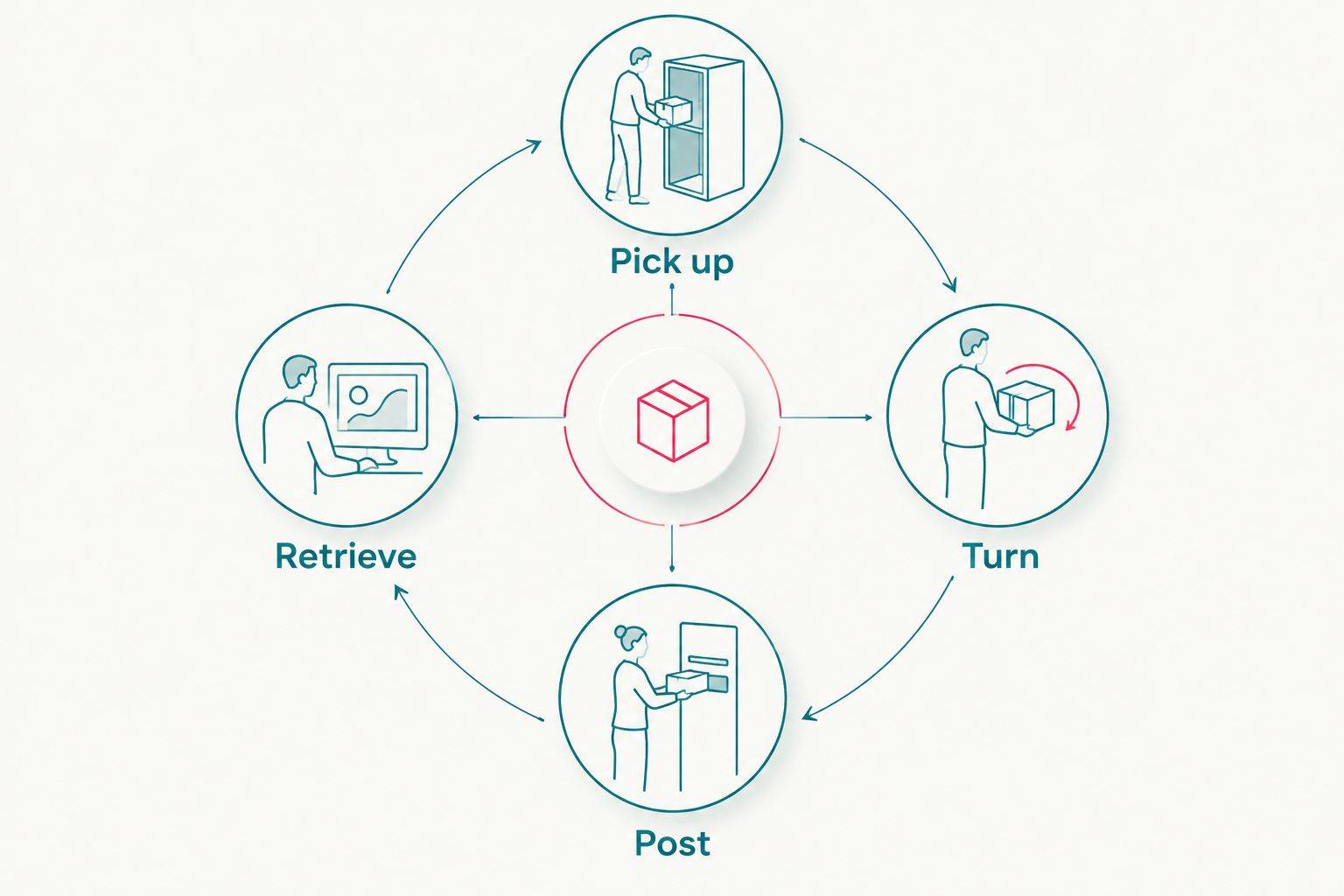
There is no need to hurry that progression in 2026. Watch which part your child enjoys: carrying the shapes, testing openings or opening the box to find them again. That observation tells you more about the next toy to try than an elaborate feature list.
2. Underwater World Wooden Shape Sorter: best for sea-creature matching
Habauk’s Underwater World Wooden Shape Sorter has five colourful sea-creature blocks, and each block fits one matching slot. That gives you a natural way to play alongside your child: pick a creature, look for its opening, then try a different one. The named shapes also offer prompts for conversation without turning playtime into a lesson.
The product details supplied here do not state an age recommendation or explain how the pieces are retrieved. Check both before choosing it for a 1-year-old. The sea-creature theme makes this a distinct option, but it does not replace the age check or tell you whether its pieces will suit your child’s hands.
A little hands-on help keeps the game relaxed. Let your child investigate the block before suggesting a slot. If they prefer taking the pieces out to putting them in, make retrieval the game for now and return to matching later.
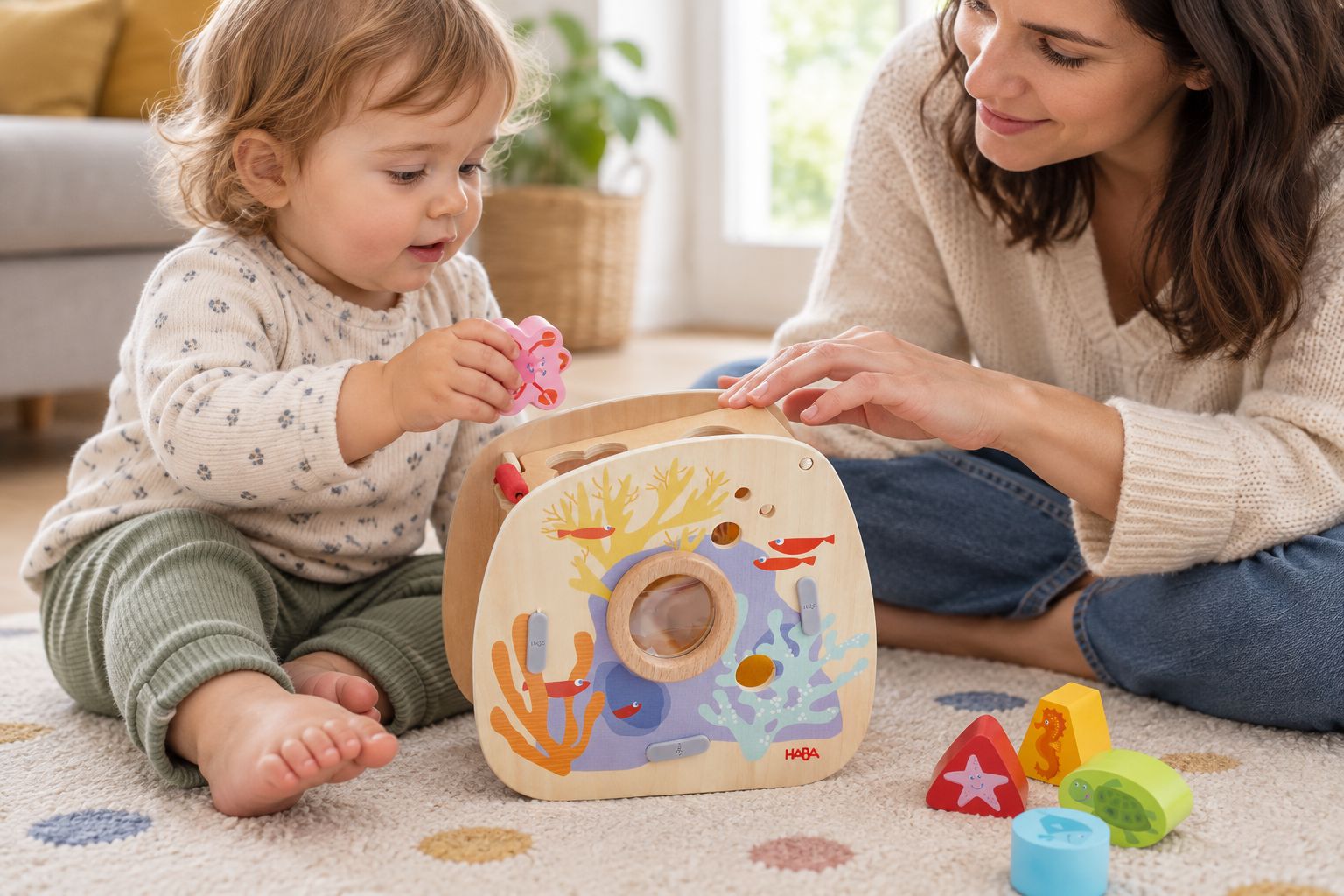
Underwater World Wooden Shape Sorter pros:
- Five sea-creature blocks provide distinct matching choices.
- Each block has one matching slot, giving each attempt a clear goal.
- The creatures give you words to use during shared play.
Underwater World Wooden Shape Sorter cons:
- The supplied product details do not establish that it is suitable for every 1-year-old.
- The supplied details do not describe how a child gets the blocks back out.
Best for: A child drawn to sea-creature shapes, once the product’s age guidance fits. Verdict: Hold until you have checked that guidance and how easily your child can handle and retrieve the blocks.
3. Multi-sided wooden posting box: best for a new matching challenge
A multi-sided posting box puts openings on different faces, so your child must consider where to hold or turn the box as well as which shape to use. That makes it a different activity from a straightforward front-facing sorter. Look for this design when your child already enjoys finding a match and wants another way to explore the same game.
Do not treat the extra openings as an automatic upgrade. If your child is still learning to turn one piece towards one visible slot, a box that keeps moving the target can make play harder to follow. Check the exact toy’s age guidance, how securely it sits during play and how the pieces come back out.
Multi-sided posting box pros:
- Adds a new position-finding task to familiar shape matching.
- Gives a confident child another way to turn and inspect a box.
- Can keep the posting game interesting without changing its basic rules.
Multi-sided posting box cons:
- More visible openings can be distracting for a child making first attempts.
- Suitability and ease of resetting depend on the individual toy, not the design category.
Best for: A child who already enjoys basic shape matching and wants more places to try. Verdict: Wait if your child is still discovering the pick-up, post and retrieve sequence; choose a simpler age-appropriate box first.
How we ranked these options
The 2026 order follows the job each design gives a child to do. A simple box comes first because its central action is easiest to follow: hold a piece, find a slot and post it. The Underwater World Wooden Shape Sorter earns a separate place for its stated sea-creature matching activity. A multi-sided box comes last because it adds another choice to an already familiar task.
This is not a claim that three named products were tested. A design can fit a child’s current interests and still be the wrong purchase if its manufacturer’s age guidance does not include them. Check that information before using any ranking as a shopping decision.
Which wooden shape sorter should you choose?
For a first sorter in 2026, choose a simple wooden sorting box with easy-to-hold pieces, easy retrieval and age guidance that includes your child. It gives you the clearest starting point for playing together. If sea creatures catch your child’s interest, consider Habauk’s Underwater World Wooden Shape Sorter after checking its age guidance and retrieval design; if your child already matches confidently, consider an age-appropriate multi-sided box.
At home, keep the invitation small. Put the sorter and a few of its own pieces where your child can reach them while you sit nearby. Name what they pick up, allow time to try, and reset the box when they are ready. You do not need to correct every mismatch: turning a piece and trying another opening is part of the play.
FAQ
What’s the best shape sorter for a 1-year-old in 2026?
A simple wooden sorting box with easy-to-hold pieces and easy retrieval is the best starting design for a 1-year-old. Check that the exact toy’s manufacturer-stated age guidance includes your child before buying.
Is the Underwater World Wooden Shape Sorter suitable for a 1-year-old?
Its suitability for a 1-year-old cannot be confirmed from the supplied product details. Habauk’s Underwater World Wooden Shape Sorter has five sea-creature blocks with matching slots, but you need to check its stated age guidance for your child.
Is a shape sorter better than a stacking toy for a 1-year-old?
Neither is better for every child. Choose a shape sorter for posting and matching play, or a stacking toy when your child is more interested in placing pieces on top of one another; check the age guidance for either toy.
How do I choose a wooden shape sorter for a first birthday?
Start with the exact toy’s age guidance, then look for pieces the child can handle and a way to retrieve them easily. A simple design makes it easier to repeat the posting game together.
Should a 1-year-old be able to match every shape?
No: choose a sorter for exploring, turning and trying pieces, not for completing every match. Offer time to investigate and help reset the toy when your child wants another turn.
When should I try a multi-sided shape sorter?
Try an age-appropriate multi-sided sorter when your child already enjoys matching pieces to openings. The extra faces add another choice, so a simpler box remains the clearer starting point for first attempts.
What should I check before giving a wooden shape sorter to a child?
Check the exact toy’s age guidance and inspect its pieces and box for damage or loose parts. Follow the maker’s care instructions and stay with a young child during play.
One last thing
The most useful feature can be the least exciting one on a product page: how the shapes come back out. In 2026, make that part of your decision. If you can reset the game easily, your child gets another chance to choose, turn and try a piece while the idea still interests them.