


Are wooden toys good for children with allergies?
Wooden toys can be suitable for children with allergies, but wood alone does not make a toy hypoallergenic or safer than another material. The right choice depends on your child’s known triggers, every material and finish in the toy, and whether you can clean it as instructed; this 2026 guide explains what to check before playtime.
- Are wooden toys good for children with allergies? Sometimes; the individual toy matters more than the material category.
- Habauk sells HABA wooden toys, but an allergy-specific choice needs product-level material and cleaning information.
- Check coatings, attached fabrics, cleaning instructions and your child’s known triggers before choosing.
- Wooden toys do not treat allergies, eczema or asthma, and natural does not mean allergen-free.
Why this matters: You want playtime to feel relaxed, not like another household puzzle. A familiar cleaning routine and clear product information are more useful than a broad claim about natural materials. Start with the care label, supported by this guide to how to clean wooden toys safely.
Are wooden toys good for children with allergies?
Wooden toys are an option, not an allergy treatment or a guarantee against reactions. A wooden block, a fabric doll and a plastic bath toy present different cleaning questions, but none is automatically right for every child with an allergy.
The useful comparison is between individual toys you can check and care for. For your 2026 toy shortlist, use the table below to identify practical advantages and limitations rather than choosing a winning material.
| Toy type | Practical advantage | Limitation to check | Best for |
|---|---|---|---|
| Wooden toy | Simple shapes can leave surfaces accessible for inspection and cleaning | Soaking or unsuitable cleaning products can damage wood or its finish; care instructions vary | Families whose chosen toy has suitable materials and a manageable care routine |
| Plastic toy | Some designs allow washing according to their instructions | Hollow parts, joins or electronic components can complicate cleaning | Families whose chosen design supports the cleaning method they need |
| Fabric or soft toy | A washable design can fit an established laundry routine | Not every soft toy is machine washable; filling and attached parts also need checking | Families who can follow the complete toy’s washing and drying instructions |
A toy’s material does not tell you everything about its surface, attachments or previous use. Look at the whole item, including cords, elastic, fabric, glue and decorative finishes where present.
If your child has a diagnosed allergy, use the advice in their care plan as your starting point. A retailer’s product description cannot replace advice about your child’s specific trigger.
What should you check before buying a wooden toy?
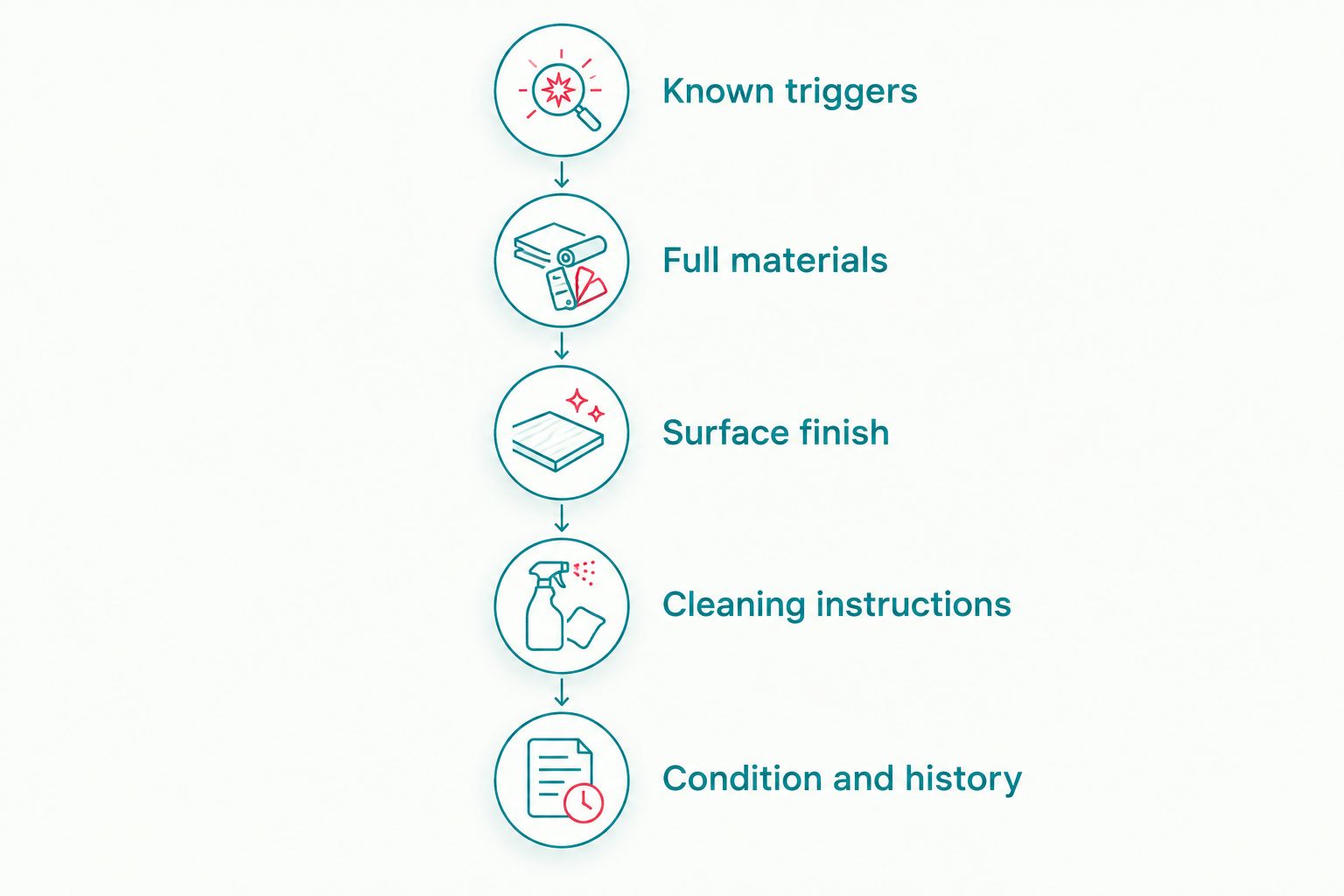
Use these 5 checks when choosing wooden toys in 2026. They turn a general question about wood into a decision about the item your child will actually handle.
1. Known triggers
Start with the substances your child has been advised to avoid. Do not assume that eczema, a food allergy and a latex allergy call for the same toy restrictions.
Write down the exact information you need before shopping. For example, if latex avoidance is part of your child’s plan, ask about elastic or rubber components rather than looking only at the main wooden pieces.
2. Full materials
Check the materials listed for the complete toy. A product described as wooden can still contain other materials, and the main description does not necessarily identify every component.
Ask the retailer or manufacturer about an ingredient or component that matters to your child. If you cannot confirm a relevant detail, choose an alternative with clearer information.
3. Surface finish
Look for information about paint, varnish, oil or other finishes. A natural-looking surface is not proof that a toy is untreated, and a coloured surface is not proof that it is unsuitable.
Likewise, a general toy-safety statement does not establish suitability for a particular allergy. Ask a specific question about your child’s known trigger rather than requesting a blanket promise that the toy is safe.
4. Cleaning instructions
Read the care instructions before buying, not after the first messy afternoon. Check whether the cleaning method fits the way your child will use the toy, particularly if it will be mouthed or shared.
Do not substitute your preferred disinfectant, a dishwasher cycle or prolonged soaking unless the manufacturer permits it. A toy that cannot tolerate your required care routine is not a practical match.
5. Condition and history
Inspect the toy for splinters, cracked surfaces, peeling finishes, dampness and visible mould. Set damaged or mouldy items aside rather than trying to make them suitable through a quick wipe.
For second-hand toys, ask about care instructions and previous use. An unknown history matters when your child needs strict avoidance of a particular substance.
Why suitability varies between wooden toys
There is no single allergy-friendly wooden toy category. Suitability changes with the child, the construction and the way the toy is used.
- The diagnosed trigger: Avoidance advice for a food allergy is different from advice about contact allergy or house dust mites.
- The complete construction: Attached fabric, elastic and other components need the same attention as the wooden body.
- The finish: Product-specific coating information matters when a known contact allergen is involved.
- The care method: A wipe-clean instruction is different from permission to wash or immerse a toy.
- The play setting: Shared play, snack tables and mouthing introduce different cleaning needs.
- The toy’s condition: Damage, damp storage and an uncertain second-hand history change what you can confidently assess.
These factors also explain why replacing every toy with wood is not a complete allergy-management plan. Keep the focus on the exposure your child needs to avoid, rather than treating one material as the solution.
Are wooden toys better for children with dust mite allergies?
Wooden toys are not automatically better for children with dust mite allergies. Dust mite management concerns the wider home environment, including bedding and soft furnishings, rather than the material of a single toy.
A simple wooden toy without attached fabric has no plush filling to launder. That is a practical difference, not evidence that buying it will improve symptoms or remove the need for your child’s existing management plan.
If you choose a soft toy, check whether its washing instructions fit the advice you have received. If you choose wood, keep surfaces clean and store the toy dry. Neither choice needs to become a rule against the other.
Choose a care routine you can maintain, rather than a material you expect to solve the allergy. Ask your child’s clinician which environmental measures are relevant before making a wholesale change to the playroom.
Are painted wooden toys suitable for children with eczema?
Painted wooden toys are not automatically unsuitable for children with eczema, but eczema alone does not identify which materials a child will tolerate. Irritation and allergy are different problems, even when both affect the skin.
Check that the surface is intact and follow the cleaning instructions. Avoid adding scented cleaners or homemade treatments, and ask your child’s clinician about products that repeatedly seem associated with discomfort.
Do not deliberately rub a toy against your child’s skin to test it. If a reaction has occurred, put the toy aside and record what happened, including other possible exposures such as food, soap or cleaning products.
For your 2026 checks, keep a distinction between choosing comfortable everyday play materials and investigating a suspected allergy. Diagnosis belongs with a qualified healthcare professional, not a home experiment.
Can children with food allergies use wooden play food?
Children with food allergies can use pretend play food when the actual materials and care requirements are suitable for them. A toy shaped like an egg or a nut does not establish that it contains that food’s proteins; equally, its appearance does not confirm its composition.
Ask about actual materials if a specific concern remains. The same principle applies to toys named after foods: the name describes the pretend-play theme, not a complete ingredient statement.
Real food residue is a separate issue. Keep actual snacks away from shared play equipment where your child’s allergy plan requires it, clean hands before play, and follow the toy’s permitted cleaning method.
For children who are learning not to eat pretend food, supervise closely and follow age guidance. Allergy suitability does not remove choking risks or make a toy appropriate for mouthing.
How do you keep wooden toys ready for shared play?
Build a simple routine around the manufacturer’s instructions and your child’s allergy plan. The aim is to make care repeatable, not to turn every play session into a deep clean.
- Prepare the space. Clear food, crumbs and used cups from the play surface. Follow any separation measures in your child’s care plan.
- Clean hands. NHS handwashing guidance recommends washing with soap and water for at least 20 seconds. Do not assume hand sanitiser removes food allergens.
- Clean the toy as directed. Use the specified method and products. Do not assume that a disinfectant also removes the allergen you need to avoid.
- Let it dry. Follow the drying instructions before putting the toy away. Keep storage dry and inspect for damage before the next session.
- Share the plan. Tell relatives, nursery staff or other carers what your child needs. Clear instructions are more useful than describing a toy as allergy-safe.
For a 2026 nursery or playgroup routine, agree who checks shared toys after snack time. Keep any necessary allergy information accessible to the adults responsible, rather than relying on a note hidden in a toy box.
Where does Habauk fit into an allergy-aware toy search?
Habauk is a wooden-toy shopping option for parents seeking HABA toys, not a substitute for allergy-specific material checks. The store sells wooden toys and children’s games, with shopping organised by age and category.
Use Habauk to explore play ideas, then check the individual item’s materials, age guidance and care information before choosing. The benefit is a focused place to browse HABA play options; the limitation is that a category label cannot confirm suitability for your child’s allergy.
Ask these 3 questions when you need more detail:
- What materials and finishes are used in the complete toy?
- Does it contain the specific substance my child has been advised to avoid?
- Which cleaning methods does the manufacturer permit?
Specific answers help you decide. A general reassurance about natural materials does not answer those questions.
FAQ
Are wooden toys hypoallergenic?
Wooden toys are not automatically hypoallergenic. Suitability depends on the complete toy, including finishes and attached components, and your child’s specific allergy.
Are wooden toys better than plastic toys for allergies?
Neither wooden nor plastic toys are universally better for allergies. Compare the individual toy’s materials, construction and permitted cleaning methods with your child’s needs.
Can a child react to the finish on a wooden toy?
A child with a contact allergy can react to a substance in a finish if that substance is their trigger. Ask for product-specific information and seek clinical advice about suspected reactions rather than testing the toy on your child’s skin.
Can I disinfect a wooden toy after food has touched it?
Follow the manufacturer’s cleaning instructions and your child’s allergy plan after food contact. Disinfecting and removing food allergens are different tasks, so do not assume a disinfectant alone makes the toy suitable.
Should I replace all soft toys with wooden toys?
Do not replace all soft toys solely because your child has an allergy. Ask which triggers and environmental measures matter for your child, then choose toys with care instructions you can follow.
Does Habauk sell wooden toys guaranteed to suit every allergy?
Do not treat Habauk wooden toys as guaranteed suitable for every allergy. Check each item’s complete materials and care instructions against your child’s known triggers before buying.
What should I do if my child has a serious allergic reaction during play?
Call 999 immediately for signs of anaphylaxis, such as sudden breathing difficulty or swelling of the tongue or throat, and say anaphylaxis. Use a prescribed adrenaline auto-injector immediately as directed in your child’s emergency plan; do not wait to identify the toy or other trigger.
One last thing
A toy’s previous use can matter as much as its material. A carefully chosen wooden toy still needs attention if it has been handled during snack time, stored damp or cleaned with an unsuitable product.
For 2026, make one practical change: keep the care instructions with your household’s toy information so another adult can follow the same routine. Choose the toy you can verify and care for, then let playtime be playtime.