


Are wooden Montessori toys worth it? Sometimes | 2026
Wooden Montessori toys are worth the extra cost when your child can use them in several ways and keeps returning to them. They are not worth paying extra for just because the packaging says Montessori. In 2026, judge the play your child gets from a toy, not its label or material alone.
- Are wooden Montessori toys worth it? Yes, when the play suits your child and lasts beyond one activity.
- Habauk wooden toys suit families seeking hands-on play, not a Montessori label for its own sake.
- Compare what your child can do with blocks, sorting toys and things already at home before buying.
- Wood is a material, not proof that a toy is safer or better for learning.
Are wooden Montessori toys worth the extra cost?
Sometimes. A wooden toy earns its place when its size, activity and level of challenge fit your child. A toy that sits untouched is poor value, however carefully it is made. This comparison shows what each option offers and where it falls short:
| Option | What your child can do | Best for | Main drawback |
|---|---|---|---|
| Basic Building Blocks 102 Piece Extra Large Wooden Starter Set | Build, knock down and arrange 102 pieces | Children who already enjoy making structures | Many pieces to put away; not every family needs a large set |
| Colored Wooden Building Blocks - 46 Piece Set | Build and arrange 46 pieces | Families who want a smaller building set | Fewer pieces for bigger shared builds |
| Colored Wooden Building Blocks - 85 Piece Set | Build and arrange 85 pieces | Children who want more pieces than the smaller set offers | More pieces to store and tidy |
| Rainbow Whirls Wooden Sorting and Stacking Game | Sort and stack wooden pieces | Children drawn to matching and stacking | A more focused activity than free building |
| Objects already at home | Stack, sort or pretend with suitable everyday items | Trying an activity before buying a toy | You must check each item is safe for your child's age and supervise its use |
Why this matters
Montessori-inspired play puts the child's own actions at the centre: picking something up, trying it, noticing what happens and trying again. That idea does not require a shelf full of matching wooden toys. Habauk's guide to wooden toys for Montessori-inspired homes offers another way to think about choosing activities rather than collecting a particular look.
A toy also has to work in your home. If your child loves sorting but has no interest in building, a sorting game is the more useful choice, even if a block set appears more versatile on paper. If you already have objects your child safely enjoys stacking, you can learn from that play before adding anything new.
What are you paying extra for?
Ask what changes for your child, not whether the word Montessori appears on the box. The useful difference is an activity your child wants to repeat: fitting, balancing, arranging or building. The material can be part of that experience, but wood alone does not tell you how engaging the activity will be.
Start by watching a play session. Does your child choose the activity without prompting? Do they try again when a tower falls or a piece does not fit? Those observations tell you more than a product label. In 2026, the sensible buying test is still whether the toy meets an interest you can see now.
The extra cost is harder to justify when the activity is too easy, too frustrating or nearly identical to something your child already uses. It is also reasonable to skip a large set when you have little room to leave a build in progress. A smaller activity that gets used fits family life better than a bigger one that stays packed away.
Does wooden mean Montessori?
No. Wooden describes a material; Montessori describes an educational approach. A wooden toy can support child-led, hands-on exploration, but its material does not give it a special educational status. Equally, an activity using another suitable material does not stop being useful just because it is not wooden.
Look at what the child controls. Can they handle the pieces, make a choice and see the result of that choice? Blocks let a child decide what to build. A shape sorter offers a more defined task. Both can suit a Montessori-inspired home, yet they invite different kinds of play.
That distinction helps when you shop in 2026. You do not need every toy to look alike or teach the same skill. Choose an activity because it meets the child in front of you, not because it matches a picture of how a playroom should look.
Which wooden activity is the better fit?
Choose blocks for building and changing plans; choose a sorting toy for a more focused matching task. Neither wins for every child. The better choice is the one your child reaches for and can use without an adult directing every move.
Open-ended building
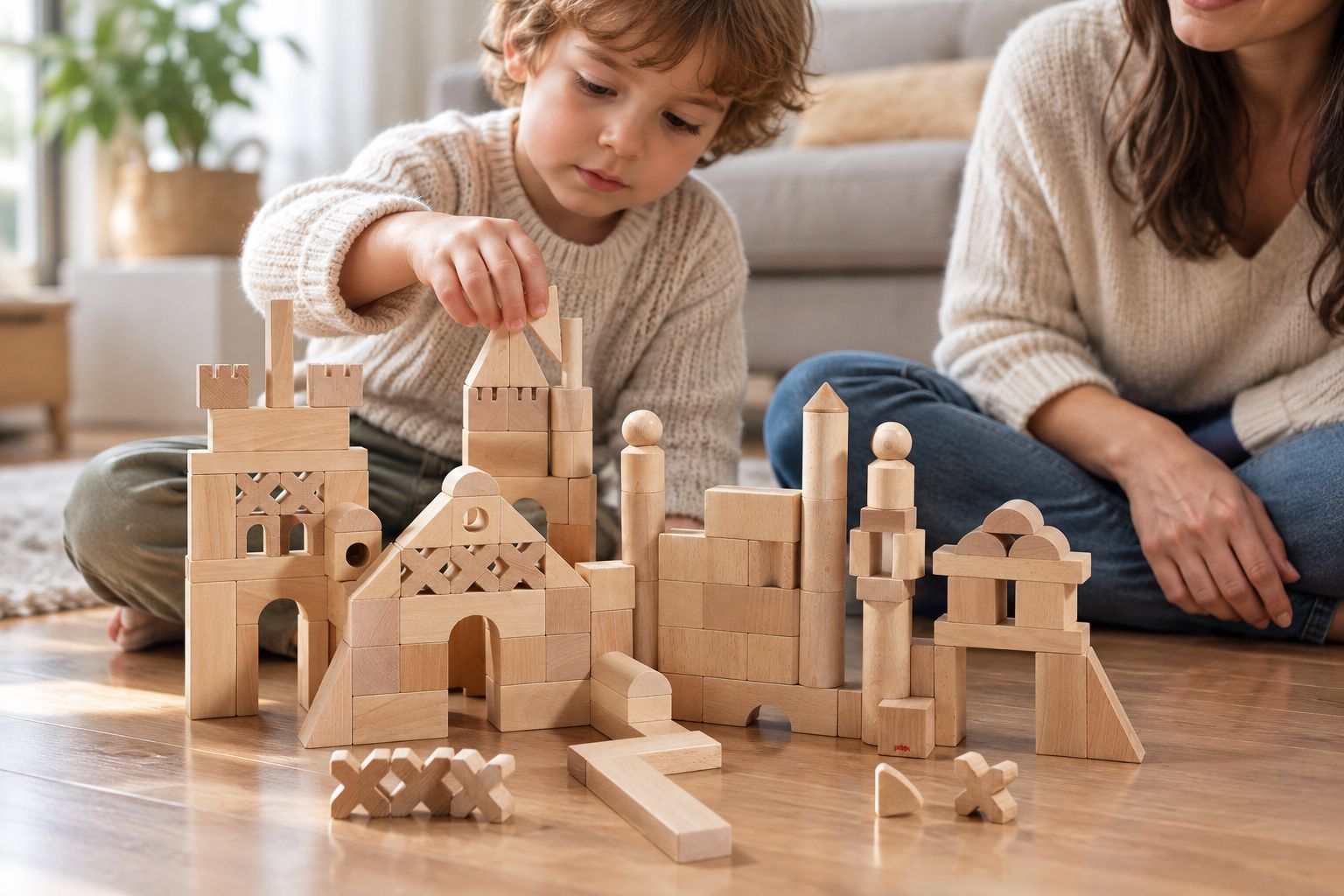
With wooden blocks, your child decides whether to make a tower, a row or something entirely their own. A fallen build becomes another chance to arrange the pieces. The drawback is practical: loose pieces need space, and a large set creates more tidying for everyone.
The 46-piece and 102-piece sets in the table give you different amounts of building material, not a measure of which child will enjoy them more. Watch how your child uses the blocks they already have before choosing a set size. In 2026, that simple check matters more than choosing the set with the most pieces.
A smaller build can still become a big story when another child joins in. If shared play is the aim, think about whether both children can get involved comfortably. If your child prefers making one careful structure alone, extra pieces need a clearer purpose.
Sorting and stacking
A sorting or stacking activity gives your child a clearer task: place pieces, notice the arrangement and try another. Rainbow Whirls Wooden Sorting and Stacking Game suits a child who enjoys that kind of repeatable challenge. Its limitation is the same focus that makes it appealing; it offers less freedom to invent a new structure than a box of blocks.
If you are unsure which activity will stick, try an age-appropriate sorting game with objects you already own, under supervision. Notice whether your child returns to matching and arranging without much prompting. Buy a dedicated toy when you know what activity you want it to support.
Exploring sound
Some children would rather shake, listen and compare than stack. Fun with Sounds Discovery Blocks offer a sound-exploration option in Habauk's wooden toy range. They are a better match for a child interested in what they can hear than for one who wants to build tall structures; they do not replace blocks for open-ended construction.
That is why a Montessori-inspired toy shelf need not be all puzzles and towers. The question is whether your child can explore an activity at their own pace. Give them room to repeat it rather than asking for a particular result.
Why the value varies from child to child
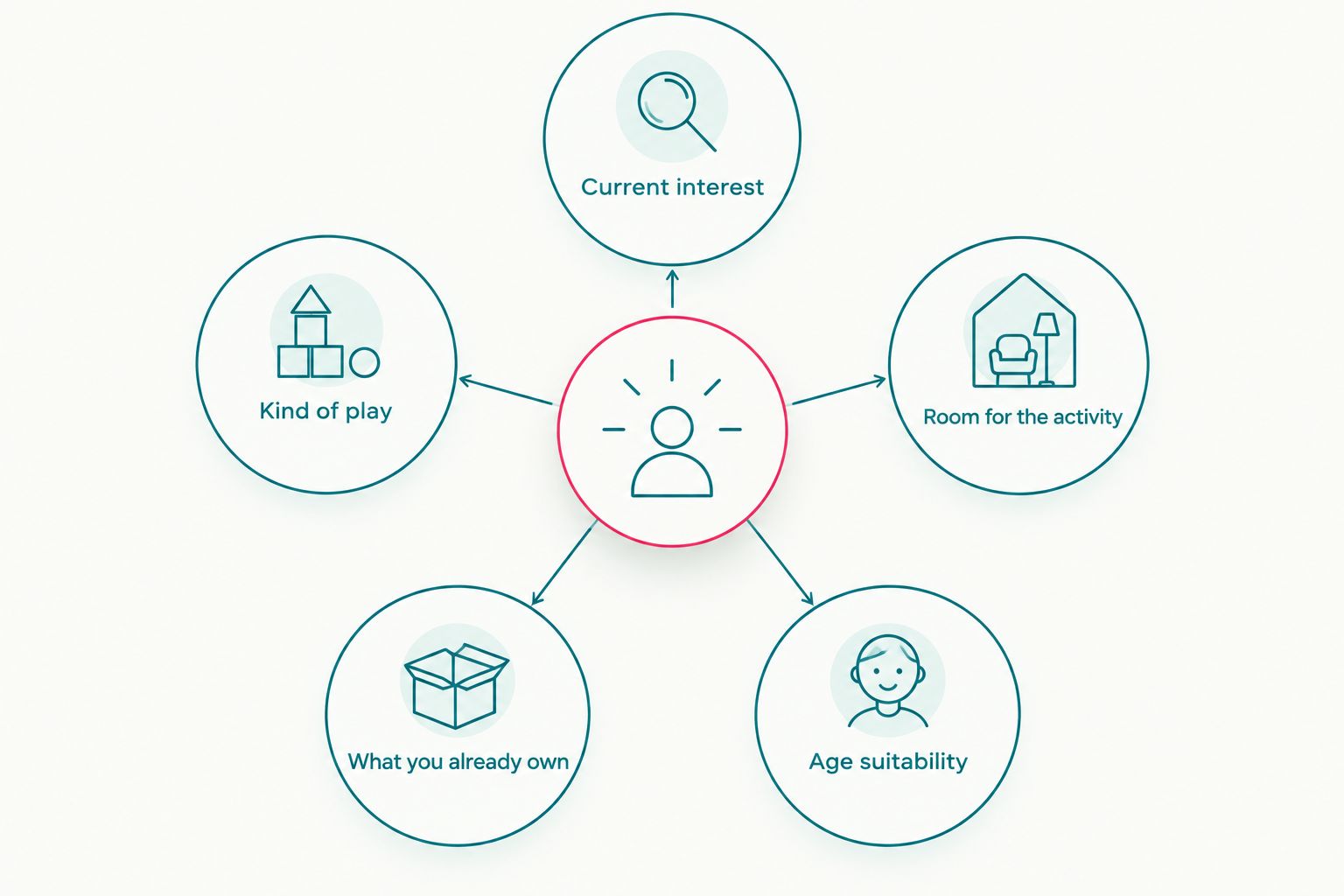
There is no universal point at which wooden toys become worth the extra cost. These factors change the answer for your family:
- Your child's current interest. A child who repeatedly builds has a clearer reason to use blocks than one who passes them by.
- The kind of play offered. Building, sorting and sound exploration ask your child to do different things. Pick the activity, then the material.
- Room for the activity. A set with 102 pieces asks more of your storage and tidying routine than one with 46 pieces.
- What you already own. Another set of blocks needs a purpose if your child is happy with the ones at home.
- How much direction the toy needs. If your child can choose what to try next, the activity leaves more room for independent exploration.
- Age suitability. Check the product's age guidance and the pieces themselves before offering a toy, particularly to a younger child.
In 2026, these checks give you a better answer than an argument about wood versus plastic. You are choosing a play activity for a real child, not awarding a prize to a material.
The easiest decision is often to buy less. Offer an activity, see whether your child returns to it and add a different challenge only when you have a reason. A thoughtfully chosen toy does not need company from every toy in the same category.
Wooden toys to consider once you know the activity
If building is the clear favourite, compare the space you have with the amount of play material your child needs. The Basic Building Blocks 102 Piece Extra Large Wooden Starter Set gives builders more pieces to arrange; the Colored Wooden Building Blocks - 46 Piece Set is the smaller option. If sorting and stacking holds their attention instead, Rainbow Whirls Wooden Sorting and Stacking Game matches that activity more directly.
Habauk wooden toys are best for families choosing a specific hands-on activity, not buying a Montessori label for its own sake. The trade-off is straightforward: a focused sorting game is less flexible than blocks, while a larger block set takes more room and effort to put away. Choose the play your child enjoys and the amount your home can accommodate.


Can you try Montessori-inspired play without buying a toy?
Yes. Start with a simple activity using suitable things you already have, and stay with your child while they explore. Stacking, matching and arranging can show you what catches their interest before you choose a dedicated toy. Check that every object is appropriate for your child's age; household items are not automatically toys.
Keep the invitation simple. Put out the materials for one activity, show your child what is available and let them decide what to try. If they turn it into a different game, watch what interests them rather than steering them back to your plan. The point is to learn what sort of play earns a return visit.
This also guards against buying for an imagined future interest. A child might love making towers but ignore matching, or enjoy sorting today and building later. You can respond to what you see without treating the first choice as a permanent decision.
Are wooden toys better than plastic toys for learning?
Not by material alone. What your child does with a toy matters more than whether it is wooden or plastic. Compare the activity, the age guidance and your child's interest instead of assuming one material guarantees a better learning experience.
The same test applies to claims about safety. Neither material makes every toy suitable for every child. Follow the individual product guidance and inspect play items for damage rather than relying on a broad rule about wood or plastic.
How do you tell whether a wooden toy will get used?
Watch for an activity your child chooses repeatedly: building, sorting, listening or pretend play. Then select a toy that makes that activity possible without asking them to use it in only one way. There is no promise that a purchase will become a favourite, but an interest you have already seen is a sounder starting point than a label.
Habauk sells wooden toys and children's games for different kinds of play. For a 2026 purchase, narrow your search by the activity and your child's age before comparing sets. It keeps the choice tied to the person who will actually play with it.
FAQ
Are wooden Montessori toys worth it for toddlers?
Yes, when the activity suits your toddler's current interests and the toy is appropriate for their age. Skip the Montessori label as a reason to buy on its own.
Does a wooden toy have to be Montessori-certified to be useful?
No. Judge the activity your child can do with it rather than treating the word Montessori as a guarantee of value.
Are wooden toys always safer than plastic toys?
No. Safety depends on the individual toy, your child's age, its condition and how it is used, not material alone.
Should I choose wooden blocks or a wooden sorting toy?
Choose blocks for a child who enjoys open-ended building and a sorting toy for one drawn to matching and arranging. Check which activity your child returns to before buying.
How many wooden blocks does my child need?
There is no set number every child needs. Habauk's listed building sets include 46-piece, 85-piece and 102-piece options; choose based on how your child builds and the room you have.
Can I try Montessori-inspired activities without buying wooden toys?
Yes. Suitable everyday objects can help you see whether your child enjoys stacking or sorting. Check each object's age suitability and supervise the activity.
Is a bigger wooden block set better value?
Only if your child uses the additional pieces. A smaller set is the better fit when it supports the builds they enjoy and is easier for your family to store.
One last thing
The best clue is not what a toy promises; it is what your child asks to do again. Before adding another wooden toy in 2026, watch one ordinary play session. If the interest is clear, choose the toy that gives it room to grow. If it is not, wait and enjoy the play you already have.