


Best wooden number blocks for early counting
Best overall for counting with loose pieces: Basic Building Blocks 26 Piece Starter Set. Best for colour sorting: Colored Wooden Building Blocks - 46 Piece Set. Best for shared building: Basic Building Blocks 60 Piece Large Starter Set. This 2026 guide separates blocks you can count from toys designed around number activities, so you can choose the right starting point.
- For the best wooden number blocks, choose by activity: counting objects, sorting colours or recognising numerals.
- Basic Building Blocks 26 Piece Starter Set is the default pick for counting alongside construction.
- Habauk’s Number Maze Magnetic Game is an alternative for guided counting, not a loose-block set.
- Choose printed numeral blocks specifically if recognising written numbers is your main goal.
Why this matters
A block you can count is not necessarily a number block. Ordinary building blocks let you make groups, compare quantities and add another piece; printed numeral blocks introduce written symbols as well.
Habauk sells HABA wooden toys and children’s games. These recommendations focus on the counting activities each named toy supports, rather than treating every wooden building set as a dedicated maths toy.
For your 2026 shortlist, decide what you want to do together before choosing a box. Counting pieces into a pretend garage calls for something different from matching a written numeral to a quantity.
What makes the best wooden number blocks?
Use these criteria before comparing sets. A bigger collection is not automatically the better first counting toy.
- Activity match: Choose loose blocks for moving and grouping objects, or a dedicated number activity for more directed play.
- Clear quantities: Look for pieces you can set apart and count individually. Similar-sized pieces make quantity comparisons easier to explain.
- Useful sorting features: Colours and shapes give you ways to organise pieces before counting them.
- Room for ordinary play: A counting toy should also suit the building, arranging or storytelling your child enjoys.
- Manageable collection: Choose a set you can put away comfortably, and bring out only the pieces you need.
- Age and safety guidance: Follow the product’s age recommendation and warnings. Wooden construction alone does not establish suitability.
If written-number recognition is your priority, check that the exact set includes printed numerals. Do not assume that colourful blocks, stacking pieces or a product described as educational will have them.
Counting-play picks at a glance for 2026
The building sets below are recommendations for counting loose objects, not recommendations for printed numeral cubes. The magnetic game offers a different approach and is included as an alternative, not another type of block.
| Item | Best for | Standout feature | Key limitation |
|---|---|---|---|
| Basic Building Blocks 26 Piece Starter Set | A first counting-and-building set | 26 pieces for open-ended construction | Not a dedicated numeral-learning set |
| Colored Wooden Building Blocks - 46 Piece Set | Colour sorting before counting | Coloured wooden building pieces | Colour sorting does not itself teach numeral recognition |
| Basic Building Blocks 60 Piece Large Starter Set | Shared building and grouping | 60 solid beech wood pieces | More pieces to organise and put away |
| Number Maze Magnetic Game | Guided counting instead of building | Guide coloured balls into the correct spots | Cannot replace loose blocks for construction |
1. Basic Building Blocks 26 Piece Starter Set: best first set
Basic Building Blocks 26 Piece Starter Set is the default choice if you want counting to happen naturally during construction. The set contains 26 pieces, giving you building material without choosing one of the larger collections here.
Start with a small selection on the floor. You can count pieces into a tower, move them into separate groups or ask your child to pass another block for a bridge.
Basic Building Blocks 26 Piece Starter Set pros:
- Loose pieces let you rearrange the same quantity in different ways.
- Building gives counting a purpose beyond answering a question.
- The starter format suits families choosing their first general building set.
Basic Building Blocks 26 Piece Starter Set cons:
- Choose a different format if you specifically want printed numerals.
- You supply the counting prompts; it is not a guided number activity.
Best for: Parents who want one construction set for everyday building and gentle counting invitations.
Try counting a row, then building a tower with those same pieces. Ask whether the amount changed when the arrangement changed, and count together to check rather than turning the moment into a test.
Verdict: Buy for a first counting-and-building set; skip for printed-number practice.
2. Colored Wooden Building Blocks - 46 Piece Set: best for sorting
Colored Wooden Building Blocks - 46 Piece Set combines a 46-piece building collection with colour. Choose this set when your child enjoys making colour groups as much as making structures.
Sorting gives your counting game a clear starting point. Gather pieces of one colour, move each counted piece aside, then use the group to build something together.
Colored Wooden Building Blocks - 46 Piece Set pros:
- Colour gives you an obvious feature to sort by.
- Loose pieces work for grouping, counting and construction.
- You can change the activity without introducing a different toy.
Colored Wooden Building Blocks - 46 Piece Set cons:
- Comparing colour groups requires attention to quantity, not just appearance.
- This is a building-set recommendation, not a printed-numeral recommendation.
Best for: Children who enjoy choosing colours, making groups and then building with them.
Keep the invitation simple: gather a colour, count the pieces, then make a house. Avoid asking your child to sort, count, compare and name shapes all at once; choose the part that interests them.
If you already own coloured blocks, try this activity with those before adding another set. Your 2026 toy choice should add a useful play opportunity, not repeat a collection that already does the job.
Verdict: Buy for colour-led counting play; skip if your existing blocks already cover it.
3. Basic Building Blocks 60 Piece Large Starter Set: best for sharing
Basic Building Blocks 60 Piece Large Starter Set contains 60 solid beech wood pieces. Choose it when you want more material for shared construction and separate groups of blocks.
You can divide a selection between builders, compare the groups and bring the pieces together for a joint project. Keep counting alongside the construction rather than making every block placement a question.
Basic Building Blocks 60 Piece Large Starter Set pros:
- More pieces than the smaller starter set for shared projects.
- Solid beech wood construction is explicitly described for this set.
- Loose pieces let you separate groups and combine them again.
Basic Building Blocks 60 Piece Large Starter Set cons:
- The larger collection brings more pieces to organise.
- You do not need the full set out for an early counting activity.
Best for: Families who want a larger building collection for playing together, with counting woven into the activity.
Give each builder a small selection and invite them to make neighbouring homes. Compare how many pieces went into each home, not whose building is better or taller.
Put the unused blocks aside while you play. Choosing a larger set does not mean asking a young child to count the entire collection.
Verdict: Buy for shared construction; hold if a smaller collection meets your needs.
4. Number Maze Magnetic Game: best for guided counting
Number Maze Magnetic Game challenges children to guide coloured balls into the correct spots. It is the alternative to choose when you want a number-focused activity rather than loose building pieces.
Habauk’s Number Maze Magnetic Game is best for families seeking guided counting rather than loose-block construction. Match that format to what your child enjoys doing with their hands.
Number Maze Magnetic Game pros:
- Counting is part of the described activity.
- Coloured balls provide objects to move towards a destination.
- The task offers a defined goal instead of an open building prompt.
Number Maze Magnetic Game cons:
- It does not offer free building with loose blocks.
- Guiding balls is a different task from picking up and grouping separate pieces.
Best for: Children who enjoy following a route and working towards a matching task.
Choose the maze because the activity appeals, not because it looks more instructional. A child happily counting building pieces does not need a different format simply to make play feel like learning.
Verdict: Buy for guided counting; skip if you want a construction toy.
Choose your counting-and-building set
For a 2026 purchase, match the collection to the way you expect to play. Choose the smaller starter for a first building set, coloured pieces for sorting, or the larger beech collection for shared projects.


Turn loose blocks into a counting invitation
Try this sequence with age-appropriate pieces from your own collection. Follow your child’s interest, and return to ordinary building whenever the counting stops being fun.
Make a group
Place a small selection of blocks within reach. Invite your child to gather pieces for a pretend wall, path or animal home, keeping the rest of the collection aside.
Touch and count
Touch or move each block as you say its number name together. Moving counted pieces into a separate space makes it clear which objects you have already counted.
Change the layout
Spread the same blocks into a longer row, then gather them close together. Ask whether there are still the same number and count again to check.
Build together
Use the counted pieces in a shared construction. Ask for another block when you need one, then talk about what changed in the group you were using.
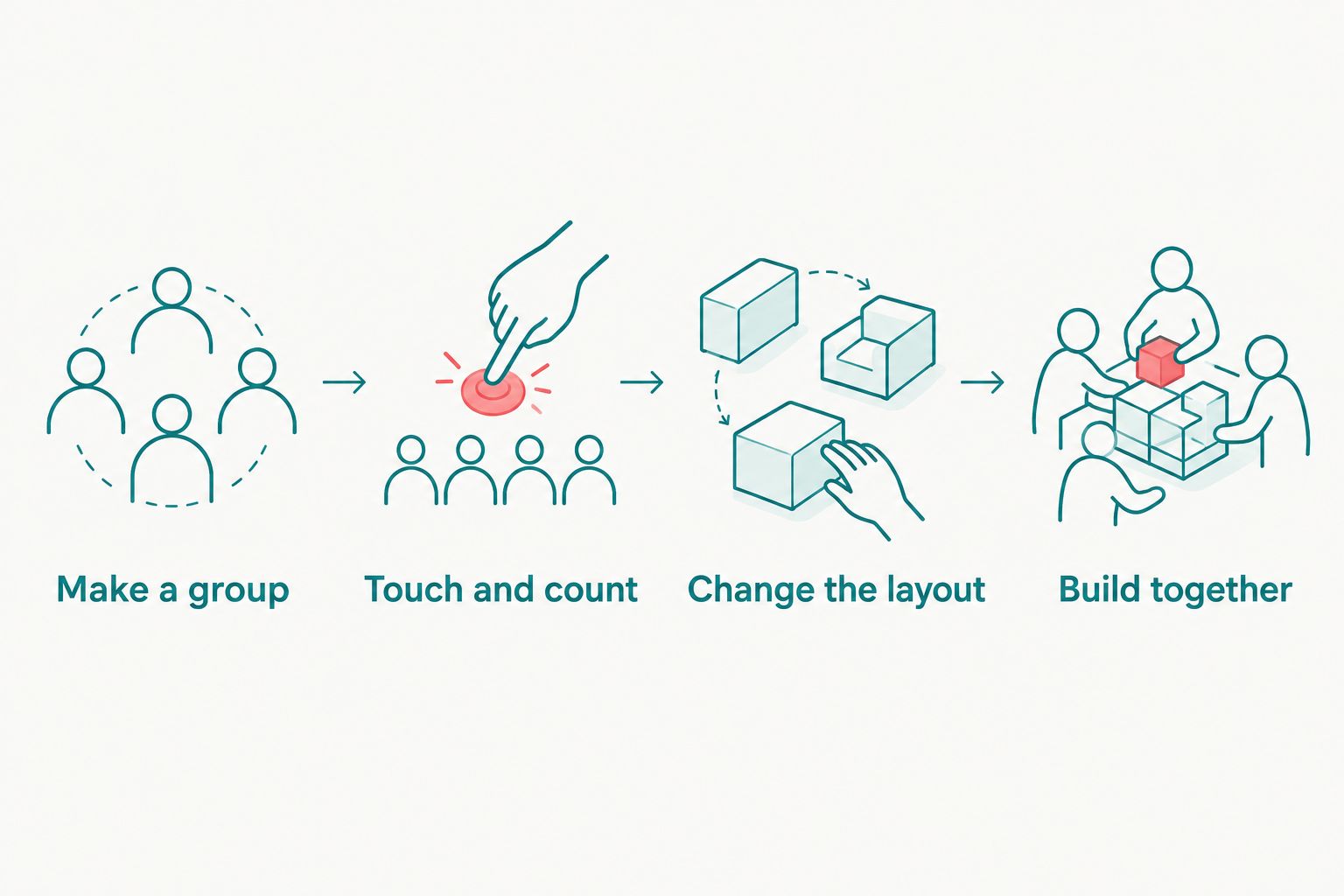
The useful part is the conversation, not completing every step. If your child turns the row into a train, join the story and count passengers or carriages only when it fits.
How the recommendations are ranked
The ranking prioritises activity match, opportunities to handle quantities and room for ordinary play. It compares the products’ stated formats and contents, rather than claiming measured learning results.
The smaller starter takes the default slot because this guide begins with counting loose objects. Colour sorting, shared building and guided matching each receive a separate recommendation because they answer different needs.
Which counting toy should you choose?
Choose Basic Building Blocks 26 Piece Starter Set if you are undecided and want a first construction set. Choose the coloured collection for sorting, the larger beech set for shared building, or Number Maze Magnetic Game for a defined counting activity.
If your 2026 shopping goal is specifically recognising written numbers, choose a set whose product details explicitly show numeral markings. Do not substitute general building blocks and expect the same activity.
Habauk’s wooden counting-play options make most sense when the play format comes first. Start with what your child likes doing, then add the number language together.
FAQ
What are the best wooden number blocks for early counting?
Basic Building Blocks 26 Piece Starter Set is the default pick here for counting loose objects during construction. For printed-number recognition, choose a set explicitly described as having numeral markings instead.
Do wooden counting blocks need numbers printed on them?
No, loose blocks work for counting objects without printed numbers. Printed numerals serve a different purpose: connecting a written symbol with a quantity.
Are coloured blocks better than plain wooden blocks for counting?
Coloured blocks add colour-sorting activities, but both formats let you count loose pieces. Choose colour when sorting is part of the play you want.
Should I buy the biggest building block set?
Choose the collection that fits your building plans and storage space, not simply the largest set. You only need a small selection out for a counting invitation.
Is Number Maze Magnetic Game the same as number blocks?
No, Number Maze Magnetic Game involves guiding coloured balls into the correct spots. Loose blocks let children pick up, separate and build with individual pieces.
How do I start counting with wooden blocks?
Make a small group and touch or move each piece while counting together. Rearrange the same pieces and count again before using them in a building.
Can babies use wooden counting blocks?
Use only toys whose age guidance and warnings suit your baby. The fact that a toy is wooden does not establish that it is suitable for babies.
One last thing
A longer row does not necessarily contain more blocks. Rearrange the same small group into a stretched-out line and a close cluster, then count both together.
That simple invitation gives your existing toys another use. Before choosing anything new, try it with suitable blocks you already have.